


Bacterial protection of beetle-fungus mutualism
- PMID: 18832638
- PMCID: PMC2761720
- DOI: 10.1126/science.1160423
Bacterial protection of beetle-fungus mutualism
Abstract
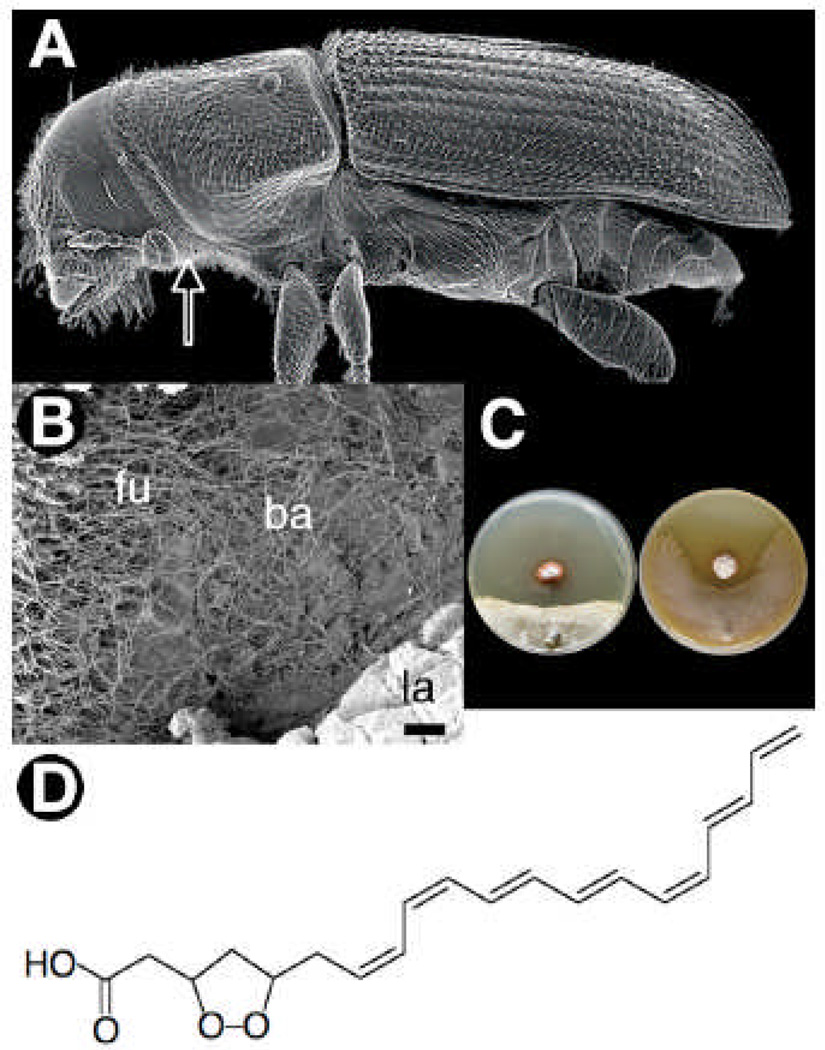
Host-microbe symbioses play a critical role in the evolution of biological diversity and complexity. In a notably intricate system, southern pine beetles use symbiotic fungi to help overcome host-tree defenses and to provide nutrition for their larvae. We show that this beetle-fungal mutualism is chemically mediated by a bacterially produced polyunsaturated peroxide. The molecule's selective toxicity toward the beetle's fungal antagonist, combined with the prevalence and localization of its bacterial source, indicates an insect-microbe association that is both mutualistic and coevolved. This unexpected finding in a well-studied system indicates that mutualistic associations between insects and antibiotic-producing bacteria are more common than currently recognized and that identifying their small-molecule mediators can provide a powerful search strategy for therapeutically useful antimicrobial compounds.
Figures
Comment in
-
Ecology. Bugs' bugs.Science. 2008 Oct 3;322(5898):52-3. doi: 10.1126/science.1164873. Science. 2008. PMID: 18832633 No abstract available.
References
Publication types
MeSH terms
Substances
Grants and funding
LinkOut - more resources
Full Text Sources
Other Literature Sources
Molecular Biology Databases
