


Antipsychotic drugs inhibit the function of breast cancer resistance protein
- PMID: 18834354
- PMCID: PMC2637613
- DOI: 10.1111/j.1742-7843.2008.00298.x
Antipsychotic drugs inhibit the function of breast cancer resistance protein
Abstract
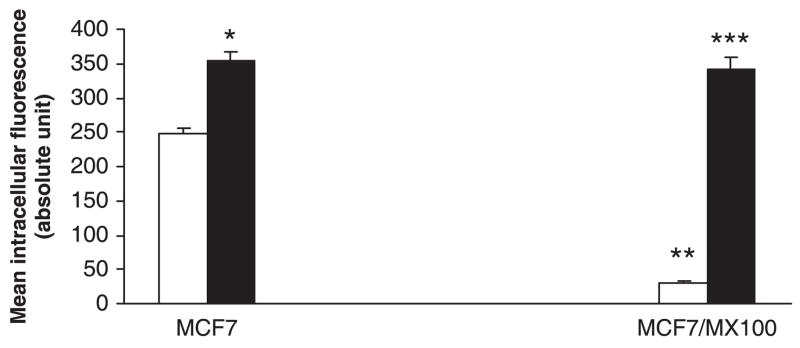
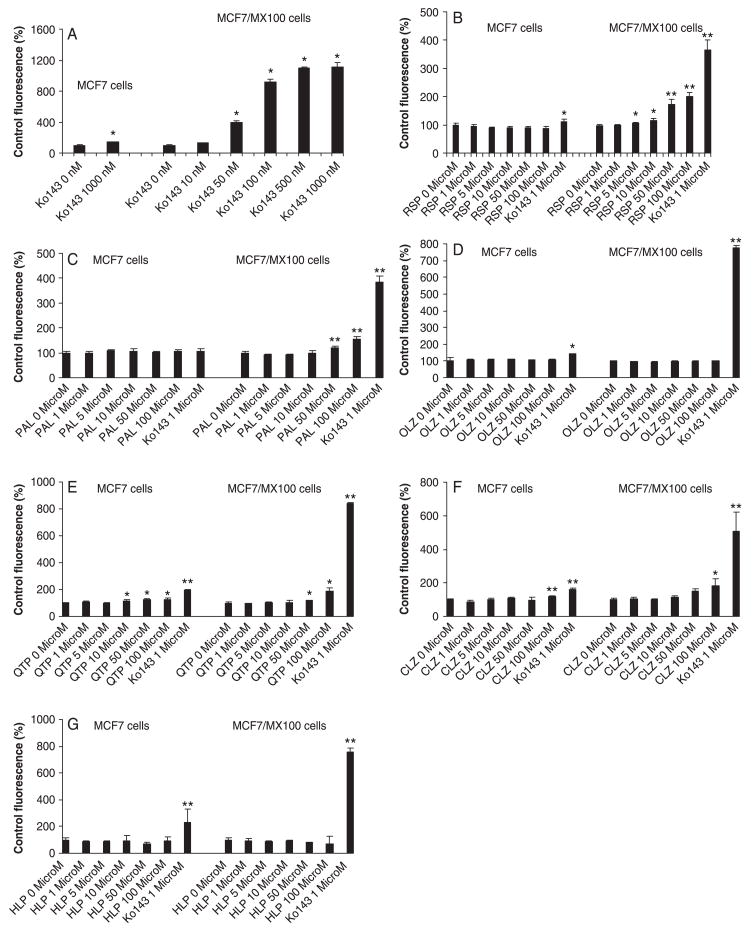
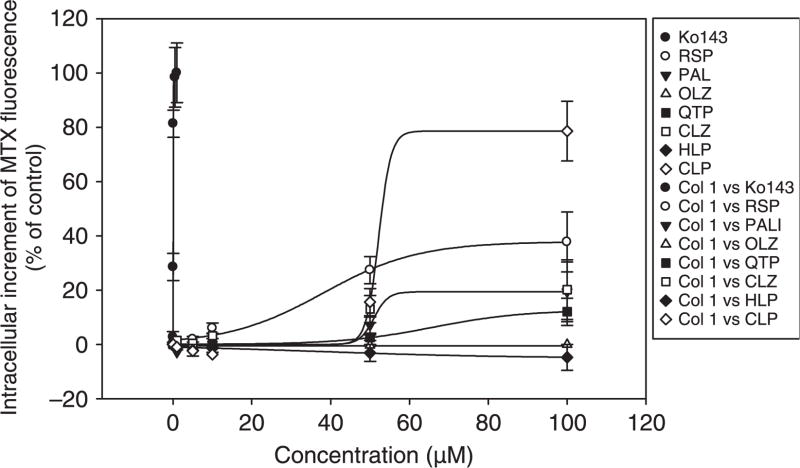
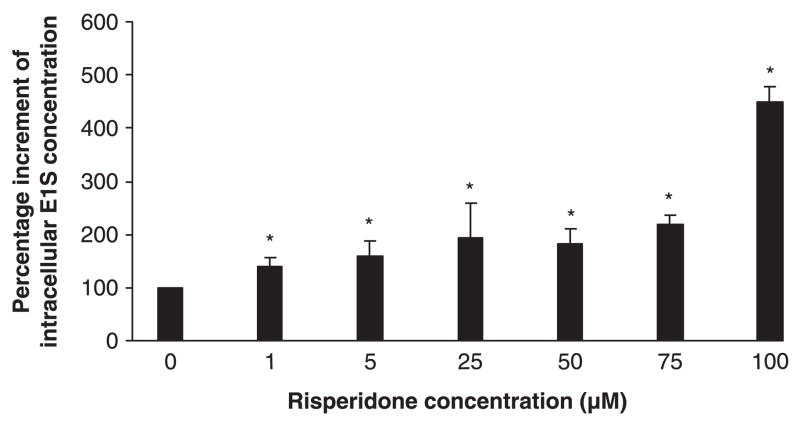
The ABCG2 transporter breast cancer resistance protein (BCRP) has been identified in several physiological sites. It has been suggested to play an important role in disposition of many drugs and environmental toxins. We investigated the effects of several antipsychotic drugs, including risperidone, 9-hydroxy-risperidone (paliperidone), olanzapine, quetiapine, clozapine, haloperidol and chlorpromazine, and a positive control inhibitor Ko143 on functions of BCRP in MCF7 and BCRP over-expressing MCF7/MX100 cell lines using a BCRP prototypical substrate mitoxantrone. Our findings indicated that the tested antipsychotics rank order of potency of inhibition of BCRP according to concentrations required to reach 50% of maximum inhibition (IC(50)) was as follows: Ko143 (0.07 microM) > risperidone (38.1 microM) > clozapine (42.0 microM) > paliperidone (51 microM) > chlorpromazine (52.2 microM) > quetiapine (66.1 microM) > olanzapine = haloperidol (>100.0 microM). We further tested the effects of various concentrations of risperidone on the BCRP-mediated transport of oestrone-3-sulfate in a colon carcinoma cell line, Caco-2, a widely used model to study drug absorption. Our findings show that risperidone at concentrations ranging from 1 to 100 microM significantly inhibited intracellular accumulation of oestrone-3-sulfate in Caco-2 cell monolayers. The present results suggest that a potential source of pharmacokinetic interactions exists between BCRP substrates and several antipsychotics.
Figures
References
-
- Kage K, Tsukahara S, Sugiyama T, Asada S, Ishikawa E, Tsuruo T, et al. Dominant-negative inhibition of breast cancer resistance protein as drug efflux pump through the inhibition of S-S dependent homodimerization. Int J Cancer. 2002;97:626–30. - PubMed
-
- Xu J, Liu Y, Yang Y, Bates S, Zhang JT. Characterization of oligomeric human half-ABC transporter ATP-binding cassette G2. J Biol Chem. 2004;279:19781–9. - PubMed
-
- Xia CQ, Yang JJ, Gan LS. Breast cancer resistance protein in pharmacokinetics and drug-drug interactions. Expert Opin Drug Metab Toxicol. 2005;1:595–611. - PubMed
-
- Breedveld P, Zelcer N, Pluim D, Sonmezer O, Tibben MM, Beijnen JH, et al. Mechanism of the pharmacokinetic interaction between methotrexate and benzimidazoles: potential role for breast cancer resistance protein in clinical drug-drug interactions. Cancer Res. 2004;64:5804–11. - PubMed
-
- Miyake K, Mickley L, Litman T, Zhan Z, Robey R, Cristensen B, et al. Molecular cloning of cDNAs which are highly overexpressed in mitoxantrone-resistant cells: demonstration of homology to ABC transport genes. Cancer Res. 1999;59:8–13. - PubMed
Publication types
MeSH terms
Substances
Grants and funding
LinkOut - more resources
Full Text Sources
Other Literature Sources
Molecular Biology Databases
