


Relationship between CD8-dependent antigen recognition, T cell functional avidity, and tumor cell recognition
- PMID: 18836717
- PMCID: PMC2773431
- DOI: 10.1007/s00262-008-0594-2
Relationship between CD8-dependent antigen recognition, T cell functional avidity, and tumor cell recognition
Abstract
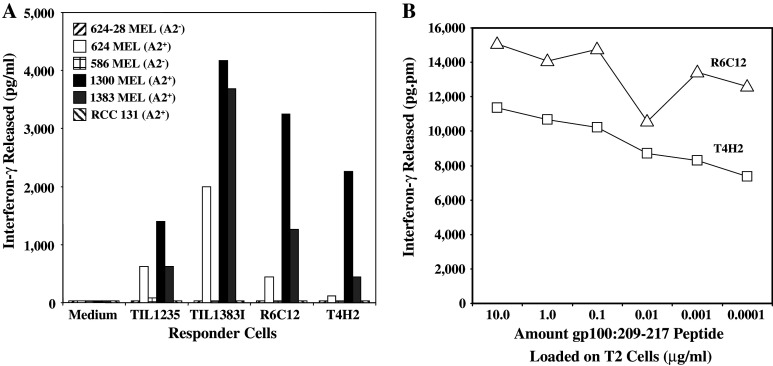
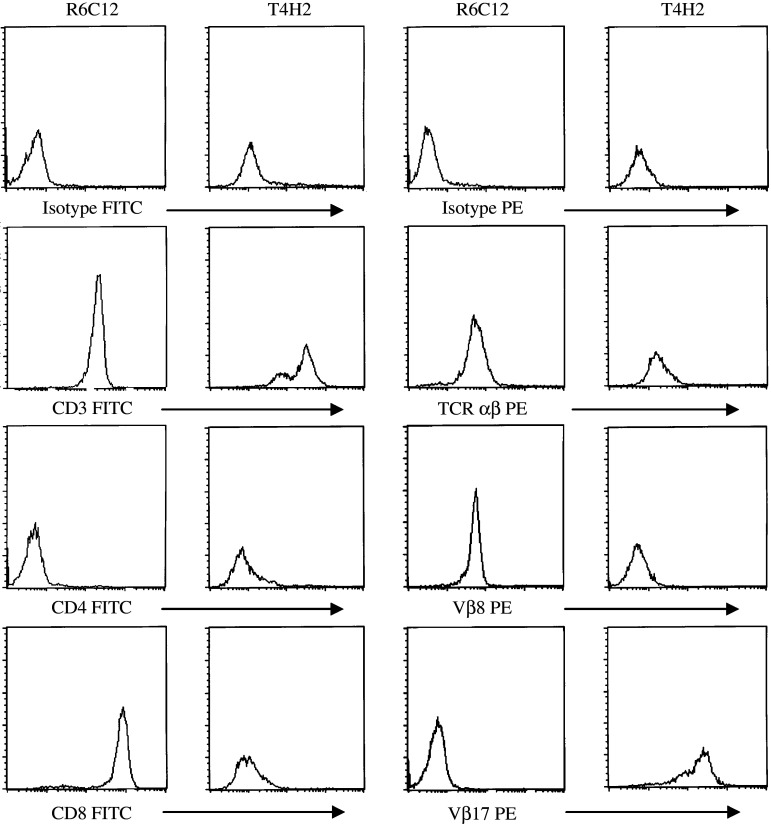
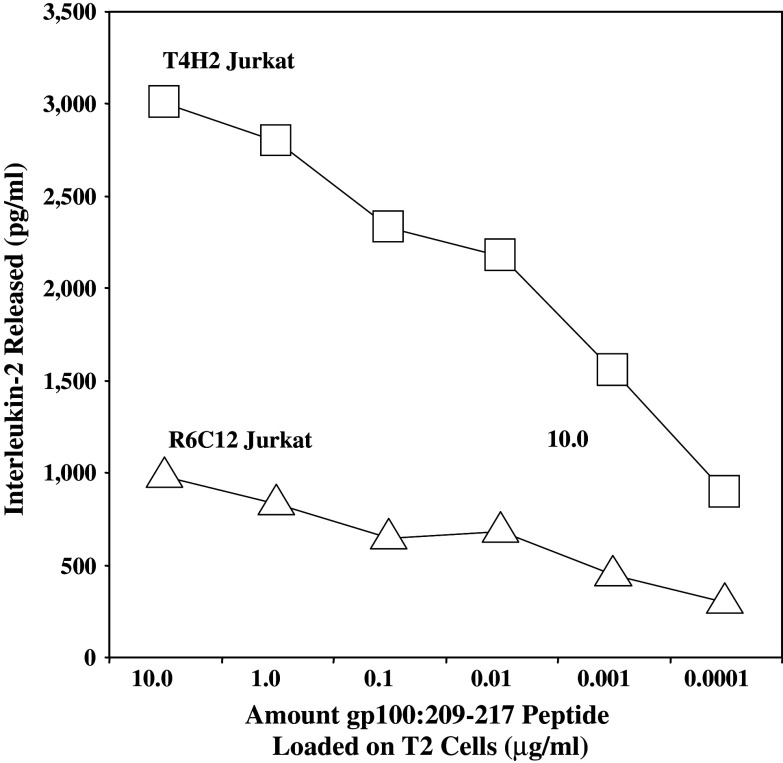
Effective immunotherapy using T cell receptor (TCR) gene-modified T cells requires an understanding of the relationship between TCR affinity and functional avidity of T cells. In this study, we evaluate the relative affinity of two TCRs isolated from HLA-A2-restricted, gp100-reactive T cell clones with extremely high functional avidity. Furthermore, one of these T cell clones, was CD4- CD8- indicating that antigen recognition by this clone was CD8 independent. However, when these TCRs were expressed in CD8- Jurkat cells, the resulting Jurkat cells recognized gp100:209-217 peptide loaded T2 cells and had high functional avidity, but could not recognize HLA-A2+ melanoma cells expressing gp100. Tumor cell recognition by Jurkat cells expressing these TCRs could not be induced by exogenously loading the tumor cells with the native gp100:209-217 peptide. These results indicate that functional avidity of a T cell does not necessarily correlate with TCR affinity and CD8-independent antigen recognition by a T cell does not always mean its TCR will transfer CD8-independence to other effector cells. The implications of these findings are that T cells can modulate their functional avidity independent of the affinity of their TCRs.
Figures
References
-
- Finke JH, Zea AH, Stanley J, Longo DL, Mizoguchi H, Tubbs RR, Wiltrout RH, O’Shea JJ, Kudoh S, Klein E, Bukowski RM, Ochoa AC. Loss of T-cell receptor zeta chain and p56lck in T-cells infiltrating human renal cell carcinoma. Cancer Res. 1993;53(23):5613–5616. - PubMed
Publication types
MeSH terms
Substances
Grants and funding
LinkOut - more resources
Full Text Sources
Other Literature Sources
Medical
Research Materials
