Pneumococcal vaccination and risk of myocardial infarction
- PMID: 18838452
- PMCID: PMC2553874
- DOI: 10.1503/cmaj.070221
Pneumococcal vaccination and risk of myocardial infarction
Abstract
Background: Based on promising results from laboratory studies, we hypothesized that pneumococcal vaccination would protect patients from myocardial infarction.
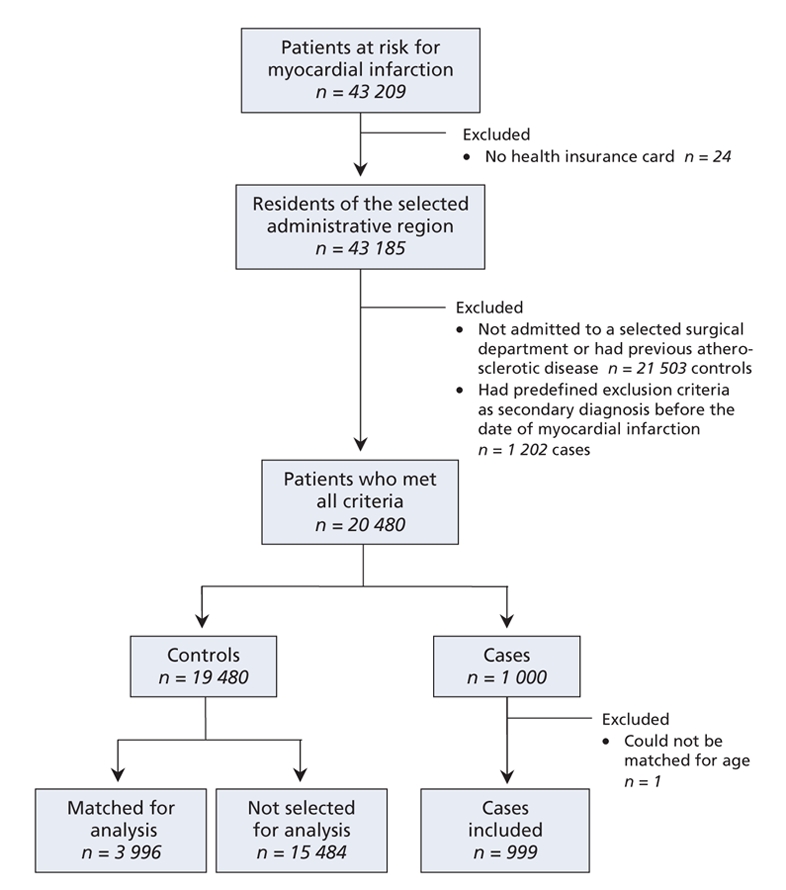
Methods: We conducted a hospital-based case-control study that included patients considered to be at risk of myocardial infarction. We used health databases to obtain hospital diagnoses and vaccination status. We compared patients who had been admitted for treatment of myocardial infarction with patients admitted to a surgical department in the same hospital for a reason other than myocardial infarction between 1997 and 2003.
Results: We found a total of 43 209 patients who were at risk; of these, we matched 999 cases and 3996 controls according to age, sex and year of hospital admission. Cases were less likely than controls to have been vaccinated (adjusted odds ratio [OR] 0.53, 95% confidence interval [CI] 0.40-0.70). This putative protective role of the vaccine was not observed for patients who had received the vaccine up to 1 year before myocardial infarction (adjusted OR 0.85, 95% CI 0.54-1.33). In contrast, if vaccination had occurred 2 years or more before the hospital admission, the association was stronger (adjusted OR 0.33, 95% CI 0.20-0.46).
Interpretation: Pneumococcal vaccination was associated with a decrease of more than 50% in the rate myocardial infarction 2 years after exposure. If confirmed, this association should generate interest in exploring the putative mechanisms and may offer another reason to promote pneumococcal vaccination.
Figures
Comment in
-
Acute infections, vaccination and prevention of cardiovascular disease.CMAJ. 2008 Oct 7;179(8):749-50. doi: 10.1503/cmaj.081302. CMAJ. 2008. PMID: 18838444 Free PMC article. No abstract available.
-
Pneumococcal vaccination and myocardial infarction.CMAJ. 2009 Feb 3;180(3):319-20; author reply 320. doi: 10.1503/cmaj.1080119. CMAJ. 2009. PMID: 19188632 Free PMC article. No abstract available.
-
Pneumococcal vaccination and myocardial infarction.CMAJ. 2009 Feb 3;180(3):319; author reply 320. doi: 10.1503/cmaj.1080120. CMAJ. 2009. PMID: 19188633 Free PMC article. No abstract available.
References
-
- Ridker PM, Stampfer MJ, Rifai N. Novel risk factors for systemic atherosclerosis: a comparison of C-reactive protein, fibrinogen, homocysteine, lipoprotein(a), and standard cholesterol screening as predictors of peripheral arterial disease. JAMA 2001;285:2481-5. - PubMed
-
- Kullo IJ, Gau GT, Tajik AJ. Novel risk factors for atherosclerosis. Mayo Clin Proc 2000;75:369-80. - PubMed
-
- Hansson GK. Inflammation, atherosclerosis, and coronary artery disease. N Engl J Med 2005;352:1685-95. - PubMed
-
- Schönbeck U, Libby P. Inflammation, immunity, and HMG-CoA reductase inhibitors: statins as antiinflammatory agents? Circulation 2004;109(Suppl 1):II18-26. - PubMed
Publication types
MeSH terms
Substances
LinkOut - more resources
Full Text Sources
Medical
Molecular Biology Databases