


Biomechanical comparison of two different concepts for stand alone anterior lumbar interbody fusion
- PMID: 18841399
- PMCID: PMC2587687
- DOI: 10.1007/s00586-008-0797-4
Biomechanical comparison of two different concepts for stand alone anterior lumbar interbody fusion
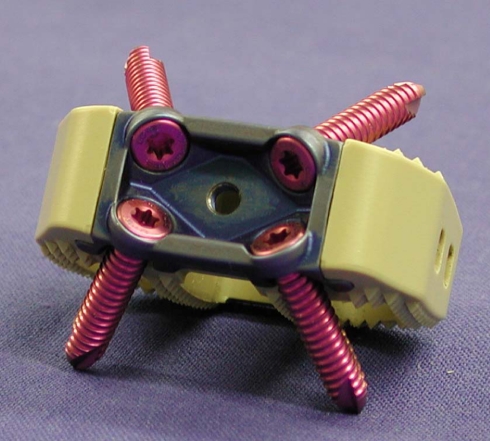
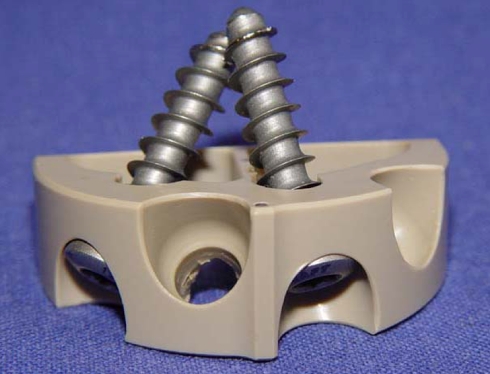
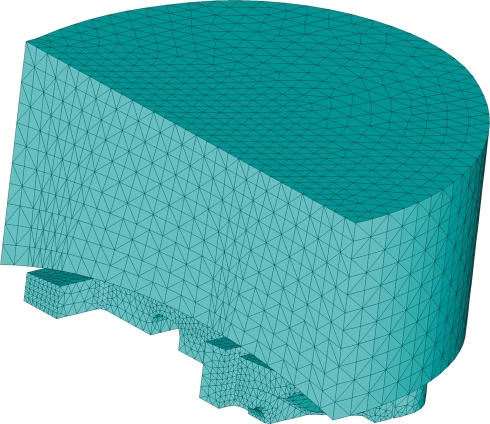
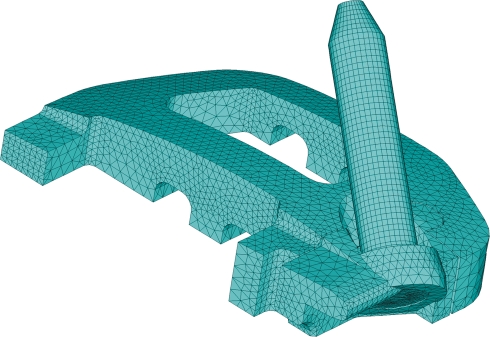
Abstract
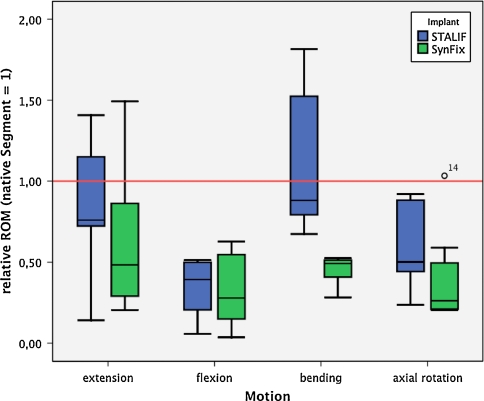
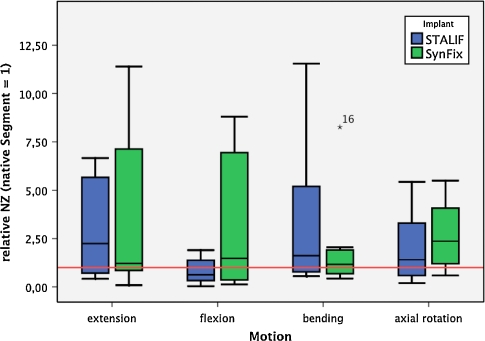
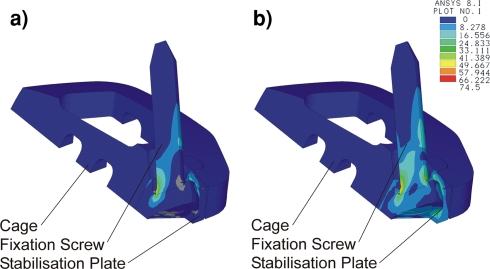
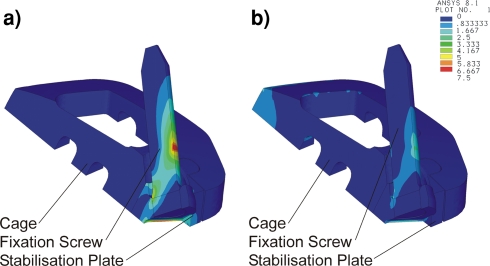
Segmental instability in degenerative disc disease is often treated with anterior lumbar interbody fusion (ALIF). Current techniques require an additional posterior approach to achieve sufficient stability. The test device is an implant which consists of a PEEK-body and an integrated anterior titanium plate hosting four diverging locking screws. The test device avoids posterior fixation by enhancing stability via the locking screws. The test device was compared to an already established stand alone interbody implant in a human cadaveric three-dimensional stiffness test. In the biomechanical test, the L4/5 motion segment of 16 human cadaveric lumbar spines were isolated and divided into two test groups. Tests were performed in flexion, extension, right and left lateral bending, right and left axial rotation. Each specimen was tested in native state first, then a discectomy was performed and either of the test implants was applied. Finite element analysis (FE) was also performed to investigate load and stress distribution within the implant in several loading conditions. The FE models simulated two load cases. These were flexion and extension with a moment of 5 Nm. The biomechanical testing revealed a greater stiffness in lateral bending for the SynFix-LR compared to the established implant. Both implants showed a significantly higher stiffness in all loading directions compared to the native segment. In flexion loading, the PEEK component takes on most of the load, whereas the majority of the extension load is put on the screws and the screw-plate junction. Clinical investigation of the test device seems reasonable based on the good results reported here.
Figures
References
-
- Arand M, Wilke HJ, Schultheiss M, Hartwig E, Kinzl L, Claes L. Comparative stability of the “Internal Fixator” and the “Universal Spine System” and the effect of crosslinking transfixating systems. A biomechanical in vitro study. Biomed Tech (Berl) 2000;45:311–316. doi: 10.1515/bmte.2000.45.11.311. - DOI - PubMed
-
- Brox JI, Sorensen R, Friis A, Nygaard O, Indahl A, Keller A, et al. Randomized clinical trial of lumbar instrumented fusion and cognitive intervention and exercises in patients with chronic low back pain and disc degeneration. Spine. 2003;28:1913–1921. doi: 10.1097/01.BRS.0000083234.62751.7A. - DOI - PubMed
Publication types
MeSH terms
Substances
LinkOut - more resources
Full Text Sources
Other Literature Sources
