


Lower airway disease in asthmatics with and without rhinitis
- PMID: 18843517
- PMCID: PMC2826710
- DOI: 10.1007/s00408-008-9119-1
Lower airway disease in asthmatics with and without rhinitis
Abstract
Study objectives: The purpose of this study was to determine if asthma with rhinitis and asthma without rhinitis represent distinct forms of disease.
Design: We performed a prospective cross-sectional study.
Participants: The study included healthy controls, participants with asthma without rhinitis, and participants with both asthma and rhinitis. Interventions We compared lung function and airway inflammation between the three groups of participants.
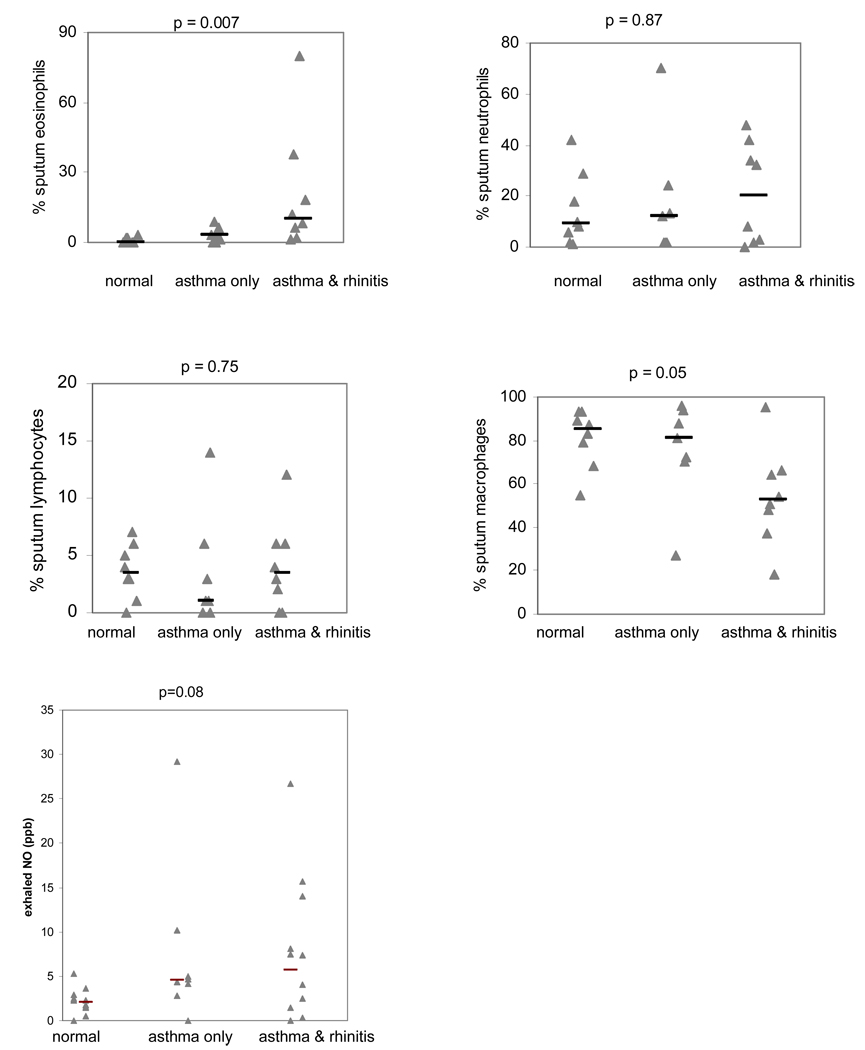
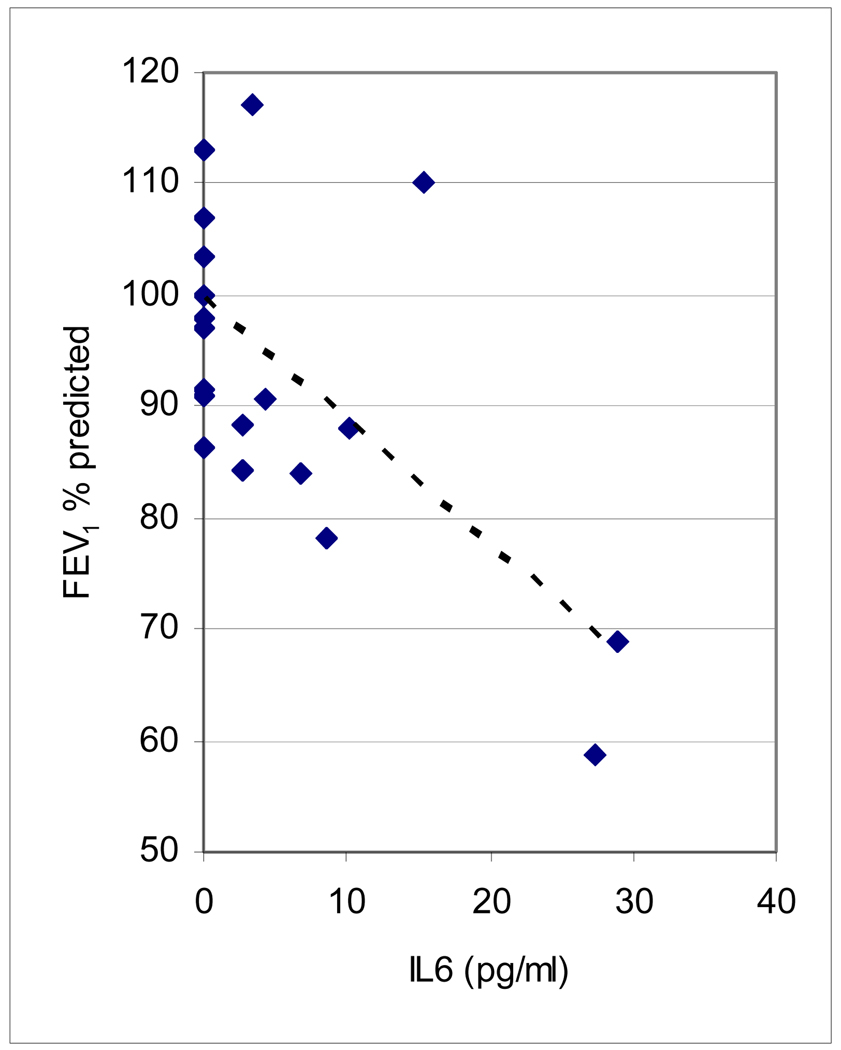
Results: We recruited 32 participants: 12 normals, 8 asthmatics without rhinitis, and 12 with rhinitis. Compared to asthmatics with rhinitis, asthmatics without rhinitis had more severe airflow limitation (FEV(1)/FVC = 60.6% [IQR = 22.8] vs. 74.8% [IQR = 7.8] and fewer induced sputum eosinophils (2.8 [IQR = 5.8] and 9.6 [IQR = 23.8], respectively). Sputum interleukin-6 correlated inversely with lung function measured by postbronchodilator FEV(1) in the study cohort (Spearman correlation coefficient = -0.55, p < 0.01).
Conclusions: Asthmatics without rhinitis tend to have lower lung function and less eosinophilic inflammation in the lung. This small study suggests that asthmatics without rhinitis represent a distinct phenotype of asthma in which low lung function is dissociated from eosinophilic cellular inflammation, and it suggests that larger studies addressing this phenotype are warrented.
Figures
References
-
- Leynaert B, Neukirch C, Kony S, Guenegou A, Bousquet J, Aubier M, et al. Association between asthma and rhinitis according to atopic sensitization in a populationbased study. JAllergy ClinImmunol. 2004;113(1):86–93. 1/2004. - PubMed
-
- Togias A. Rhinitis and asthma: evidence for respiratory system integration. JAllergy ClinImmunol. 2003;111(6):1171–1183. 6/2003. - PubMed
-
- Dixon AE, Kaminsky DA, Holbrook JT, Wise RA, Shade DM, Irvin CG. Allergic rhinitis and sinusitis in asthma: differential effects on symptoms and pulmonary function. Chest. 2006 Aug;130(2):429–435. - PubMed
-
- Bousquet J, Boushey HA, Busse WW, Canonica GW, Durham SR, Irvin CG, et al. Characteristics of patients with seasonal allergic rhinitis and concomitant asthma. ClinExpAllergy. 2004;34(6):897–903. 6/2004. - PubMed
-
- Juniper EF, Bousquet J, Abetz L, Bateman ED. Identifying 'well-controlled' and 'not well-controlled' asthma using the Asthma Control Questionnaire. Respir Med. 2006 Apr;100(4):616–621. - PubMed
