


Physical activity patterns during pregnancy
- PMID: 18845974
- PMCID: PMC3319731
- DOI: 10.1249/MSS.0b013e31817f1957
Physical activity patterns during pregnancy
Abstract
Purpose: The aim of the study was to describe the mode, frequency, duration, and intensity of physical activity among pregnant women, to explore whether these women reached the recommended levels of activity, and to explore how these patterns changed during pregnancy.
Methods: This study, as part of the third phase of the Pregnancy, Infection, and Nutrition Study, investigated physical activity among 1482 pregnant women. A recall of the different modes, frequency, duration, and intensity of physical activity during the past week was assessed in two telephone interviews at 17-22 and 27-30 wk of gestation.
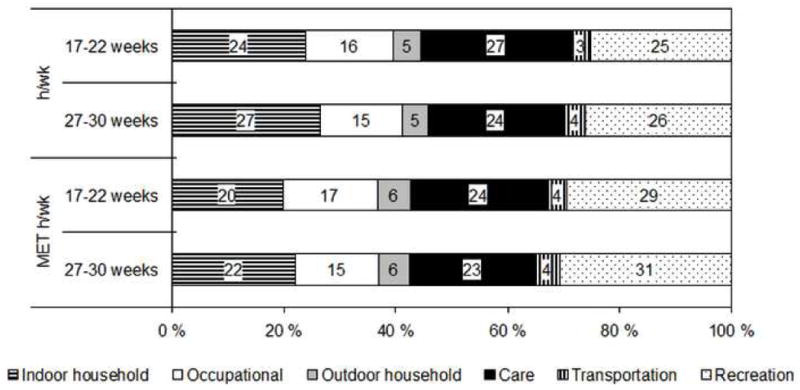
Results: Most women reported some type of physical activity during both periods. Child and adult care giving, indoor household, and recreational activities constituted the largest proportion of total reported activity. The overall physical activity level decreased during pregnancy, particularly in care giving, outdoor household, and recreational activity. Women who were active during the second and the third trimesters reported higher levels of activity in all modes of activity than those who became active or inactive during pregnancy. The majority did not reach the recommended level of physical activity.
Conclusion: These data suggest that self-reported physical activity decreased from the second to the third trimesters, and only a small proportion reached the recommended level of activity during pregnancy. Further research is needed to explore if physical activity rebounds during the postpartum period.
Conflict of interest statement
None declared.
Figures
References
-
- ACOG. Exercise during pregnancy and the postpartum period. ACOG Committee Opinion No. 267. Obstet Gynecol. 2002;99:171–3. - PubMed
-
- Ainsworth BE, Haskell WL, Leon AS, et al. Compendium of physical activities: classification of energy costs of human physical activities. Med Sci Sports Exerc. 1993;25:71–80. - PubMed
-
- Ainsworth BE, Haskell WL, Whitt MC, et al. Compendium of physical activities: an update of activity codes and MET intensities. Med Sci Sports Exerc. 2000;32:S498–504. - PubMed
-
- American College of Sports Medicine. Impact of physical activity during pregnancy and postpartum on chronic disease risk. Med Sci Sports Exerc. 2006;38:989–1006. - PubMed
-
- Borg G, Linderholm H. Perceived exertion and pulse rate during graded exercise in various age groups. Acta Med Scand. 1974;472:194–206.
Publication types
MeSH terms
Grants and funding
LinkOut - more resources
Full Text Sources
Medical
Miscellaneous
