


Associations of dietary intake and physical activity with sleep disordered breathing in the Apnea Positive Pressure Long-Term Efficacy Study (APPLES)
- PMID: 18853696
- PMCID: PMC2576325
Associations of dietary intake and physical activity with sleep disordered breathing in the Apnea Positive Pressure Long-Term Efficacy Study (APPLES)
Abstract
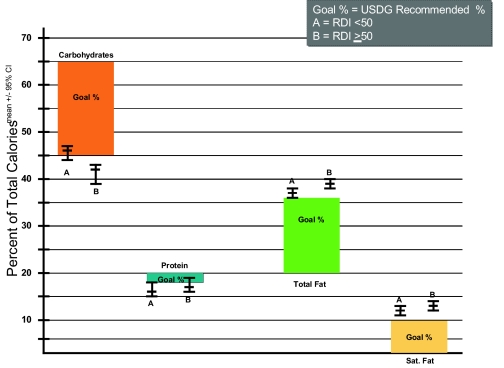
The purpose of this study was to examine whether dietary habits and physical activity patterns were independently associated with severity of sleep disordered breathing (SDB) in adults diagnosed with obstructive sleep apnea. Data collected from 320 adults participating in an ancillary study of The Apnea Positive Pressure Long-term Efficacy Study were analyzed as a cross-sectional assessment at study baseline. The respiratory disturbance index (RDI) was used as a measure of the severity of sleep disordered breathing. Separate linear regression models were fitted using RDI as the independent variable and various preselected components of dietary intake and physical activity as the dependent variables. The results indicated that even after adjusting for BMI, age, and daytime sleepiness, subjects with very severe and extremely severe SDB (RDI > or =50) consumed a diet that was higher in cholesterol, protein, total fat, and total saturated fatty acids. These findings were most evident among women. For all participants, those with RDI > or =50 in comparison to those <50, on average consumed 88.16 more mg of cholesterol per day (95% CI: 44.45 to 131.86, p < 0.001). Among the women participants only, those with RDI > or =50 in comparison to those <50, on average consumed 21.96 more grams of protein (95% CI: 2.64 to 41.29, p = 0.026), 27.75 more grams of total fat (95% CI: 3.38 to 52.11, p = 0.026), and 9.24 more grams of saturated fatty acids (95% CI: 0.67 to 17.80, p = 0.035). Furthermore, those with an RDI > or =50 had a 224.58 greater caloric expenditure than those with RDI <50 from all activities including work and sleep (95% CI: 40.98 to 408.18, p = 0.017). Although significant results were seen in a reduction of physical activity from recreational activities, this finding was explained by the increase in BMI associated with higher levels of RDI.
Figures
Comment in
-
Your tax dollars at work! or the APPLES trial bears fruit.J Clin Sleep Med. 2008 Oct 15;4(5):419-20. J Clin Sleep Med. 2008. PMID: 18853697 Free PMC article. No abstract available.
References
-
- Tishler PV, Larkin EK, Schluchter MD, Redline S. Incidence of sleep-disordered breathing in an urban adult population: the relative importance of risk factors in the development of sleep-disordered breathing. JAMA. 2003;289:2230–7. - PubMed
-
- Budhiraja R, Quan SF. Sleep-disordered breathing and cardiovascular health. Curr Opin Pulm Med. 2005;11:501–6. - PubMed
-
- Wolk R, Somers VK. Obesity-related cardiovascular disease: implications of obstructive sleep apnea. Diabetes Obes Metab. 2006;8:250–60. - PubMed
-
- Kushida CA, Nichols DA, Quan SF, et al. The Apnea Positive Pressure Long-term Efficacy Study (APPLES): rationale, design, methods, and procedures. J Clin Sleep Med. 2006;2:288–300. - PubMed
-
- Vgontzas AN, Papanicolaou DA, Bixler EO, et al. Sleep apnea and daytime sleepiness and fatigue: relation to visceral obesity, insulin resistance, and hypercytokinemia. J Clin Endocrinol Metab. 2000;85:1151–8. - PubMed