


Clinical guideline for the evaluation and management of chronic insomnia in adults
- PMID: 18853708
- PMCID: PMC2576317
Clinical guideline for the evaluation and management of chronic insomnia in adults
Abstract
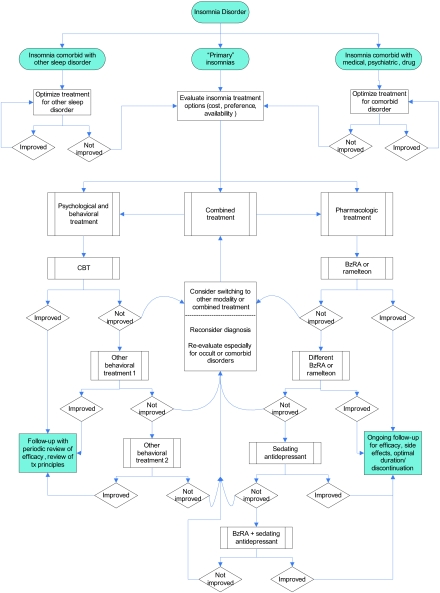
Insomnia is the most prevalent sleep disorder in the general population, and is commonly encountered in medical practices. Insomnia is defined as the subjective perception of difficulty with sleep initiation, duration, consolidation, or quality that occurs despite adequate opportunity for sleep, and that results in some form of daytime impairment.1 Insomnia may present with a variety of specific complaints and etiologies, making the evaluation and management of chronic insomnia demanding on a clinician's time. The purpose of this clinical guideline is to provide clinicians with a practical framework for the assessment and disease management of chronic adult insomnia, using existing evidence-based insomnia practice parameters where available, and consensus-based recommendations to bridge areas where such parameters do not exist. Unless otherwise stated, "insomnia" refers to chronic insomnia, which is present for at least a month, as opposed to acute or transient insomnia, which may last days to weeks.
Figures

References
-
- American Academy of Sleep Medicine. International classification of sleep disorders, 2nd ed.: diagnostic and coding manual. Westchester, IL: American Academy of Sleep Medicine; 2005.
-
- Littner M Standards of Practice Committee of the American Academy of Sleep Medicine. Practice parameters for using polysomnography to evaluate insomnia: an update for 2002. Sleep. 2003;26:754–60. - PubMed
-
- Littner M, et al. Standards of Practice Committee of the American Academy of Sleep Medicine. Practice parameters for clinical use of the multiple sleep latency test and the maintenance of wakefulness test. Sleep. 2005;28:113–21. - PubMed
-
- Chesson AL, Jr, et al. Standards of Practice Committee of the American Academy of Sleep Medicine. Practice parameters for the nonpharmacologic treatment of chronic insomnia. An American Academy of Sleep Medicine report. Sleep. 1999;22:1128–33. - PubMed
-
- Morgenthaler T, et al. Practice parameters for the psychological and behavioral treatment of insomnia: an update. An American Academy of Sleep Medicine report. Sleep. 2006;29:1415–9. - PubMed
Publication types
MeSH terms
Substances
LinkOut - more resources
Full Text Sources
Other Literature Sources
Medical