


Satisfaction with web-based training in an integrated healthcare delivery network: do age, education, computer skills and attitudes matter?
- PMID: 18922178
- PMCID: PMC2575204
- DOI: 10.1186/1472-6920-8-48
Satisfaction with web-based training in an integrated healthcare delivery network: do age, education, computer skills and attitudes matter?
Abstract
Background: Healthcare institutions spend enormous time and effort to train their workforce. Web-based training can potentially streamline this process. However the deployment of web-based training in a large-scale setting with a diverse healthcare workforce has not been evaluated. The aim of this study was to evaluate the satisfaction of healthcare professionals with web-based training and to determine the predictors of such satisfaction including age, education status and computer proficiency.
Methods: Observational, cross-sectional survey of healthcare professionals from six hospital systems in an integrated delivery network. We measured overall satisfaction to web-based training and response to survey items measuring Website Usability, Course Usefulness, Instructional Design Effectiveness, Computer Proficiency and Self-learning Attitude.
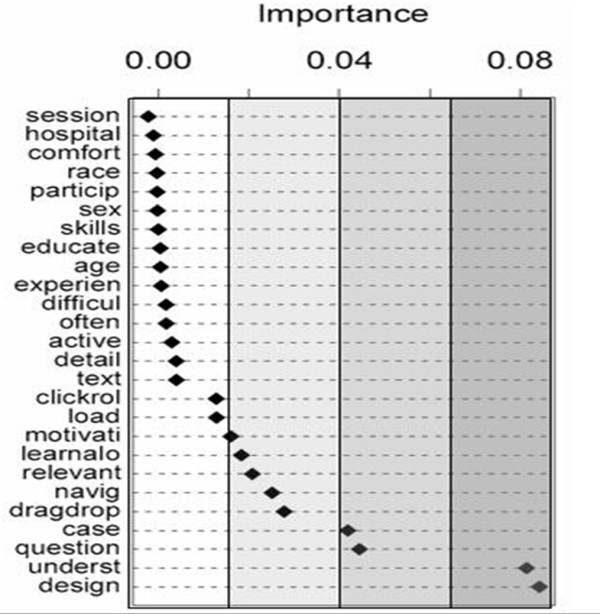
Results: A total of 17,891 healthcare professionals completed the web-based training on HIPAA Privacy Rule; and of these, 13,537 completed the survey (response rate 75.6%). Overall course satisfaction was good (median, 4; scale, 1 to 5) with more than 75% of the respondents satisfied with the training (rating 4 or 5) and 65% preferring web-based training over traditional instructor-led training (rating 4 or 5). Multivariable ordinal regression revealed 3 key predictors of satisfaction with web-based training: Instructional Design Effectiveness, Website Usability and Course Usefulness. Demographic predictors such as gender, age and education did not have an effect on satisfaction.
Conclusion: The study shows that web-based training when tailored to learners' background, is perceived as a satisfactory mode of learning by an interdisciplinary group of healthcare professionals, irrespective of age, education level or prior computer experience. Future studies should aim to measure the long-term outcomes of web-based training.
Figures
References
-
- Morrissey J. Internet dominates providers' line of sight. Mod Healthc. 2000;30:72–82. - PubMed
-
- Nelson EA. E-learning. A practical solution for training and tracking in patient-care settings. Nurs Adm Q. 2003;27:29–32. - PubMed
-
- Howatson-Jones L. Designing web-based education courses for nurses. Nurs Stand. 2004;19:41–4. - PubMed
Publication types
MeSH terms
LinkOut - more resources
Full Text Sources
