


Transcriptome analysis of proliferating Arabidopsis endosperm reveals biological implications for the control of syncytial division, cytokinin signaling, and gene expression regulation
- PMID: 18923020
- PMCID: PMC2593665
- DOI: 10.1104/pp.108.128108
Transcriptome analysis of proliferating Arabidopsis endosperm reveals biological implications for the control of syncytial division, cytokinin signaling, and gene expression regulation
Abstract
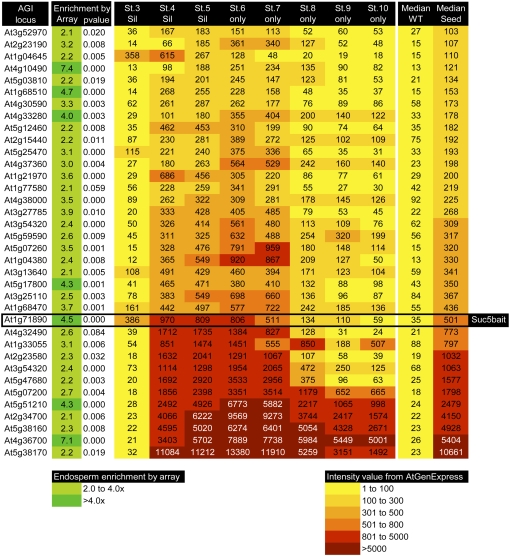
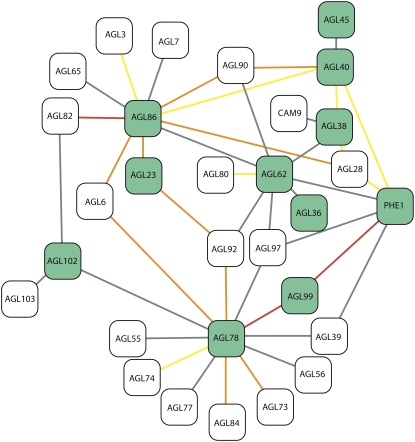
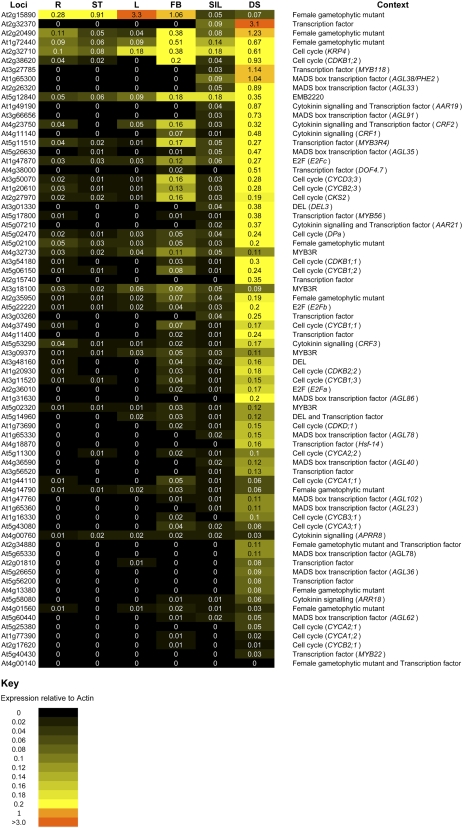
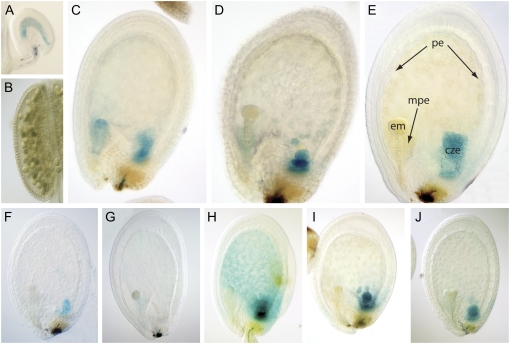
During the early stages of seed development, Arabidopsis (Arabidopsis thaliana) endosperm is syncytial and proliferates rapidly through repeated rounds of mitosis without cytokinesis. This stage of endosperm development is important in determining final seed size and is a model for studying aspects of cellular and molecular biology, such as the cell cycle and genomic imprinting. However, the small size of the Arabidopsis seed makes high-throughput molecular analysis of the early endosperm technically difficult. Laser capture microdissection enabled high-resolution transcript analysis of the syncytial stage of Arabidopsis endosperm development at 4 d after pollination. Analysis of Gene Ontology representation revealed a developmental program dominated by the expression of genes associated with cell cycle, DNA processing, chromatin assembly, protein synthesis, cytoskeleton- and microtubule-related processes, and cell/organelle biogenesis and organization. Analysis of core cell cycle genes implicates particular gene family members as playing important roles in controlling syncytial cell division. Hormone marker analysis indicates predominance for cytokinin signaling during early endosperm development. Comparisons with publicly available microarray data revealed that approximately 800 putative early seed-specific genes were preferentially expressed in the endosperm. Early seed expression was confirmed for 71 genes using quantitative reverse transcription-polymerase chain reaction, with 27 transcription factors being confirmed as early seed specific. Promoter-reporter lines confirmed endosperm-preferred expression at 4 d after pollination for five transcription factors, which validates the approach and suggests important roles for these genes during early endosperm development. In summary, the data generated provide a useful resource providing novel insight into early seed development and identify new target genes for further characterization.
Figures
Comment in
-
Identification of cytoskeleton-associated genes expressed during Arabidopsis syncytial endosperm development.Plant Signal Behav. 2009 Sep;4(9):883-6. doi: 10.4161/psb.4.9.9461. Epub 2009 Sep 7. Plant Signal Behav. 2009. PMID: 19847098 Free PMC article.
References
-
- Araki S, Ito M, Soyano T, Nishihama R, Machida Y (2004) Mitotic cyclins stimulate the activity of c-Myb-like factors for transactivation of G2/M phase-specific genes in tobacco. J Biol Chem 279 32979–32988 - PubMed
-
- Baroux C, Pien S, Grossniklaus U (2007) Chromatin modification and remodeling during early seed development. Curr Opin Genet Dev 17 473–479 - PubMed
-
- Baud S, Wuilleme S, Lemoine R, Kronenberger J, Caboche M, Lepiniec L, Rochat C (2005) The AtSUC5 sucrose transporter specifically expressed in the endosperm is involved in early seed development in Arabidopsis. Plant J 43 824–836 - PubMed
-
- Berger F (2003) Endosperm: the crossroad of seed development. Curr Opin Plant Biol 6 42–50 - PubMed
MeSH terms
Substances
Associated data
- Actions
LinkOut - more resources
Full Text Sources
Molecular Biology Databases
