


New approaches to the treatment of opioid-induced constipation
- PMID: 18924451
- PMCID: PMC4370832
New approaches to the treatment of opioid-induced constipation
Abstract
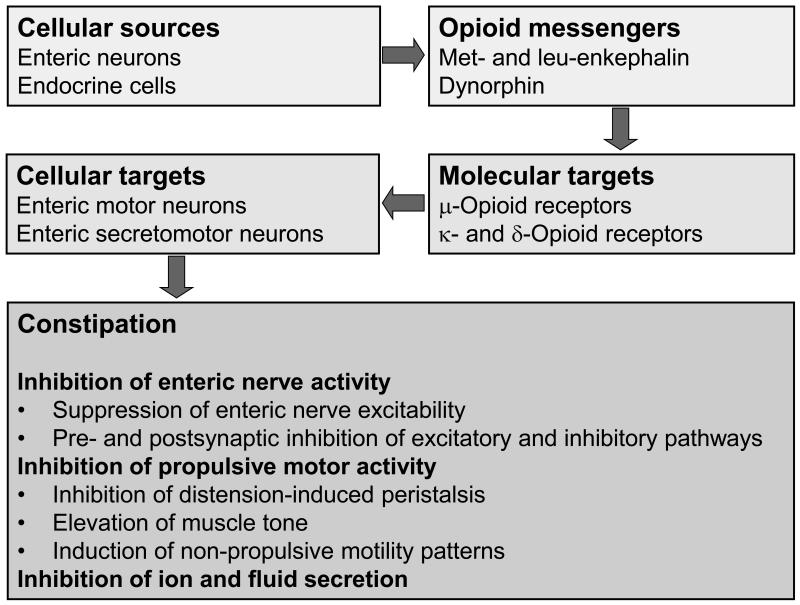
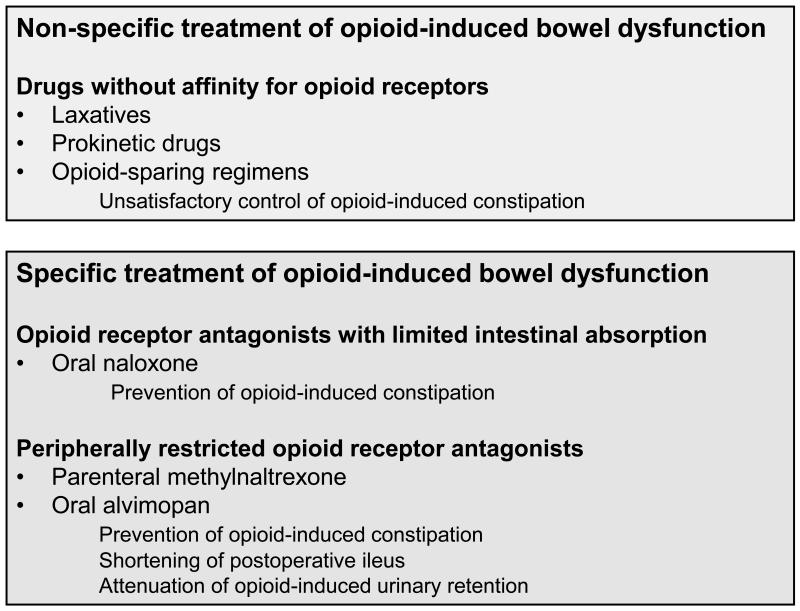
Opiates are indispensable for the treatment of moderate to severe pain. The gastrointestinal tract is one of the major victims of the undesired effects of opiates, because the enteric nervous system expresses all major subtypes of opioid receptors. As a result, propulsive motility and secretory processes in the gut are inhibited by opioid analgesics, and the ensuing constipation is one of the most frequent and troublesome adverse reactions. Many treatments involving laxatives, prokinetic drugs and opioid-sparing regimens have been explored to circumvent opioid-induced bowel dysfunction, but the outcome has in general been unsatisfactory. Specific antagonism of peripheral opioid receptors offers a more rational approach to the management of the adverse actions of opioid analgesics in the gut. This goal is currently addressed by the use of opioid receptor antagonists with limited absorption such as oral naloxone and by the development of peripherally restricted opioid receptor antagonists such as methylnaltrexone and alvimopan. These investigational drugs hold considerable promise in preventing constipation due to opiate treatment, whereas the analgesic action of opiates remains unabated. Postoperative ileus associated with opioid-induced postsurgical pain control is likewise ameliorated by the compounds. With this proof of concept, several phase III studies are under way to define optimal dosage, dosing regimen as well as long-term efficacy and safety of methylnaltrexone and alvimopan. In addition, there is preliminary evidence that these peripherally restricted opioid receptor antagonists may act as prokinetic drugs in their own right.
Figures
References
-
- Meissner W, Schmidt U, Hartmann M, Kath R, Reinhart K. Oral naloxone reverses opioid-associated constipation. Pain. 2000;84:105–109. - PubMed
-
- Kurz A, Sessler DI. Opioid-induced bowel dysfunction: pathophysiology and potential new therapies. Drugs. 2003;63:649–671. - PubMed
-
- Herbert MK, Holzer P. Standardized concept for the treatment of gastrointestinal dysmotility in critically ill patients--current status and future options. Clin Nutr. 2008;27:25–41. - PubMed
-
- Kromer W. Endogenous and exogenous opioids in the control of gastrointestinal motility and secretion. Pharmacol Rev. 1988;40:121–162. - PubMed
-
- De Luca A, Coupar IM. Insights into opioid action in the intestinal tract. Pharmacol Ther. 1996;69:103–115. - PubMed
Publication types
MeSH terms
Substances
Grants and funding
LinkOut - more resources
Full Text Sources
Other Literature Sources
Medical
Research Materials