


Progressive resistance training in elderly HIV-positive patients: does it work?
- PMID: 18925321
- PMCID: PMC2664719
- DOI: 10.1590/s1807-59322008000500009
Progressive resistance training in elderly HIV-positive patients: does it work?
Abstract
Background: Elderly people present alterations in body composition and physical fitness, compromising their quality of life. Chronic diseases, including HIV/AIDS, worsen this situation. Resistance exercises are prescribed to improve fitness and promote healthier and independent aging. Recovery of strength and physical fitness is the goal of exercise in AIDS wasting syndrome.
Objective: This study describes a case series of HIV-positive elderly patients who participated in a progressive resistance training program and evaluates their body composition, muscular strength, physical fitness and the evolution of CD4+ and CD8+ cell counts.
Methods: Subjects were prospectively recruited for nine months. The training program consisted of three sets of 8-12 repetitions of leg press, seated row, lumbar extension and chest press, performed with free weight machines hts, twice/week for one year. Infectious disease physicians followed patients and reported all relevant clinical data. Body composition was assessed by anthropometric measures and dual-energy x-ray absorptiometry before and after the training program.
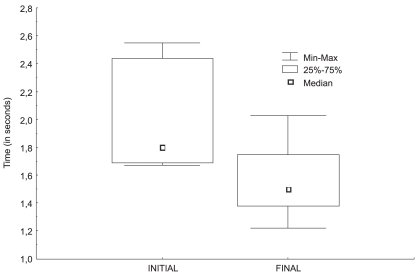
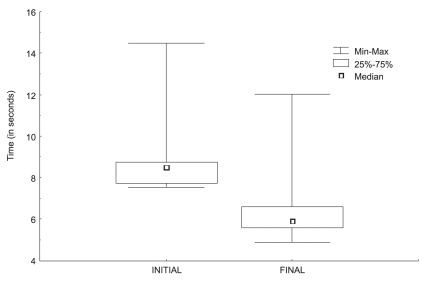
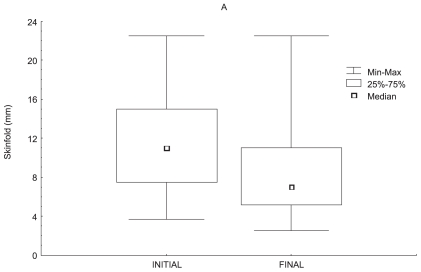
Results: Fourteen patients, aged 62-71 years old, of both genders, without regular physical activity who had an average of nine years of HIV/AIDS history were enrolled. The strengths of major muscle groups increased (74%-122%, p=0.003-0.021) with a corresponding improvement in sit-standing and walking 2.4 m tests (p=0.003). There were no changes in clinical conditions and body composition measures, but triceps and thigh skinfolds were significantly reduced (p=0.037). In addition, there were significant increases in the CD4+ counts (N=151 cells; p=0.008) and the CD4+/CD8+ ratio (0.63 to 0.81, p=0.009).
Conclusion: Resistance training increased strength, improved physical fitness, reduced upper and lower limb skinfolds, and were associated with an improvement in the CD4+ and CD4+/CD8+ counts in HIV positive elderly patients without significant side effects.
Figures
References
-
- Instituto Brasileiro de Geografia e Estatística – IBGE. Síntese de Indicadores Sociais 2005. http://www.ibge.gov.br/home/estatistica/populacao/condicaodevida/indicad... (Apr 12, 2006)
-
- Hunter GR, McCarthy JP, Bamman MM. Effects of resistance training on older adults. Sports Med. 2004;34:329–48. - PubMed
-
- Kraemer WJ, Adams K, Cafarelli E, Dudley GA, Dooly C, Feigenbaum MS, et al. American College of Sports Medicine. Position Stand on Progression models in resistance training for healthy adults. Med Sci Sports Exerc. 2002;34:364–80. - PubMed
-
- Winett RA, Carpinelli RN. Potential Health – related benefits of resistance training. Preventive Medicine. 2001;33:503–13. - PubMed
-
- Utter AC, Nieman DC, Shannonhouse EM, Butterworth DE, Nieman CN. Influence of diet and/or exercise on body composition and cardiorespiratory fitness in obese women. Int J Sport Nutrition. 1998;8:213–22. - PubMed
MeSH terms
LinkOut - more resources
Full Text Sources
Medical
Research Materials
