


Encapsulation of human islets in novel inhomogeneous alginate-ca2+/ba2+ microbeads: in vitro and in vivo function
- PMID: 18925451
- PMCID: PMC3748134
- DOI: 10.1080/10731190802369755
Encapsulation of human islets in novel inhomogeneous alginate-ca2+/ba2+ microbeads: in vitro and in vivo function
Abstract
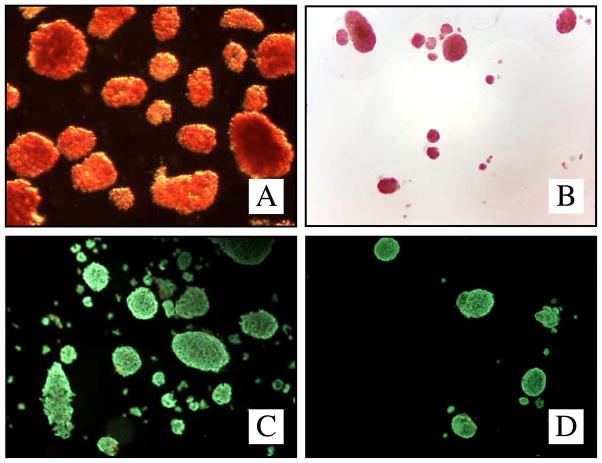
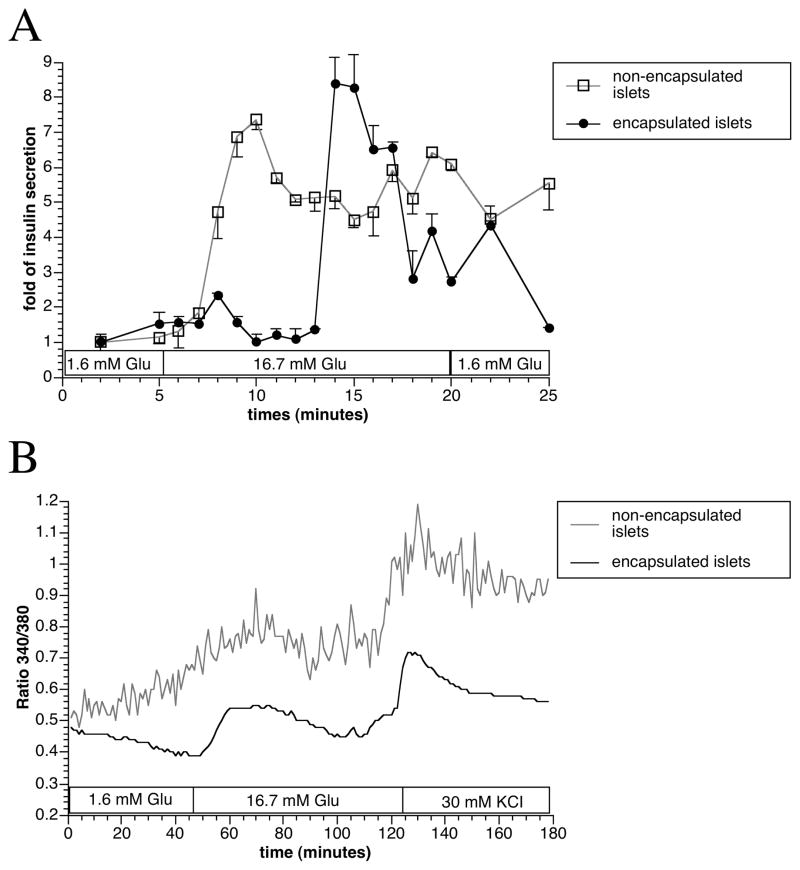
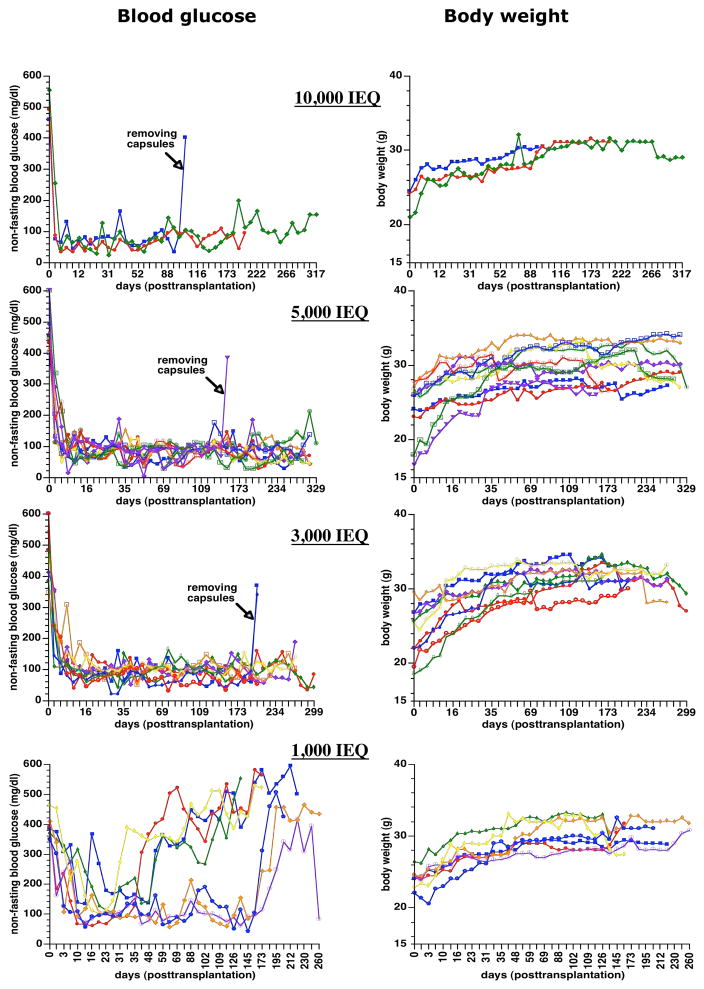
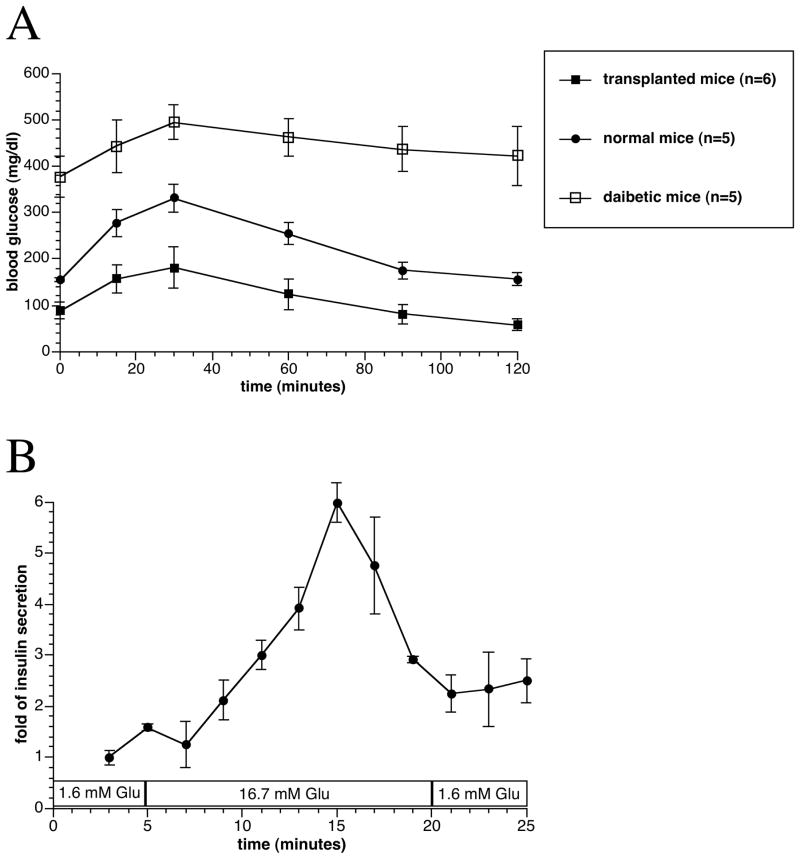
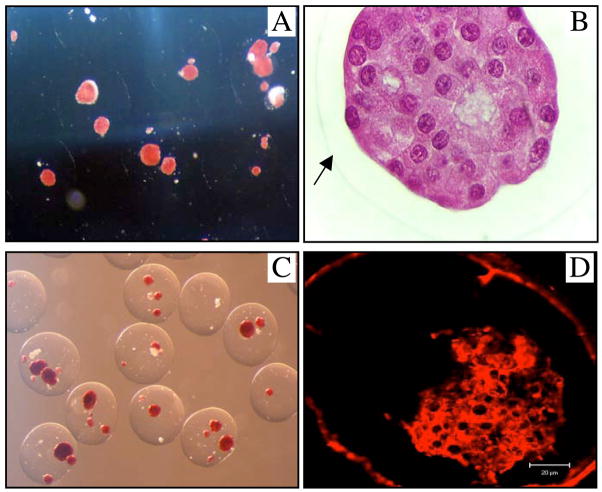
Microencapsulation may allow for immunosuppression-free islet transplantation. Herein we investigated whether human islets can be shipped safely to a remote encapsulation core facility and maintain in vitro and in vivo functionality. In non-encapsulated islets before and encapsulated islets after shipment, viability was 88.3+/-2.5 and 87.5+/-2.7% (n=6, p=0.30). Stimulation index after static glucose incubation was 5.4+/-0.5 and 6.3+/-0.4 (n=6, p=0.18), respectively. After intraperitoneal transplantation, long-term normoglycemia was consistently achieved with 3,000, 5,000, and 10,000 IEQ encapsulated human islets. When transplanting 1,000 IEQ, mice returned to hyperglycemia after 30-55 (n=4/7) and 160 days (n=3/7). Transplanted mice showed human oral glucose tolerance with lower glucose levels than non-diabetic control mice. Capsules retrieved after transplantation were intact, with only minimal overgrowth. This study shows that human islets maintained the viability and in vitro function after encapsulation and the inhomogeneous alginate-Ca(2+)/Ba(2+) microbeads allow for long-term in vivo human islet graft function, despite long-distance shipment.
Figures
References
-
- Shapiro AM, Ricordi C, Hering BJ, Auchincloss H, Lindblad R, Robertson RP, et al. International trial of the Edmonton protocol for islet transplantation. N Engl J Med. 2006;355(13):1318–1330. - PubMed
-
- Thompson DM, Fung MA, Warnock GL. Islet transplantation. N Engl J Med. 2007;356(9):964. author reply 964–965. - PubMed
-
- Alejandro R, Lehmann R, Ricordi C, Kenyon NS, Angelico MC, Burke G, et al. Long-term function (6 years) of islet allografts in type 1 diabetes. Diabetes. 1997;46(12):1983–1989. - PubMed
-
- Oberholzer J, Triponez F, Mage R, Andereggen E, Buhler L, Cretin N, et al. Human islet transplantation: lessons from 13 autologous and 13 allogeneic transplantations. Transplantation. 2000;69(6):1115–1123. - PubMed
-
- van de Linde P, Boog PJ, Tysma OM, Elliott JF, Roelen DL, Claas FH, et al. Selective unresponsiveness to beta cell autoantigens after induction immunosuppression in pancreas transplantation with anti-interleukin-2 receptor antibody versus anti-thymocyte globulin. Clin Exp Immunol. 2007 - PMC - PubMed
Publication types
MeSH terms
Substances
Grants and funding
LinkOut - more resources
Full Text Sources
Other Literature Sources
Medical
Miscellaneous
