


Species-specific regulation of PXR/CAR/ER-target genes in the mouse and rat liver elicited by o, p'-DDT
- PMID: 18925944
- PMCID: PMC2577663
- DOI: 10.1186/1471-2164-9-487
Species-specific regulation of PXR/CAR/ER-target genes in the mouse and rat liver elicited by o, p'-DDT
Abstract
Background: Dichlorodiphenyltrichloroethane (DDT) is a persistent estrogenic organochlorine pesticide that is a rodent hepatic tumor promoter, with inconclusive carcinogenicity in humans. We have previously reported that o, p'-DDT elicits primarily PXR/CAR-mediated activity, rather than ER-mediated hepatic responses, and suggested that CAR-mediated effects, as opposed to ER-mediated effects, may be more important in tumor promotion in the rat liver. To further characterize species-specific hepatic responses, gene expression analysis, with complementary histopathology and tissue level analyses were investigated in immature, ovariectomized C57BL/6 mice treated with 300 mg/kg o, p'-DDT, and compared to Sprague-Dawley rat data.
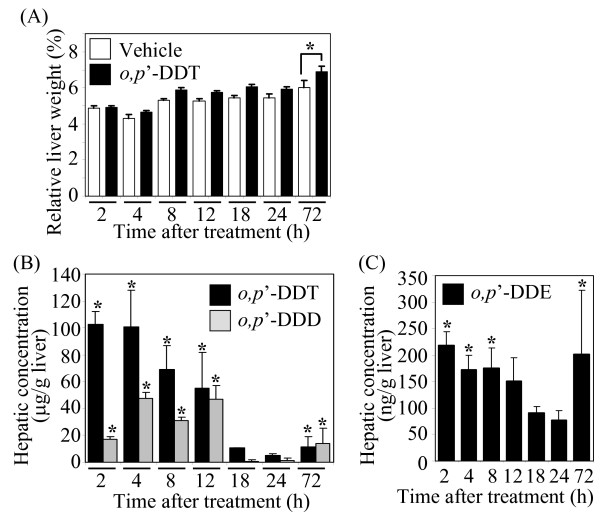
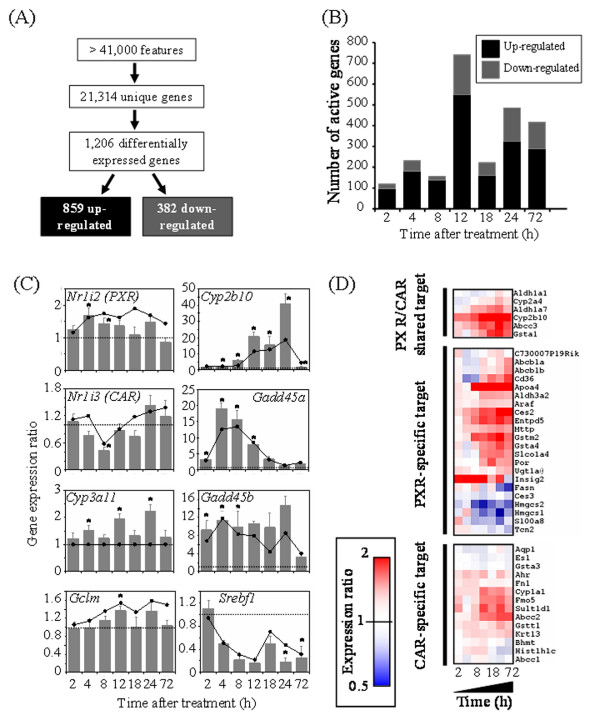
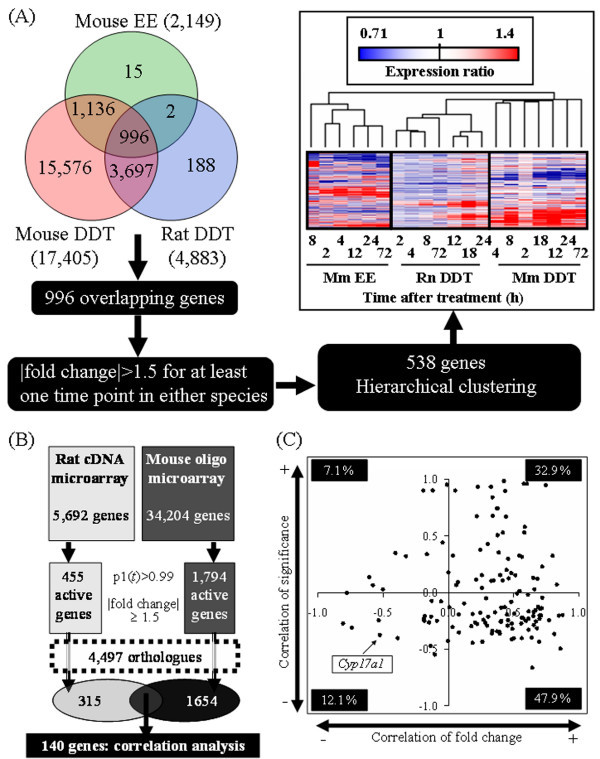
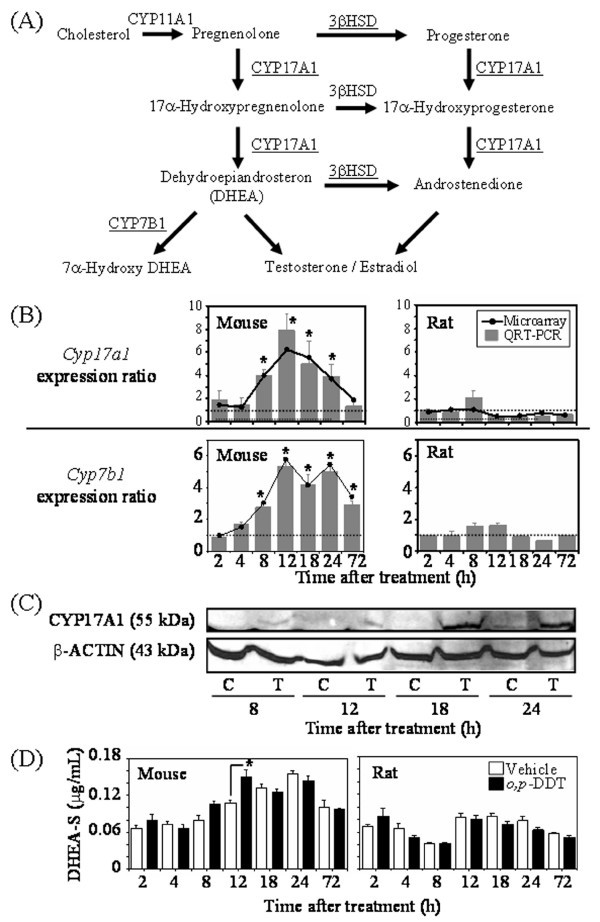
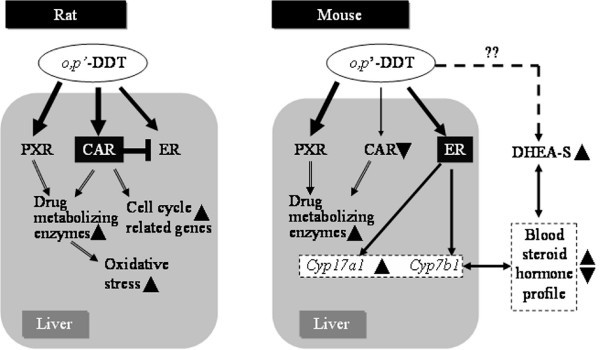
Results: Rats and mice exhibited negligible histopathology with rapid o, p'-DDT metabolism. Gene expression profiles were also similar, exhibiting PXR/CAR regulation with the characteristic induction of Cyp2b10 and Cyp3a11. However, PXR-specific target genes such as Apoa4 or Insig2 exhibited more pronounced induction compared to CAR-specific genes in the mouse. In addition, mouse Car mRNA levels decreased, possibly contributing to the preferential activation of mouse PXR. ER-regulated genes Cyp17a1 and Cyp7b1 were also induced, suggesting o, p'-DDT also elicits ER-mediated gene expression in the mouse, while ER-mediated effects were negligible in the rat, possibly due to the inhibitory effects of CAR on ER activities. In addition, o, p'-DDT induced Gadd45a, Gadd45b and Cdkn1, suggesting DNA damage may be an additional risk factor. Furthermore, elevated blood DHEA-S levels at 12 h after treatment in the mouse may also contribute to the endocrine-related effects of o, p'-DDT.
Conclusion: Although DDT is known to cause rodent hepatic tumors, the marked species differences in PXR/CAR structure, expression patterns and ligand preference as well as significant species-specific differences in steroidogenesis, especially CYP17A1 expression and activity, confound the extrapolation of these results to humans. Nevertheless, the identification of potential modes of action as well as species-specific responses may assist in the selection and further development of more appropriate models for assessing the toxicity of DDT to humans and wildlife.
Figures
References
-
- McGlynn KA, Abnet CC, Zhang M, Sun XD, Fan JH, O'Brien TR, Wei WQ, Ortiz-Conde BA, Dawsey SM, Weber JP, et al. Serum concentrations of 1,1,1-trichloro-2,2-bis(p-chlorophenyl)ethane (DDT) and 1,1-dichloro-2,2-bis(p-chlorophenyl)ethylene (DDE) and risk of primary liver cancer. J Natl Cancer Inst. 2006;98:1005–1010. - PubMed
-
- DDT and its derivatives http://www.inchem.org/documents/ehc/ehc/ehc009.htm
Publication types
MeSH terms
Substances
Grants and funding
LinkOut - more resources
Full Text Sources
Miscellaneous
