


Cocaine effects during D-amphetamine maintenance: a human laboratory analysis of safety, tolerability and efficacy
- PMID: 18926645
- PMCID: PMC2663379
- DOI: 10.1016/j.drugalcdep.2008.08.009
Cocaine effects during D-amphetamine maintenance: a human laboratory analysis of safety, tolerability and efficacy
Abstract
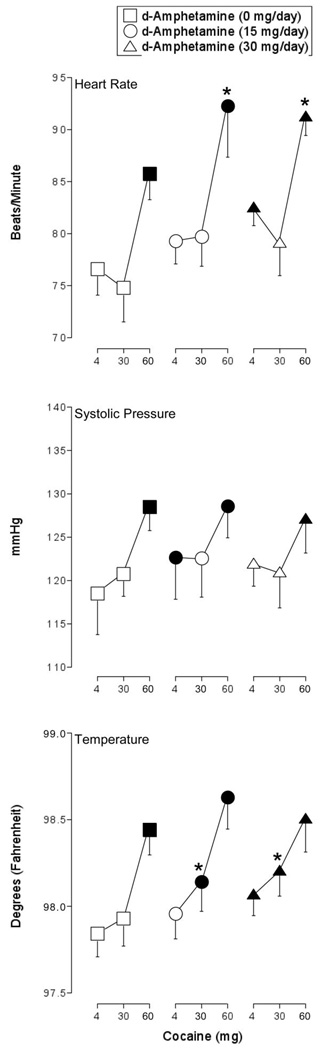
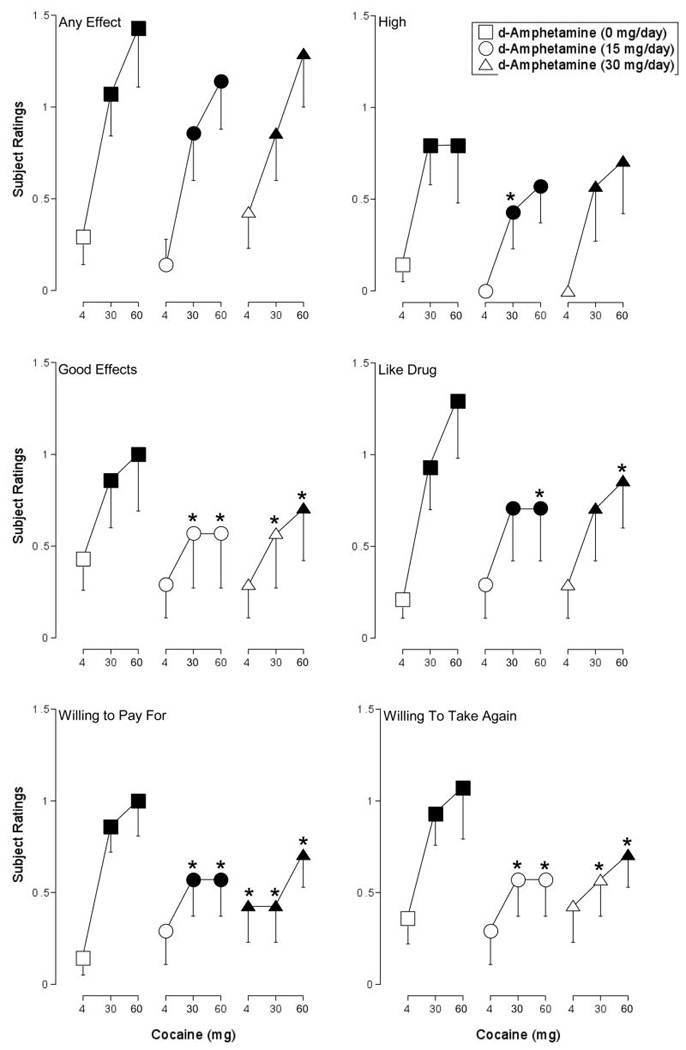
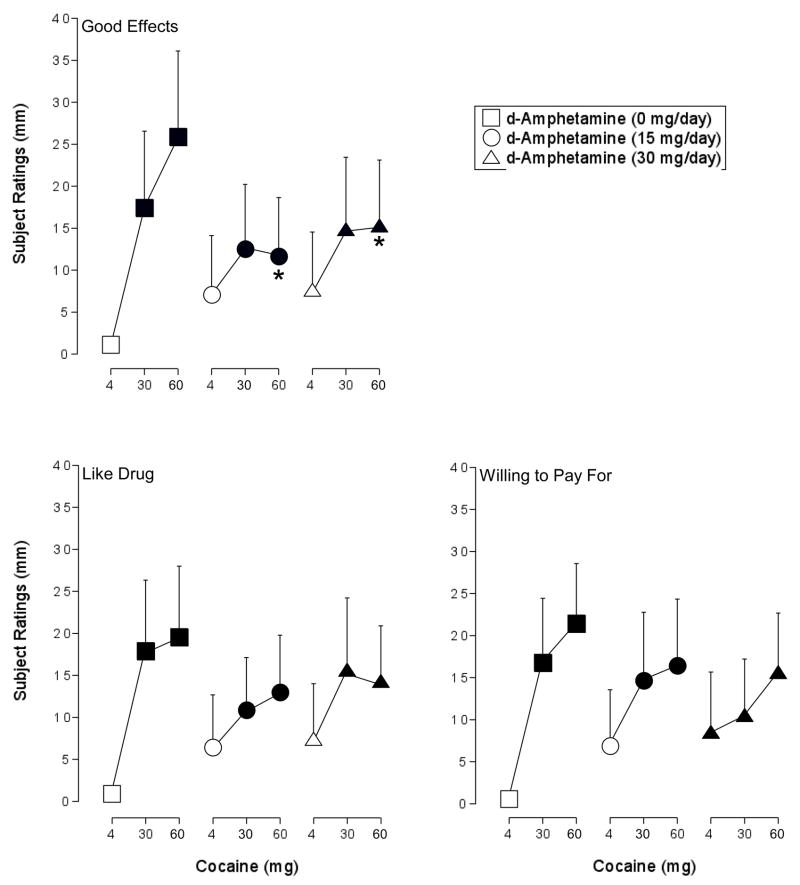
Agonist replacement therapies are effective for managing substance abuse disorders including nicotine and opioid dependence. The results of preclinical laboratory studies and clinical trials indicate that agonist replacements like D-amphetamine may be a viable option for managing cocaine dependence. This experiment determined the physiological and behavioral effects of cocaine during D-amphetamine maintenance in seven cocaine-dependent participants. We predicted cocaine would be well tolerated during D-amphetamine maintenance. We also predicted D-amphetamine would attenuate the behavioral effects of cocaine. After 3-5 days of D-amphetamine maintenance (0, 15, and 30 mg/day), volunteers were administered ascending doses of cocaine (4, 30, 60 mg, i.n.) within a single session. Cocaine doses were separated by 90 min. Cocaine produced prototypical physiological (e.g., increased heart rate, blood pressure, and body temperature) and subject-rated (e.g., increased ratings of Good Effects) effects. During maintenance on the highest D-amphetamine dose, the heart rate increasing effects of cocaine were larger than observed during placebo maintenance. These effects were not clinically significant and no unexpected or serious adverse events were observed. D-amphetamine attenuated some of the subject-rated effects of cocaine. These results are concordant with those of previous preclinical studies, human laboratory experiments and clinical trials, further suggesting that agonist replacement therapy may be a viable strategy for managing cocaine abuse. Additional research in humans is needed to determine whether D-amphetamine attenuates the effects of cocaine under different experimental conditions (e.g., higher cocaine doses) and behavioral arrangements (e.g., drug self-administration or discrimination).
Figures
References
-
- Castells X, Casas M, Vidal X, Bosch R, Roncero C, Ramos-Quiroga JA, Capella D. Efficacy of central nervous system stimulant treatment for cocaine dependence: a systematic review and meta-analysis of randomized controlled clinical trials. Addiction. 2007;102:1871–1887. - PubMed
-
- Collins SL, Levin FR, Foltin RW, Kleber HD, Evans SM. Response to cocaine, alone and in combination with methylphenidate, in cocaine abusers with ADHD. Drug Alcohol Depend. 2006;82:158–67. - PubMed
-
- de Lima MS, de Oliveira Soares BG, Reisser AA, Farrell M. Pharmacological treatment of cocaine dependence: A systematic review. Addiction. 2002;97:931–949. - PubMed
-
- Di Marino ME, Haberny KA, Felch LJ, Walsh SL, Preston KL, Bigelow GE. Development of a subject- rated rating scale sensitive to acute cocaine administration. In: Harris L, editor. Problems of Drug Dependence, 1997: Proceedings of the 59th Annual Scientific Meeting. National Institute on Drug Abuse Research Monograph Series; Rockville, MD. 1998. p. 139.
-
- Dudish-Poulsen SA, Hatsukami DK. Dissociation between subjective and behavioral responses after cocaine stimuli presentation. Drug Alcohol Depend. 1997;47:1–9. - PubMed
Publication types
MeSH terms
Substances
Grants and funding
LinkOut - more resources
Full Text Sources
Medical
