


Semantic memory in schizophrenia: association with cell membrane essential fatty acids
- PMID: 18929465
- PMCID: PMC2962952
- DOI: 10.1016/j.schres.2008.03.009
Semantic memory in schizophrenia: association with cell membrane essential fatty acids
Abstract
Introduction: Semantic memory and language deficits are associated with schizophrenia. Understanding how these systems operate in this disorder will likely require a multi-factorial model that explains their linkages with cognition and modulation by dopamine. A biological factor that may provide causal convergence for these connections is cell membrane composition and dynamics.
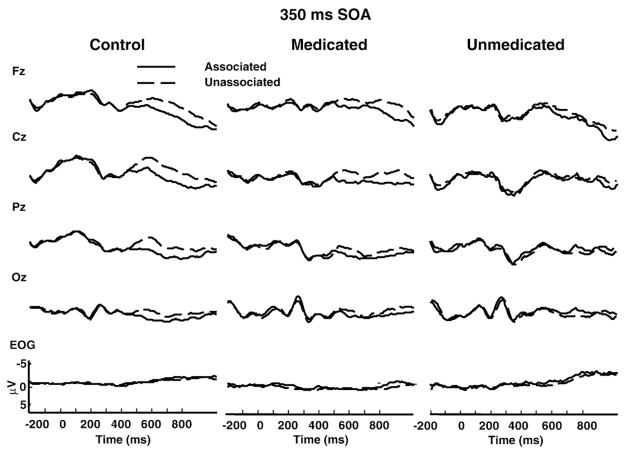
Methods: N400 is an electrophysiological measure of semantic memory and language that is sensitive to deficits in schizophrenia. Relationships among N400, cognition, dopamine, and cell membrane polyunsaturated fatty acids (PUFAs) were examined for patients tested under medicated (haloperidol only) and unmedicated (placebo) conditions. Relationships between these factors and clinical symptoms were also evaluated. The sample included 37 male schizophrenia inpatients and 34 male normal controls. The N400 priming effect was measured from visual event-related potentials recorded during a semantic priming-lexical decision task, in which semantic association (related versus unrelated words) and presentation rate (Stimulus Onset Asynchrony/SOAs: 350 and 950 ms) were varied.
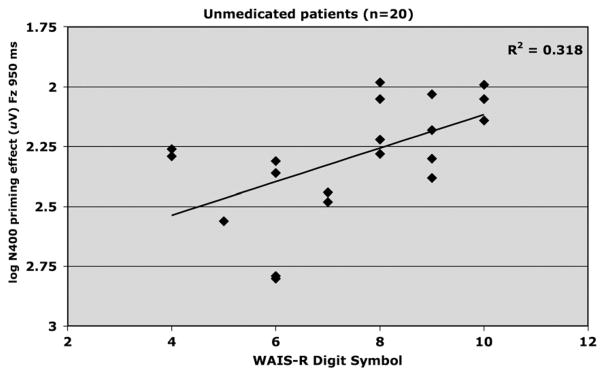
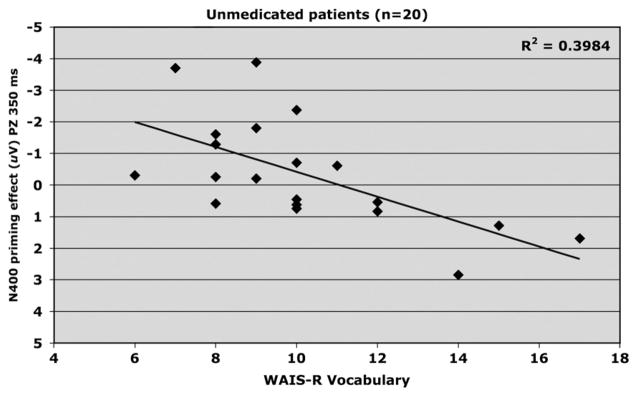
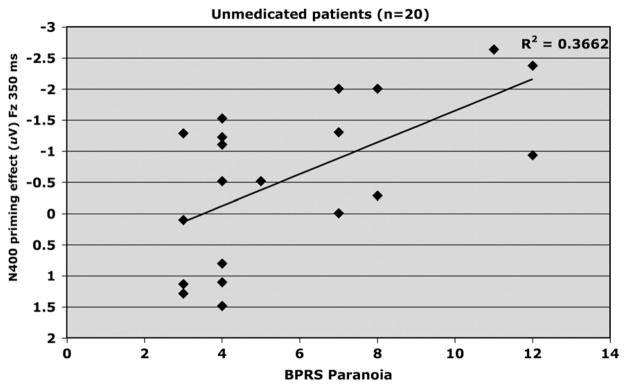
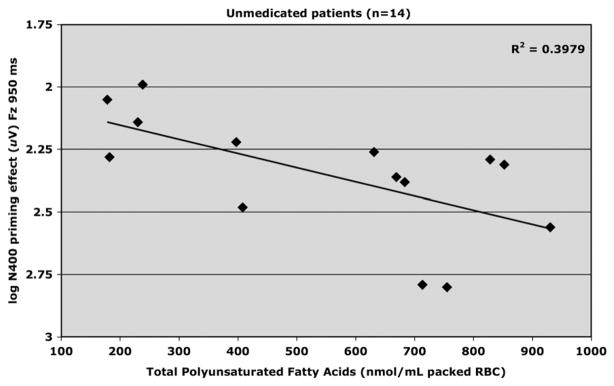
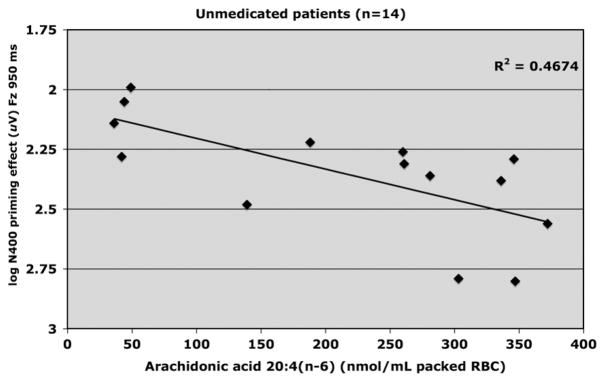
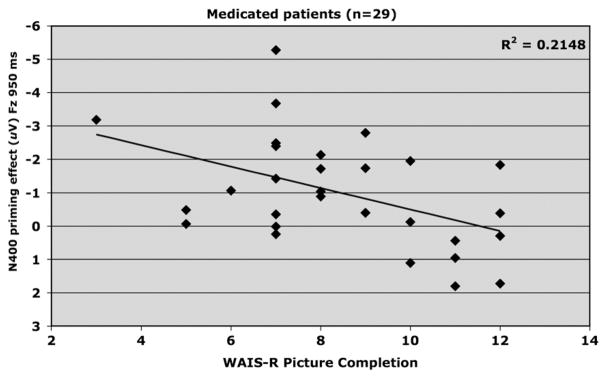
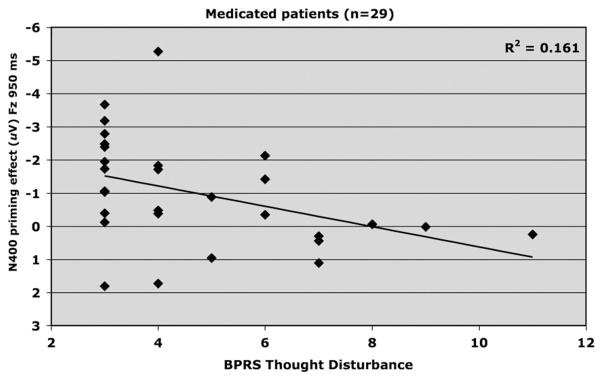
Results: N400 was associated with cognition (speed, visuoperception, attention) in patients and controls. These relationships were influenced by SOA in both groups, and by pharmacological condition in patients. Levels of total PUFAs and arachidonic acid were associated with N400 in unmedicated patients. Clinical symptoms (paranoia, thought disturbance) were associated with N400, but not with cognition or PUFAs.
Conclusions: Results suggest cell membrane fatty acids are associated with semantic memory and language in schizophrenia. Findings also suggest a series of linkages that are modulated by dopamine: cell membrane fatty acids are associated with N400 semantic priming; N400 semantic priming is associated with clinical symptoms.
Conflict of interest statement
No conflict declared.
Figures
References
-
- Aleman A, Hijman R, de Haan EHF, Kahn RS. Memory impairment in schizophrenia: a meta-analysis. American Journal of Psychiatry. 1999;156:1358–1366. - PubMed
-
- American Psychiatric Association. Diagnostic and Statistical Manual of Mental Disorders, Fourth Edition. American Psychiatric Association; Washington, D.C: 2000. Text Revision.
-
- Andreasen NC, Paradiso S, O’Leary DS. Cognitive Dysmetria” as an integrative theory of schizophrenia: a dysfunction in cortical-subcortical-cerebellar circuitry? Schizophrenia Bulletin. 1998;24:203–218. - PubMed
-
- Andreasen NC, Nopoulos P, O’Leary DS, Miller DD, Wassink T, Flaum M. Defining the phenotype of schizophrenia: cognitive dysmetria and its neural mechanisms. Biological Psychiatry. 1999;46:908–920. - PubMed
-
- Angwin AJ, Chenery HJ, Copland DA, Arnott WL, Murdoch BE, Silburn PA. Dopamine and semantic activation: an investigation of masked direct and indirect priming. Journal of the International Neuropsychological Society. 2004;10:15–25. - PubMed
Further reading
-
- Reddy RD, Keshavan MS, Yao JK. Reduced red blood cell membrane essential polyunsaturated fatty acids in first episode schizophrenia at neuroleptic-naïve baseline. Schizophrenia Bulletin. 2004;30 (4):901–911. - PubMed
-
- Yao JK, van Kammen DP. Red blood cell dynamics in schizophrenia. I. Membrane fluidity. Schizophrenia Research. 1994;11 (3):209–216. - PubMed
Publication types
MeSH terms
Substances
Grants and funding
LinkOut - more resources
Full Text Sources
Medical
