


Efficacy of percutaneous electrical nerve stimulation and therapeutic exercise for older adults with chronic low back pain: a randomized controlled trial
- PMID: 18930352
- PMCID: PMC2864648
- DOI: 10.1016/j.pain.2008.09.005
Efficacy of percutaneous electrical nerve stimulation and therapeutic exercise for older adults with chronic low back pain: a randomized controlled trial
Abstract
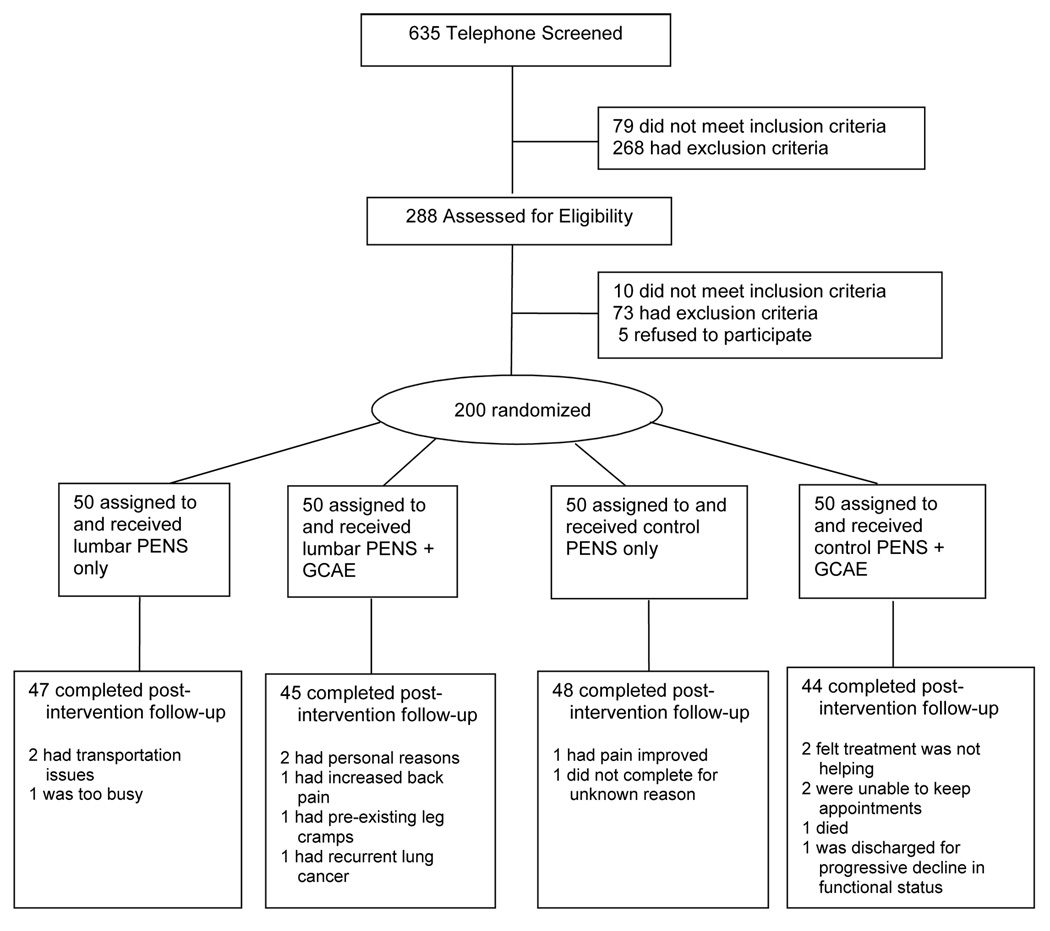
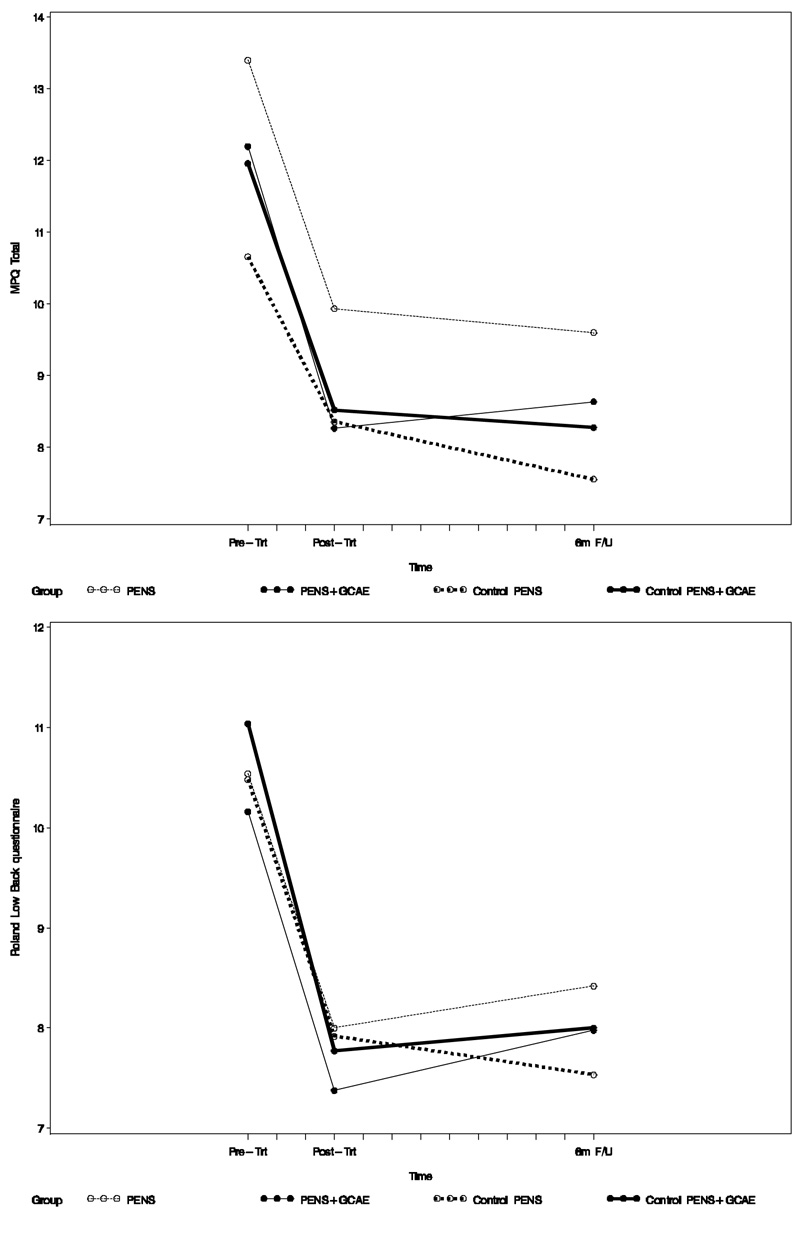
Chronic low back pain (CLBP) in older adults may be disabling and therapeutically challenging, largely because of the inefficacy and/or morbidity associated with traditional pain treatment. We conducted a randomized controlled trial in 200 men and women > or = age 65 with CLBP to evaluate the efficacy of percutaneous electrical nerve stimulation (PENS) with and without general conditioning and aerobic exercise (GCAE), for reducing pain and improving physical function. Participants were randomized to receive (1) PENS, (2) control-PENS (brief electrical stimulation to control for treatment expectancy), (3) PENS+GCAE, or (4) control-PENS+GCAE, twice a week for 6 weeks. All four groups experienced significantly reduced pain (range -2.3 to -4.1 on the McGill Pain Questionnaire short form), improved self-reported disability (range -2.1 to -3.0 on Roland scale) and improved gait velocity (0.04-0.07 m/s), sustained at 6 months. The GCAE groups experienced significantly fewer fear avoidance beliefs immediately post-intervention and at 6 months than non-GCAE groups. There were no significant side effects. Since brief electrical stimulation (i.e., control-PENS) facilitated comparably reduced pain and improved function at 6 months as compared with PENS, the exact dose of electrical stimulation required for analgesia cannot be determined. GCAE was more effective than PENS alone in reducing fear avoidance beliefs, but not in reducing pain or in improving physical function.
Figures
References
-
- Anderson KO, Noel Dowds B, Pelletz RE, Edwards WT, Peeters-Asdourian C. Development and initial validation of a scale to measure self-efficacy beliefs in patients with chronic pain. Pain. 1995;63:77–84. - PubMed
-
- Apkarian AV, Sosa Y, Krauss BR, Thomas PS, Fredrickson BE, Levy RE, Harden RN, Chialvo DR. Chronic pain patients are impaired on an emotional decision-making task. Pain. 2004;108:129–136. - PubMed
-
- Bath PA. Self-rated health as a risk factor for prescribed drug use and future health and social service use in older people. Journals of Gerontology; Series A, Biological Sciences & Medical Sciences. 1999;54(11):M565–M570. - PubMed
-
- Berman BM, Bausell RB. The use of non-pharmacological therapies by pain specialists. Pain. 2000;85:313–315. - PubMed
-
- Bohannon RW. Comfortable and maximum walking speed of adults aged 20–79 years: Reference values as determinants. Age and Aging. 1997;26:15–19. - PubMed
Publication types
MeSH terms
Grants and funding
LinkOut - more resources
Full Text Sources
Other Literature Sources
