


Reduction of L-methionine selenoxide to seleno-L-methionine by endogenous thiols, ascorbic acid, or methimazole
- PMID: 18930712
- PMCID: PMC2642925
- DOI: 10.1016/j.bcp.2008.09.022
Reduction of L-methionine selenoxide to seleno-L-methionine by endogenous thiols, ascorbic acid, or methimazole
Abstract
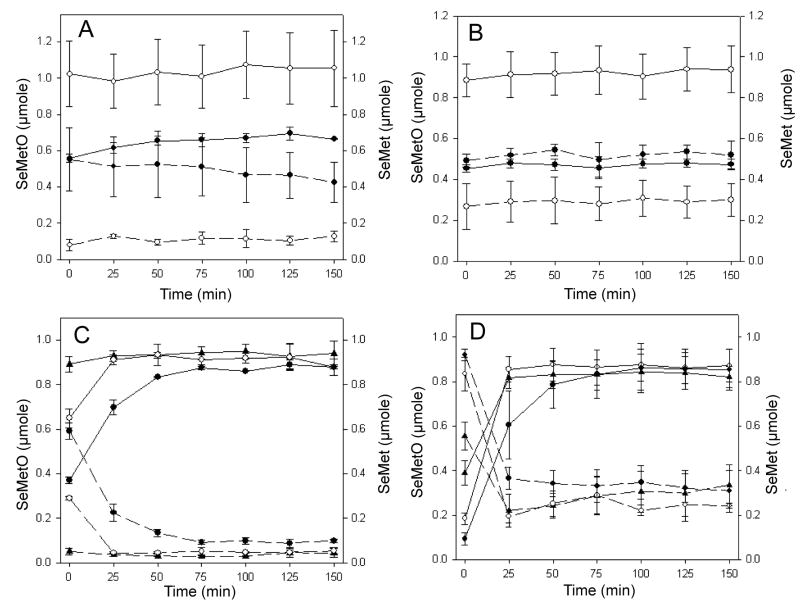
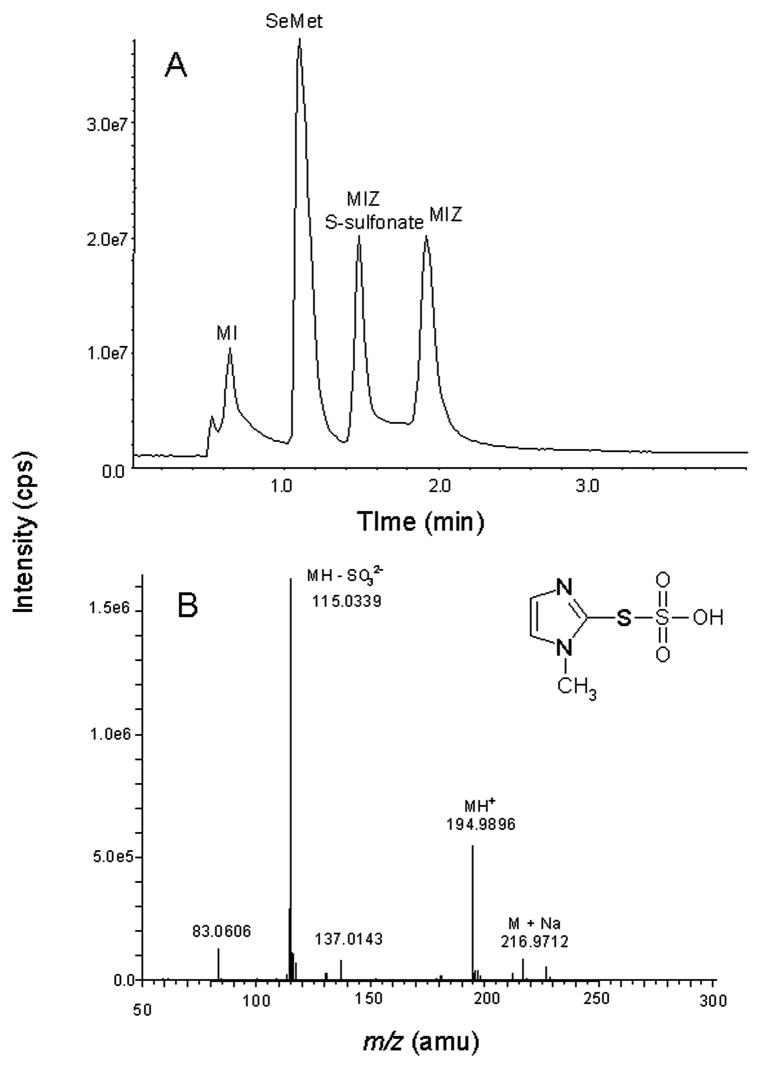
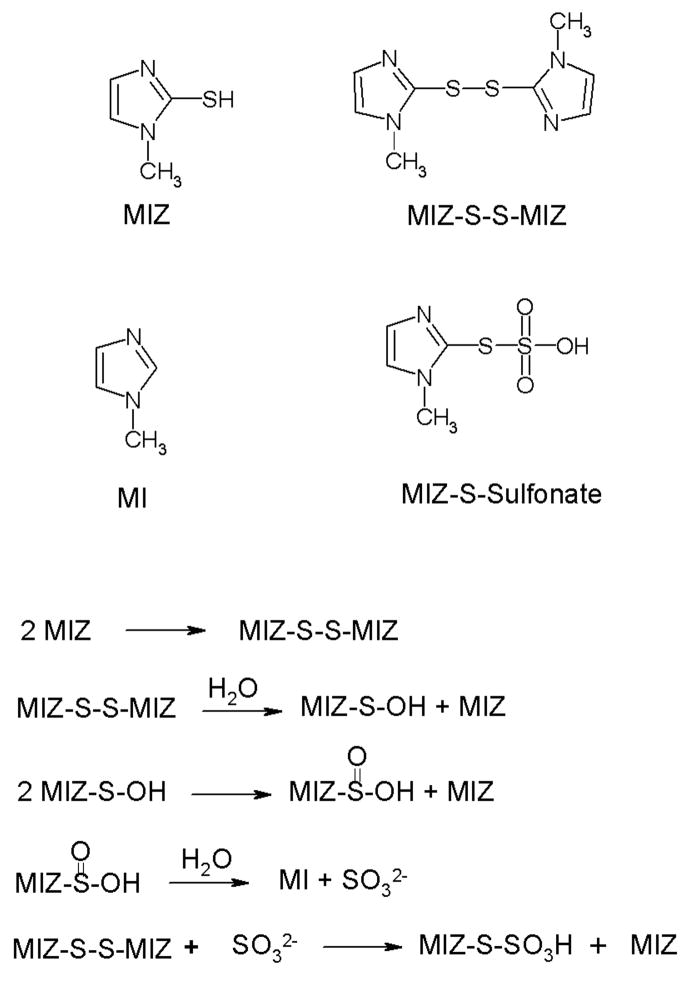
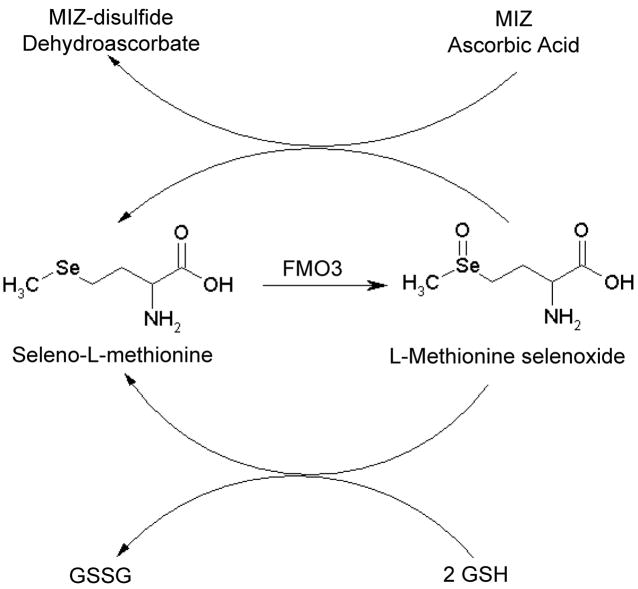
Seleno-L-methionine (SeMet) can be oxidized to L-methionine selenoxide (MetSeO) by flavin-containing monooxygenase 3 (FMO3) and rat liver microsomes in the presence of NADPH. MetSeO can be reduced by GSH to yield SeMet and GSSG. In the present study, the potential reduction of MetSeO to SeMet by other cellular components and antioxidants was investigated. Besides GSH, other thiols (L-cysteine, or N-acetyl-L-cysteine) and antioxidants (ascorbic acid and methimazole) also reduced MetSeO to SeMet. This reduction is unique to MetSeO since methionine sulfoxide was not reduced to methionine under similar conditions. The MetSeO reduction by thiols was instaneous and much faster than the reduction by ascorbic acid or methimazole. However, only one molar equivalent of ascorbic acid or methimazole was needed to complete the reduction, as opposed to two molar equivalents of thiols. Whereas the disulfides produced by the reactions of MetSeO with thiols are chemically stable, methimazole disulfide readily decomposed at pH 7.4, 37 degrees C to yield methimazole, methimazole-sulfenic acid, methimazole sulfinic acid, methimazole S-sulfonate, 1-methylimidazole (MI) and sulfite anion. Collectively, the results demonstrate reduction of MetSeO to SeMet by multiple endogenous thiols, ascorbic acid, and methimazole. Thus, oxidation of SeMet to MetSeO may result in depletion of endogenous thiols and antioxidant molecules. Furthermore, the novel reduction of MetSeO by methimazole provides clear evidence that methimazole should not be used as an alternative FMO substrate when studying FMO-mediated oxidation of SeMet.
Figures

References
-
- Redman C, Scott JA, Baines AT, Basye JL, Clark LC, Calley C, Roe D, Payne CM, Nelson MA. Inhibitory effect of selenomethionine on the growth of three selected human tumor cell lines. Cancer Lett. 1998;125:103–10. - PubMed
-
- Goulet A-C, Chigbrow M, Frisk P, Nelson MA. Selenomethionine induces sustained ERK phosphorylation leading to cell-cycle arrest in human colon cancer cells. Carcinogenesis. 2005;26:109–17. - PubMed
-
- Miki K, Xu M, Gupta A, Ba Y, Tan Y, Al-Refaie W, Bouvet M, Makuuchi M, Moossa AR, Hoffman RM. Methionase cancer gene therapy with selenomethionine as suicide prodrug substrate. Cancer Res. 2001;61:6805–10. - PubMed
-
- Kajander EO, Harvima RJ, Eloranta TO, Martikainen H, Kantola M, Kärenlampi SO, Åkerman K. Metabolism, cellular actions, and cytotoxicity of selenomethionine in cultured cells. Biol Trace Elem Res. 1991;28:39–45. - PubMed
Publication types
MeSH terms
Substances
Grants and funding
LinkOut - more resources
Full Text Sources
Medical
