


Mechanisms of neurodegeneration and regeneration in alcoholism
- PMID: 18940959
- PMCID: PMC2948812
- DOI: 10.1093/alcalc/agn079
Mechanisms of neurodegeneration and regeneration in alcoholism
Abstract
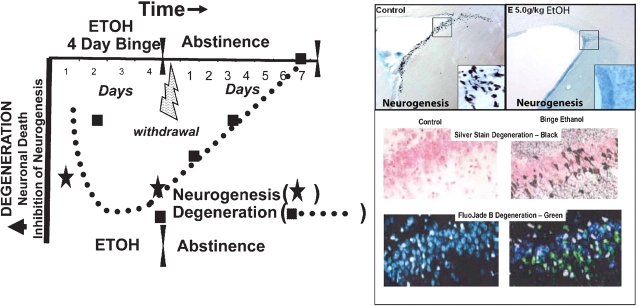
Aims: This is a review of preclinical studies covering alcohol-induced brain neuronal death and loss of neurogenesis as well as abstinence-induced brain cell genesis, e.g. brain regeneration. Efforts are made to relate preclinical studies to human studies.
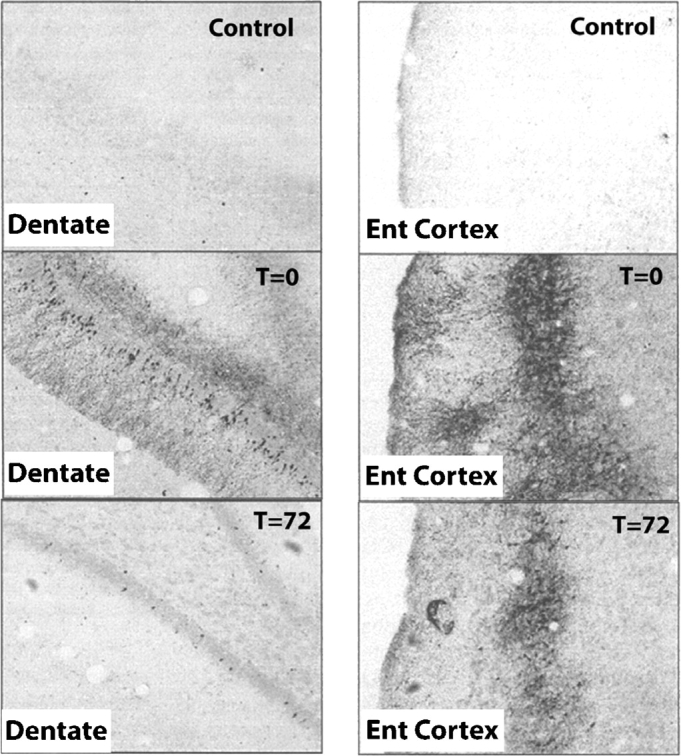
Methods: The studies described are preclinical rat experiments using a 4-day binge ethanol treatment known to induce physical dependence to ethanol. Neurodegeneration and cognitive deficits following binge treatment mimic the mild degeneration and cognitive deficits found in humans. Various histological methods are used to follow brain regional degeneration and regeneration.
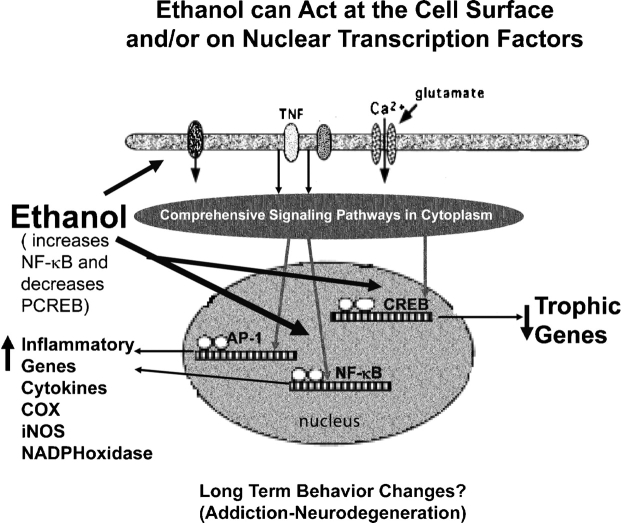
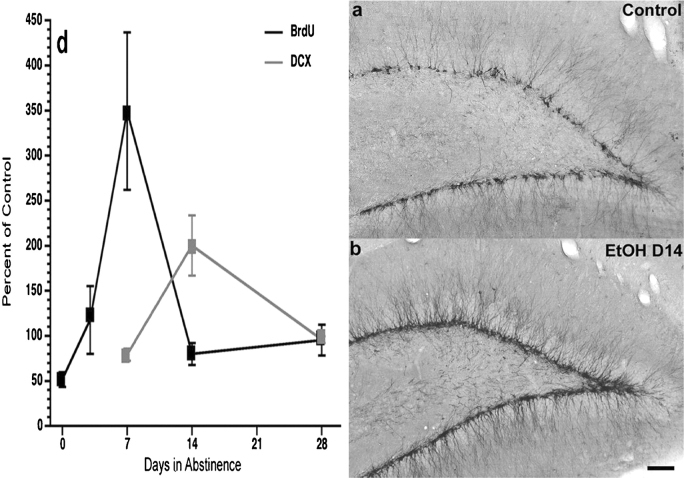
Results: Alcohol-induced degeneration occurs due to neuronal death during alcohol intoxication. Neuronal death is related to increases in oxidative stress in brain that coincide with the induction of proinflammatory cytokines and oxidative enzymes that insult brain. Degeneration is associated with increased NF-kappaB proinflammatory transcription and decreased CREB transcription. Corticolimbic brain regions are most sensitive to binge-induced degeneration and induce relearning deficits. Drugs that block oxidative stress and NF-kappaB transcription or increase CREB transcription block binge-induced neurodegeneration, inhibition of neurogenesis and proinflammatory enzyme induction. Regeneration of brain occurs during abstinence following binge ethanol treatment. Bursts of proliferating cells occur across multiple brain regions, with many new microglia across brain after months of abstinence and many new neurons in neurogenic hippocampal dentate gyrus. Brain regeneration may be important to sustain abstinence in humans.
Conclusions: Alcohol-induced neurodegeneration occurs primarily during intoxication and is related to increased oxidative stress and proinflammatory proteins that are neurotoxic. Abstinence after binge ethanol intoxication results in brain cell genesis that could contribute to the return of brain function and structure found in abstinent humans.
Figures




References
-
- Altman J, Das GD. Autoradiographic and histological evidence of postnatal hippocampal neurogenesis in rats. J Comp Neurol. 1965;124:319–35. - PubMed
-
- Armstrong RJ, Barker RA. Neurodegeneration: a failure of neuroregeneration? Lancet. 2001;358:1174–6. - PubMed
-
- Banks WA. Blood–brain barrier transport of cytokines: a mechanism for neuropathology. Curr Pharm Des. 2005;11:973–84. - PubMed
-
- Baydas G, Tuzcu M. Protective effects of melatonin against ethanol-induced reactive gliosis in hippocampus and cortex of young and aged rats. Exp Neurol. 2005;194:175–81. - PubMed
Publication types
MeSH terms
Substances
Grants and funding
LinkOut - more resources
Full Text Sources
Medical
