


Substituted 2-imino-5-arylidenethiazolidin-4-one inhibitors of bacterial type III secretion
- PMID: 18947223
- PMCID: PMC2645953
- DOI: 10.1021/jm8004515
Substituted 2-imino-5-arylidenethiazolidin-4-one inhibitors of bacterial type III secretion
Abstract
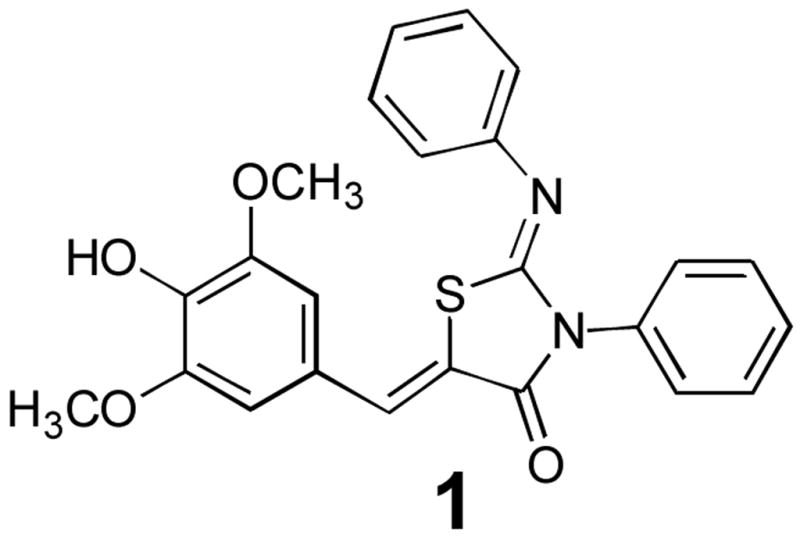
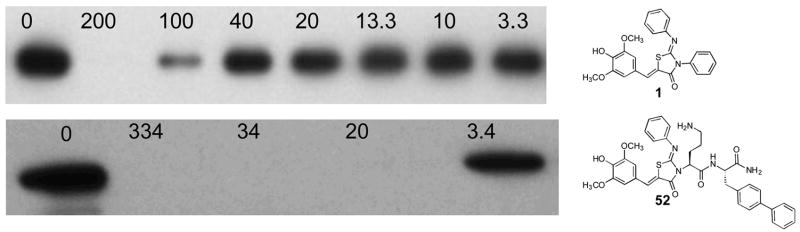
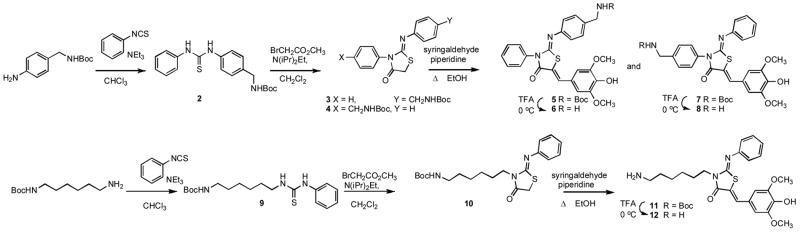
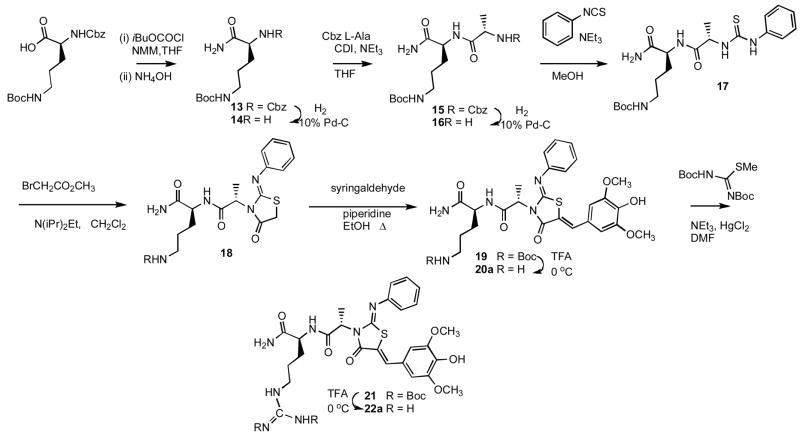
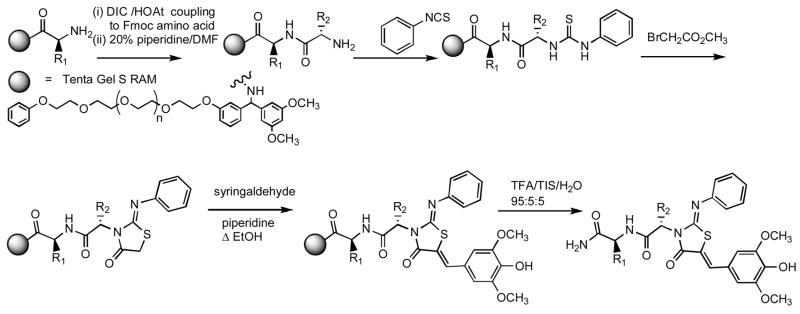
Diverse species of pathogenic Gram-negative bacteria use secretion systems to export a variety of protein toxins and virulence factors that help establish and maintain infection. Disruption of such secretion systems is a potentially effective therapeutic strategy. We developed a high-throughput screen and identified a tris-aryl substituted 2-imino-5-arylidenethiazolidin-4-one, compound 1, as an inhibitor of the type III secretion system. Expansion of this chemotype enabled us to define the essential pharmacophore for type III secretion inhibition by this structural class. A synthetic diversity set helped us identify N-3 as the most permissive locus and led to the design of a panel of novel N-3-dipeptide-modified congeners with improved activity and physiochemical properties. We now report on the synthesis of these compounds, including a novel solid phase approach to the rapid generation of the dipeptide-thiazolidinone hybrids, and their in vitro characterization as inhibitors of type III secretion in Salmonella enterica serovar Typhimurium.
Figures
References
-
- Cornelis GR. The type III secretion injectisome. Nat Rev Microbiol. 2006;4:811–825. - PubMed
-
- Smith PA, Romesberg FE. Combating bacteria and drug resistance by inhibiting mechanisms of persistence and adaptation. Nat Chem Biol. 2007;3:549–556. - PubMed
-
- Baron C, Coombes B. Targeting bacterial secretion systems: benefits of disarmament in the microcosm. Infect Disord Drug Targets. 2007;7:19–27. - PubMed
-
- Preston GM. Metropolitan microbes: type III secretion in multihost symbionts. Cell Host & Microbe. 2007;2:291–294. - PubMed
Publication types
MeSH terms
Substances
Grants and funding
LinkOut - more resources
Full Text Sources
Other Literature Sources
Medical
