


The sweeter side of ACE2: physiological evidence for a role in diabetes
- PMID: 18948167
- PMCID: PMC2676688
- DOI: 10.1016/j.mce.2008.09.020
The sweeter side of ACE2: physiological evidence for a role in diabetes
Abstract
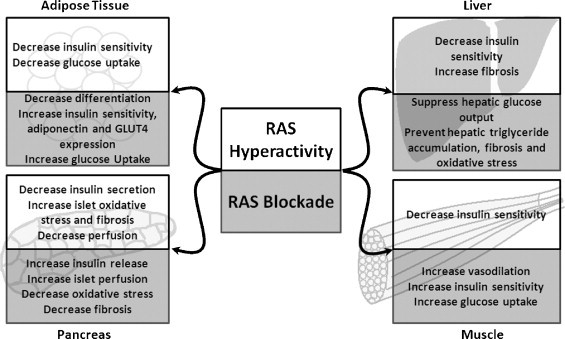
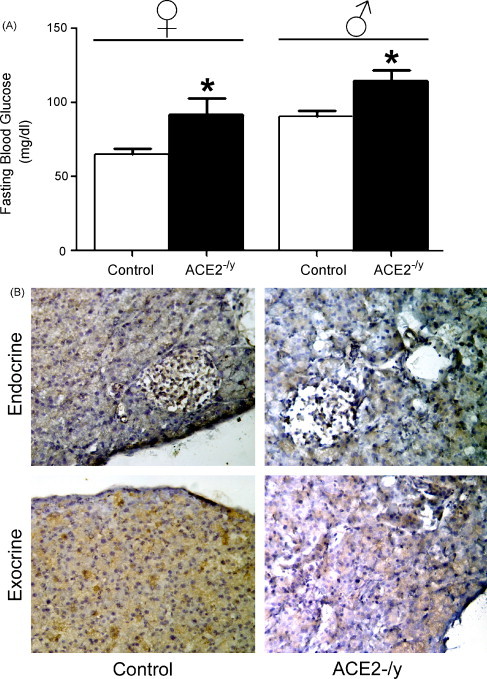
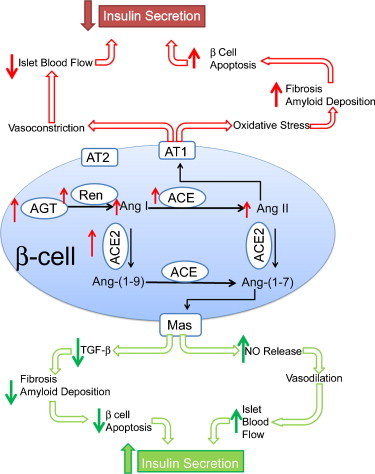
Diabetes mellitus is a growing problem in all parts of the world. Both clinical trials and animal models of type I and type II diabetes have shown that hyperactivity of angiotensin-II (Ang-II) signaling pathways contribute to the development of diabetes and diabetic complications. Of clinical relevance, blockade of the renin-angiotensin system prevents new-onset diabetes and reduces the risk of diabetic complications. Angiotensin-converting enzyme (ACE) 2 is a recently discovered mono-carboxypeptidase and the first homolog of ACE. It is thought to inhibit Ang-II signaling cascades mostly by cleaving Ang-II to generate Ang-(1-7), which effects oppose Ang-II and are mediated by the Mas receptor. The enzyme is present in the kidney, liver, adipose tissue and pancreas. Its expression is elevated in the endocrine pancreas in diabetes and in the early phase during diabetic nephropathy. ACE2 is hypothesized to act in a compensatory manner in both diabetes and diabetic nephropathy. Recently, we have shown the presence of the Mas receptor in the mouse pancreas and observed a reduction in Mas receptor immuno-reactivity as well as higher fasting blood glucose levels in ACE2 knockout mice, indicating that these mice may be a new model to study the role of ACE2 in diabetes. In this review we will examine the role of the renin-angiotensin system in the physiopathology and treatment of diabetes and highlight the potential benefits of the ACE2/Ang-(1-7)/Mas receptor axis, focusing on recent data about ACE2.
Figures
References
-
- Abuissa H., Jones P.G., Marso S.P., O’Keefe J.J.H. Angiotensin-converting enzyme inhibitors or angiotensin receptor blockers for prevention of type 2 diabetes: a meta-analysis of randomized clinical trials. J. Am. Coll. Cardiol. 2005;46:821–826. - PubMed
-
- Almeida A.P., Frábregas B.C., Madureira M.M., Santos R.J.S., Campagnole-Santos M.J., Santos R.A.S. Angiotensin-(1–7) potentiates the coronary vasodilatatory effect of bradykinin in the isolated rat heart. Braz. J. Med. Biol. Res. 2000;33:709–713. - PubMed
-
- Anonymous Effects of ramipril on cardiovascular and microvascular outcomes in people with diabetes mellitus: results of the HOPE study and MICRO-HOPE substudy. Heart Outcomes Prevention Evaluation Study Investigators. Lancet. 2000;355:253–259. - PubMed
-
- Anonymous Type 2 diabetes in children and adolescents. American Diabetes Association. Diabetes Care. 2000;23:1442–1443. - PubMed
Publication types
MeSH terms
Substances
Grants and funding
LinkOut - more resources
Full Text Sources
Medical
Miscellaneous
