


Active involvement of Robo1 and Robo4 in filopodia formation and endothelial cell motility mediated via WASP and other actin nucleation-promoting factors
- PMID: 18948384
- PMCID: PMC4048916
- DOI: 10.1096/fj.07-098269
Active involvement of Robo1 and Robo4 in filopodia formation and endothelial cell motility mediated via WASP and other actin nucleation-promoting factors
Abstract
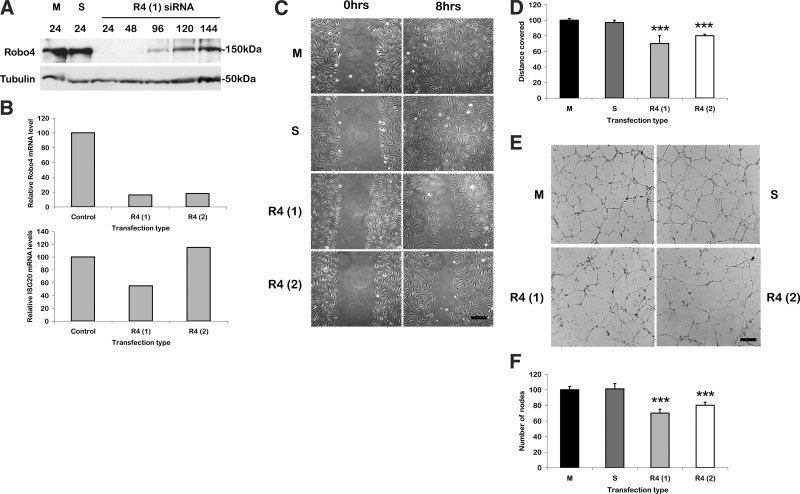
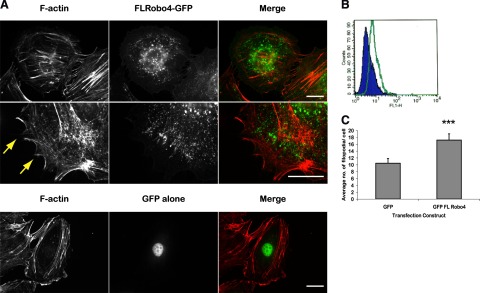
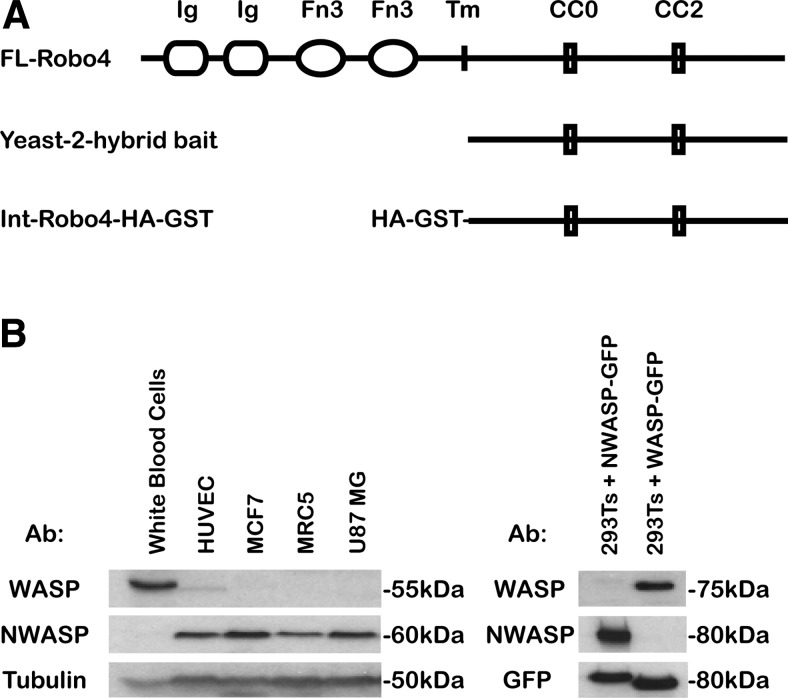
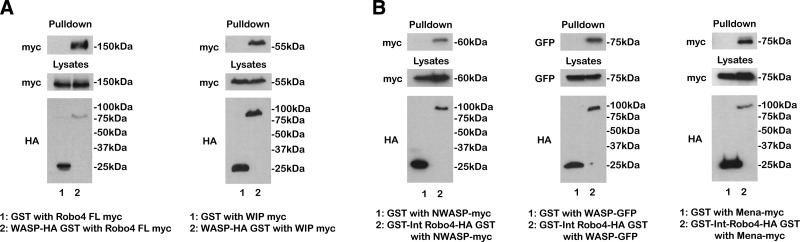
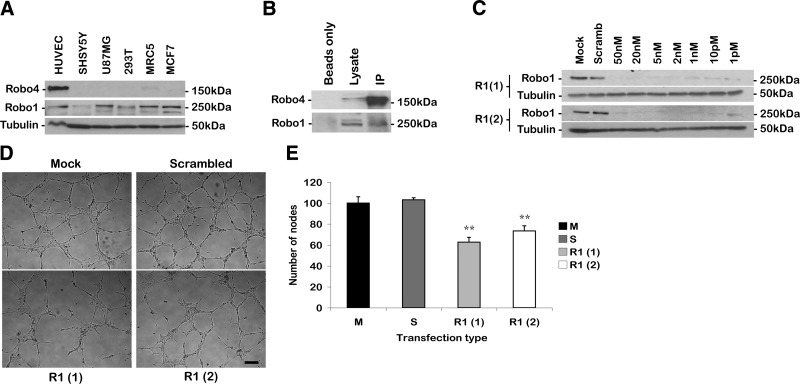
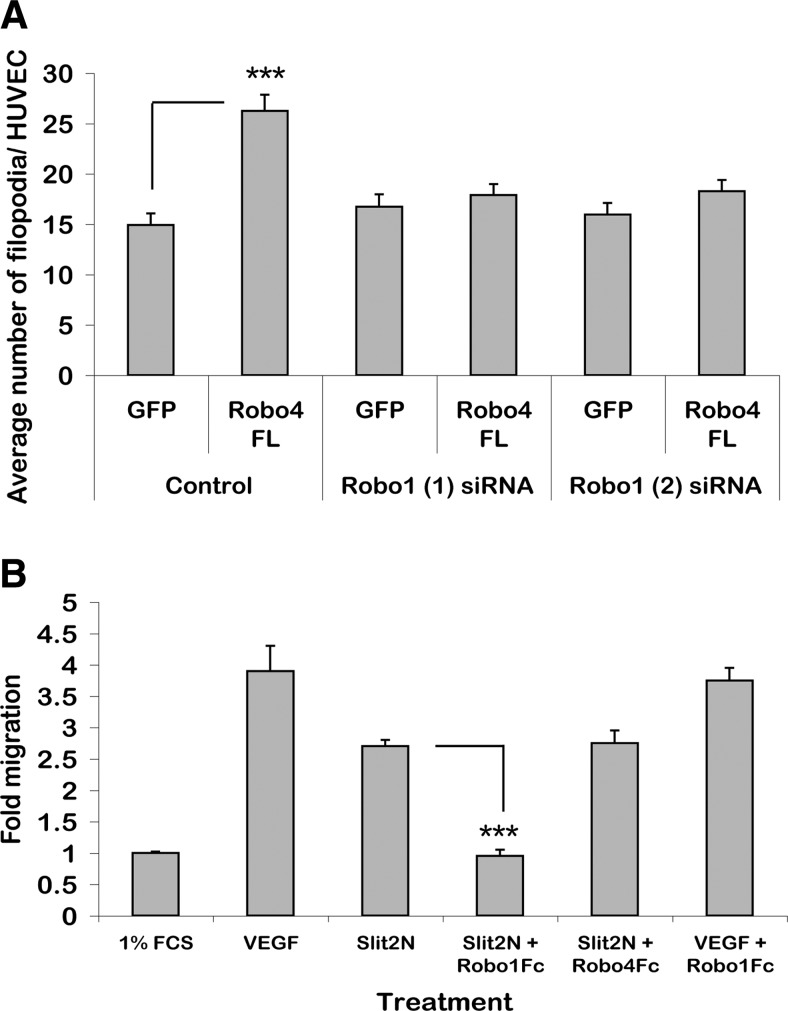
This study aimed to further elucidate the function of Roundabout proteins in endothelium. We show that both Robo1 and Robo4 are present in human umbilical vein endothelial cells (HUVECs) and have knocked expression down using small interfering RNA (siRNA) technology. Roundabout knockout endothelial cells were then studied in a variety of in vitro assays. We also performed a yeast 2-hybrid analysis using the intracellular domain of Robo4 as bait to identify interacting proteins and downstream signaling. Both Robo1 and Robo4 siRNA knockdown and transfection of Robo4-green fluorescent protein inhibited endothelial cell movement and disrupted tube formation on Matrigel. Consistent with a role in regulating cell movement, yeast 2-hybrid and glutathione-S-transferase pulldown analyses show Robo4 binding to a Wiskott-Aldrich syndrome protein (WASP), neural Wiskott-Aldrich syndrome protein, and WASP-interacting protein actin-nucleating complex. We have further shown that Robo1 forms a heterodimeric complex with Robo4, and that transfection of Robo4GFP into HUVECs induces filopodia formation. We finally show using Robo1 knockdown cells that Robo1 is essential for Robo4-mediated filopodia induction. Our results favor a model whereby Slit2 binding to a Robo1/Robo4 heterodimer activates actin nucleation-promoting factors to promote endothelial cell migration.
Figures
References
-
- Seeger M., Tear G., Ferres-Marco D., Goodman C. S. Mutations affecting growth cone guidance in Drosophila: genes necessary for guidance toward or away from the midline. Neuron. 1993;10:409–426. - PubMed
-
- Kidd T., Brose K., Mitchell K. J., Fetter R. D., Tessier-Lavigne M., Goodman C. S., Tear G. Roundabout controls axon crossing of the CNS midline and defines a novel subfamily of evolutionarily conserved guidance receptors. Cell. 1998;92:205–215. - PubMed
-
- Huminiecki L., Gorn M., Suchting S., Poulsom R., Bicknell R. Magic Roundabout is a new member of the Roundabout receptor family that is endothelial specific and expressed at sites of active angiogenesis. Genomics. 2002;79:547–552. - PubMed
-
- Legg J. A., Herbert J. M. J., Clissold P., Bicknell R. Slits and Roundabouts in cancer, tumour angiogenesis and endothelial cell migration. Angiogenesis. 2008;11:13–21. - PubMed
Publication types
MeSH terms
Substances
Grants and funding
LinkOut - more resources
Full Text Sources
Other Literature Sources
Molecular Biology Databases
