. 2008 Oct;4(10):e1000235.
doi: 10.1371/journal.pgen.1000235. Epub 2008 Oct 24.

ZHP-3 acts at crossovers to couple meiotic recombination with synaptonemal complex disassembly and bivalent formation in C. elegans

Affiliations

ZHP-3 acts at crossovers to couple meiotic recombination with synaptonemal complex disassembly and bivalent formation in C. elegans

Needhi Bhalla et al. PLoS Genet. 2008 Oct.

Erratum in

  • PLoS Genet. 2008 Nov;4(11).doi.org/10.1371/annotation/ffbb52bd-7ceb-404c-8c96-93577bf83932

Abstract

Crossover recombination and the formation of chiasmata normally ensure the proper segregation of homologous chromosomes during the first meiotic division. zhp-3, the Caenorhabditis elegans ortholog of the budding yeast ZIP3 gene, is required for crossover recombination. We show that ZHP-3 protein localization is highly dynamic. At a key transition point in meiotic prophase, the protein shifts from along the length of the synaptonemal complex (SC) to an asymmetric localization on the SC and eventually becomes restricted to foci that mark crossover recombination events. A zhp-3::gfp transgene partially complements a null mutation and reveals a separation of function; although the fusion protein can promote nearly wild-type levels of recombination, aneuploidy among the progeny is high, indicating defects in meiotic chromosome segregation. The structure of bivalents is perturbed in this mutant, suggesting that the chromosome segregation defect results from an inability to properly remodel chromosomes in response to crossovers. smo-1 mutants exhibit phenotypes similar to zhp-3::gfp mutants at higher temperatures, and smo-1; zhp-3::gfp double mutants exhibit more severe meiotic defects than either single mutant, consistent with a role for SUMO in the process of SC disassembly and bivalent differentiation. We propose that coordination of crossover recombination with SC disassembly and bivalent formation reflects a conserved role of Zip3/ZHP-3 in coupling recombination with SC morphogenesis.


Conflict of interest statement

The authors have declared that no competing interests exist.

Figures

Figure 1
Figure 1. ZHP-3 shows dynamic localization during meiotic prophase.
(A) Wild-type gonad stained with DAPI and antibodies against SYP-1 and ZHP-3. ZHP-3 largely colocalizes with SYP-1 throughout the gonad. High magnification views of meiotic nuclei in early pachytene (B, C, D and E), mid-pachytene (F and G) and late pachytene (H and I) stained with antibodies against ZHP-3, SYP-1 and HTP-3. The arrows in D and E indicate unsynapsed chromosomes, detected as segments of HTP-3 devoid of SYP-1 and ZHP-3. High magnification views of individual nuclei in late pachytene (J and K) and late pachytene/diplotene (N and O). A single pair of synapsed homologs from each of these nuclei is shown in L, M, P and Q. Note the asymmetric distribution of ZHP-3 in L and focus formation in P on synapsed chromosomes (M and Q). All images are maximum intensity projections of deconvolved 3D stacks. Scale bars represent 4 microns in all figures unless indicated otherwise.
Figure 2
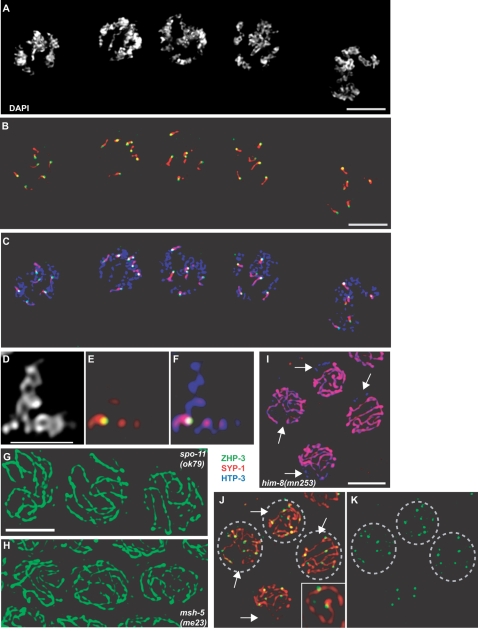
Figure 2. ZHP-3 localizes to sites of meiotic crossover recombination.
(A–F) The site from which the asymmetric disassembly of the SC occurs is marked by a ZHP-3 focus. Wild-type nuclei in diplotene/diakinesis stained with DAPI and antibodies against HTP-3, ZHP-3 and SYP-1. An individual bivalent from one of these nuclei is shown in D–F. Scale bar in D represents 2 microns. (G and H) ZHP-3 foci formation depends on DSB formation and crossover recombination. Late pachytene nuclei from spo-11(ok79) (G) and msh-5(me23) (H) mutants were stained with antibodies against ZHP-3. (I, J, and K) More than one ZHP-3 focus per chromosome is frequently observed in mutant oocytes with perturbed crossover control. Late pachytene nuclei from him-8(mn253) mutants were stained with ZHP-3, SYP-1 and HTP-3 antibodies. Arrows indicate unsynapsed chromosomes. Circled nuclei have greater than five ZHP-3 foci. The inset in J is a single pair of synapsed homologs with two ZHP-3 foci.
Figure 3
Figure 3. ZHP-3-GFP recapitulates the localization pattern of endogenous ZHP-3.
Wild-type oocytes at early pachytene (A and B) and late pachytene (C and D) stained with antibodies against SYP-1 and GFP. (E and F) Formation of ZHP-3-GFP foci depends on double-strand breaks and crossover recombination. Late pachytene nuclei from spo-11(ok79) (E) and msh-5(me23) (F) mutants were stained with antibodies against GFP. G. Crossover distributions can be analyzed by direct visualization of ZHP-3-GFP. Numbers of ZHP-3-GFP foci were quantified in late pachytene nuclei of wild-type, mnDp66; meDf2, and zim-1(tm1813) animals.
Figure 4
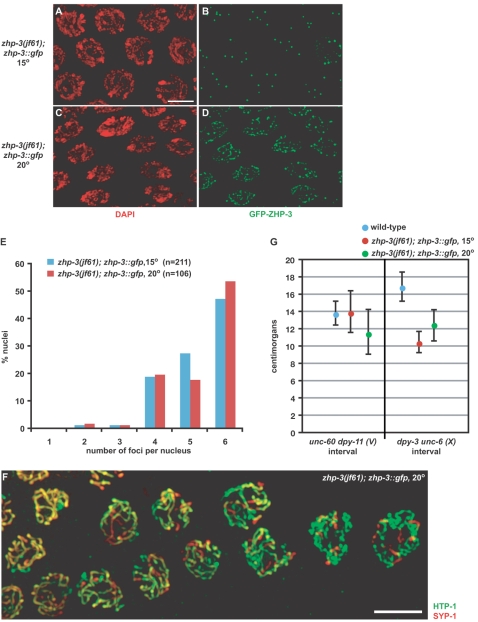
Figure 4. ZHP-3-GFP promotes crossover formation.
(A–D) Localization of ZHP-3-GFP in zhp-3::gfp mutant animals at 15° and 20°. Late pachytene nuclei were stained with DAPI (A and C) and antibodies against GFP (B and D). Foci are visible at both temperatures. However, at the higher temperature, ZHP-3-GFP is also seen along the SC. (E) Quantification of ZHP-3-GFP foci in animals grown at 15° and 20°. The majority of nuclei contain five or six ZHP-3-GFP foci. Number of nuclei quantified for each genotype is indicated. (F) Asymmetric disassembly of the SC occurs normally in zhp-3::gfp mutants grown at 20°. Oocytes exiting pachytene are visualized with antibodies against HTP-1 and SYP-1. (G) Crossover frequencies in wild-type and zhp-3::gfp mutant hermaphrodites. Recombination in two different genetic intervals, one on Chromosome V and one on X were measured in wild-type hermaphrodites grown at 20° and mutant hermaphrodites grown at 15° and 20°. Error bars indicate 95% confidence intervals.
Figure 5
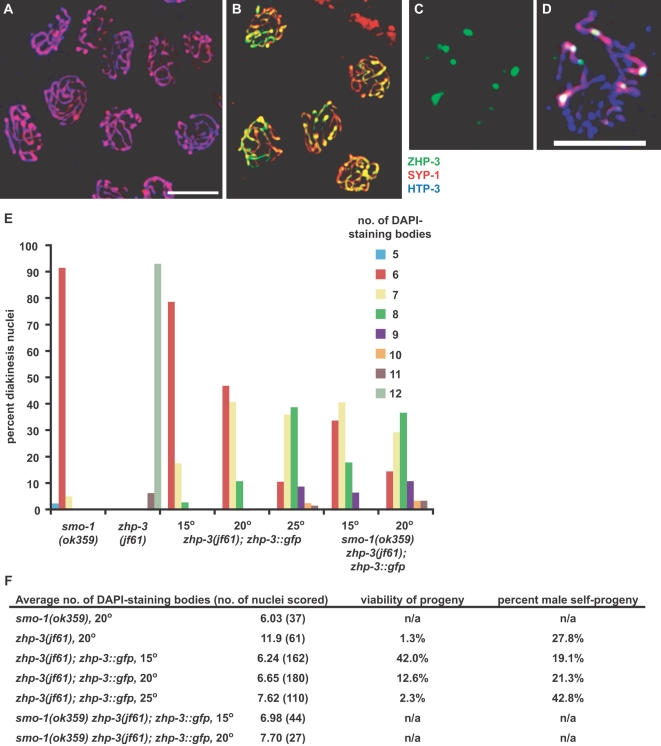
Figure 5. smo-1(ok359) genetically interacts with the zhp-3::gfp allele.
(A) Synapsis occurs normally in smo-1(ok359) mutants. Late pachytene nuclei stained with antibodies against HTP-3 and SYP-1 are shown. (B) ZHP-3 fails to redistribute in late pachytene in smo-1(ok359) mutants. Nuclei were stained with antibodies against ZHP-3 and SYP-1. (C and D) ZHP-3 eventually forms six foci per nucleus during SC disassembly. Diplotene/diakinesis nuclei were stained with antibodies against ZHP-3, SYP-1 and HTP-3. (E) The number of univalents increases with temperature in zhp-3::gfp mutants. This defect is exacerbated by introduction of the smo-1(ok359) deletion into mutant animals. DAPI-staining bodies were scored in the indicated genotypes at 15°, 20° and 25°. (F) Average number of DAPI-staining bodies. To facilitate comparison, the percentage of viable progeny and male self-progeny generated by each genotype is indicated.
Figure 6
Figure 6. Defects in SC disassembly and bivalent structure in zhp-3::gfp mutants.
(A–L) Synaptonemal complex disassembly is disrupted in zhp-3::gfp mutants propagated at 25° and in smo-1 mutants. Bivalents in diakinesis nuclei were stained with antibodies against HTP-3 and SYP-1. At 20°, zhp-3::gfp mutants resemble wild-type animals in that SYP-1 is restricted to the short arm of the diakinesis bivalent. In zhp-3::gfp mutants at 25°, smo-1 single mutants and smo-1; zhp-3::gfp double mutants at 20°, SYP-1 is seen all along the bivalent, similar to the axial element HTP-3. Scale bar indicates 2 microns. (M–P) As homologs desynapse in zhp-3::gfp mutants at 25°, SYP-1 is enriched along what will become the short arm of the bivalent, but is still visible on the long arm. (Q–T) Homologs sometimes appear to separate precociously at diplotene in zhp-3::gfp animals. (U–X) Bivalent structure is disrupted in zhp-3::gfp and smo-1 mutants. Bivalents are stained with DAPI and antibodies against HTP-3. Scale bar indicates 2 microns.

References

    1. Agarwal S, Roeder GS. Zip3 provides a link between recombination enzymes and synaptonemal complex proteins. Cell. 2000;102:245–255. - PubMed
    1. Borner GV, Kleckner N, Hunter N. Crossover/noncrossover differentiation, synaptonemal complex formation, and regulatory surveillance at the leptotene/zygotene transition of meiosis. Cell. 2004;117:29–45. - PubMed
    1. Fung JC, Rockmill B, Odell M, Roeder GS. Imposition of crossover interference through the nonrandom distribution of synapsis initiation complexes. Cell. 2004;116:795–802. - PubMed
    1. Perry J, Kleckner N, Borner GV. Bioinformatic analyses implicate the collaborating meiotic crossover/chiasma proteins Zip2, Zip3, and Spo22/Zip4 in ubiquitin labeling. Proc Natl Acad Sci U S A. 2005;102:17594–17599. - PMC - PubMed
    1. Gill G. SUMO and ubiquitin in the nucleus: different functions, similar mechanisms? Genes Dev. 2004;18:2046–2059. - PubMed

Publication types

MeSH terms

Substances