


The prevalence of incidental findings at cardiac MRI
- PMID: 18949093
- PMCID: PMC2570573
- DOI: 10.2174/1874192400802010020
The prevalence of incidental findings at cardiac MRI
Abstract
OBJECT OR PURPOSE OF STUDY: As the field of view of cardiac magnetic resonance imaging (CMR) includes the thorax and upper abdomen, it is not surprising that these studies can reveal incidental extra-cardiac abnormalities. The purpose of this study is to determine the prevalence of these incidental findings.
Materials, methods and procedures: 132 volunteer participants with a mean age of 74.2 years (range, 61-89 years; 127 males and 5 females) had CMR with 7 sequences. All images were retrospectively reviewed by a radiologist, specifically assessing for non-cardiac findings. Visualized abnormalities were noted and categorized according to significance. Clinically significant findings were defined as those requiring further clinical or radiological work-up, with moderately significant findings defined as those that may affect patient care depending on medical history or symptoms. Remaining findings were considered clinically insignificant.
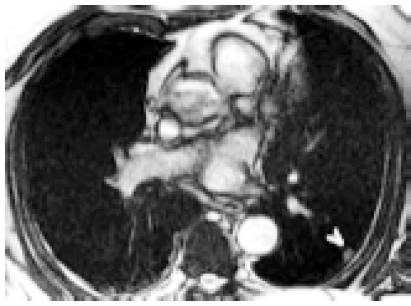
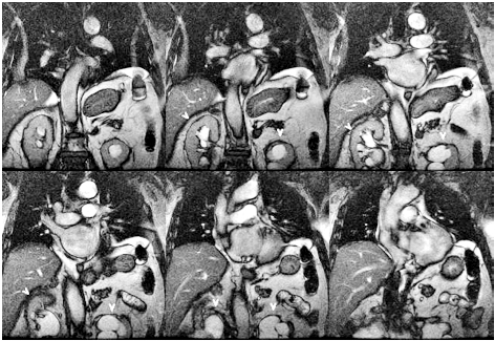
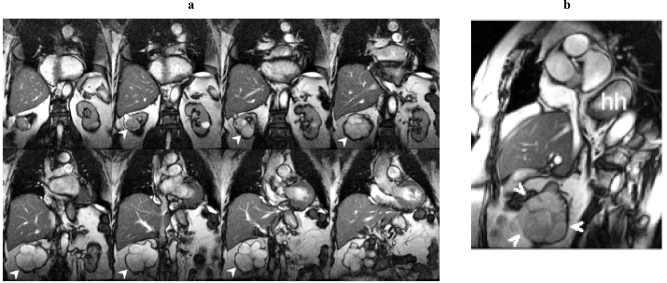
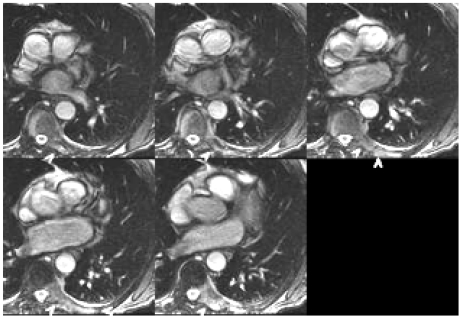
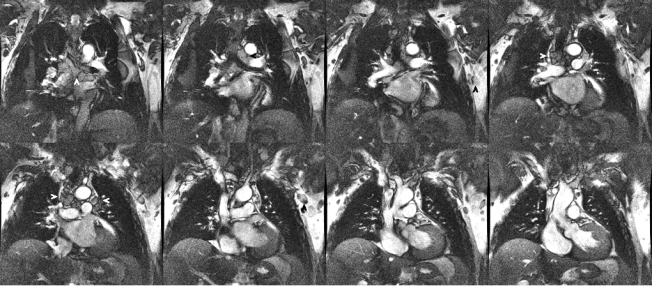
Results: Within the group, 107 participants (81%) had extra-cardiac findings, with 63 (48%) having multiple findings. A total of 224 incidental findings were visualized, with at least one clinically significant and moderately significant finding found in 23 (17%) and 43 (33 %) of the subjects, respectively. Potentially clinically significant findings included pulmonary nodules, solid or complex lesions of the solid abdominal viscera and thyroid, and aortic pathology including aneurysm. The most prevalent incidental findings were however benign appearing, including renal and hepatic cysts, hemangiomas, and atelectasis. The SSFP coronal localizer, SSFP axial localizer, and short axis SSFP cine oblique sequences were most sensitive at detecting incidental findings (p = 0.013 vs four other sequences) with 47%, 46%, and 41% detection respectively, with no significant difference between these three multislice sequences (p = 0.369).
Significance of the conclusions: In total, 81% of our volunteers had extra-cardiac findings, of which 17% were potentially clinically significant, necessitating further work up. We believe that these numbers appear high compared to prior similar studies performed at Cardiac CT. This may be related to the relatively older cohort examined here. In conclusion it is important to look beyond the heart when reviewing cardiac MRI studies and carefully assess the entire field of view for abnormalities.
Keywords: Cardiac MRI; incidental findings.
Figures
References
-
- Sosnouski D, Bonsall RP, Mayer FB, Ravenel JG. Extracardiac findings at cardiac CT a practical approach. J Thorac Imag. 2007;22(1):77. - PubMed
-
- Budoff MJ, Achenbach S, Fayad Z, et al. Task force 12: training in advanced cardiovascular imaging (computed tomography): endorsed by the American Society of Nuclear Cardiology, Society for Cardiovascular Angiography and Interventions, Society of Atherosclerosis Imaging and Prevention, and Society of Cardiovascular Computed Tomography. J Am Coll Cardiol. 2006. pp. 915–920. - PubMed
-
- Horton KM, Post WS, Blumenthal RS, Fishman EK. Prevalence of significant noncardiac findings on electron-beam computed tomography coronary artery calcium screening examinations. Circulation. 2002;106:532–34. - PubMed
-
- Hunold R, Schmermund A, Seibel RM, et al. Prevalence and clinical significance of accidental findings in electron-beam tomographic scans for coronary artery calcification. Eur Heart J. 2001;22:1748–58. - PubMed
-
- Shih WJ, McFarland KA, Kiefer V, Wierzbinski B. Illustrations of abdominal abnormalities on 99mTc tetrofosmin gated cardiac SPECT. Nucl Med Commun. 2005. pp. 119–27. - PubMed
LinkOut - more resources
Full Text Sources
Research Materials