


Are side-chain oxidized oxysterols regulators also in vivo?
- PMID: 18952574
- PMCID: PMC2674729
- DOI: 10.1194/jlr.R800025-JLR200
Are side-chain oxidized oxysterols regulators also in vivo?
Abstract
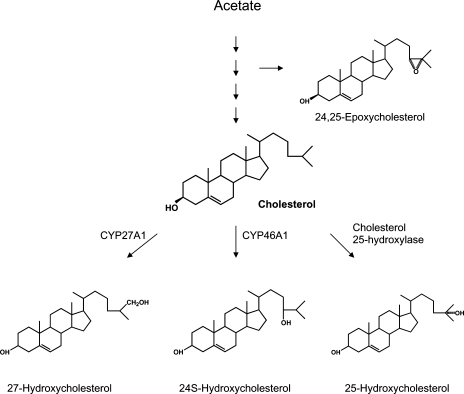
Oxsterols are oxygenated metabolites of cholesterol that are short-lived intermediates or end products in cholesterol excretion pathways. They are present in very low concentrations in mammalian systems, always accompanied by a high excess of cholesterol. According to current concepts, side-chain oxidized oxysterols may be mediators of many cholesterol-induced regulatory effects. When added to cultured cells in vitro, side-chain oxidized oxysterols limit intracellular cholesterol levels by at least three different mechanisms: 1) binding to Insig with subsequent block of the sterol regulatory element-binding proteins (SREBP)-mediated mechanism for regulation of sterol sensitive genes; 2) increasing degradation of hydroxymethylglutaryl-coenzyme A (HMG-CoA) reductase, eventually by a mechanism involving binding of Insig to the enzyme; 3) activation of LXR-mediated stimulation of cholesterol transporters and cholesterol metabolism. Addition of pure unesterified oxysterols to cell cultures is however highly unphysiological, and the in vivo relevance of such experiments is questionable. Transgenic mouse models with markedly reduced or increased concentration of some specific oxysterols do not present marked disturbances in cholesterol turnover and homeostasis. Oxysterol-binding proteins such as LXR have been conclusively shown to be of importance for cholesterol turnover in vivo, but their physiological ligands have not yet been defined with certainty. During the last few years, new experimental data has accumulated supporting the contention that side-chain oxysterols are involved in some LXR-mediated regulation in vivo, at least in some biological systems. The new findings will be critically reviewed here.
Figures

References
-
- Schroepfer G. J. 2000. Oxysterols: modulators of cholesterol metabolism and other processes. Physiol. Rev. 80 361–554. - PubMed
-
- Björkhem I., and U. Diczfalusy. 2002. Oxysterols: friends, foes or just fellow passengers. Arterioscler. Thromb. Vasc. Biol. 22 734–742. - PubMed
-
- Lange Y., D. S. Ory, Y. Jin, L. H. Lanier, F. Hsu, and T. L. Steck. 2008. Effectors of rapid homeostatic responses of endoplasmic reticulum cholesterol and HMG CoA reductase. J. Biol. Chem. 283 1445–1455. - PubMed
-
- Lange Y., J. Ye, and F. Strebel. 1995. Movement of 25-hydroxycholesterol from the plasma membrane to the rough endoplasmic reticulum in cultured hepatoma cells. J. Lipid Res. 36 1092–1097. - PubMed
Publication types
MeSH terms
Substances
LinkOut - more resources
Full Text Sources
Other Literature Sources
