


Ictal hypoxemia in localization-related epilepsy: analysis of incidence, severity and risk factors
- PMID: 18952672
- PMCID: PMC2639205
- DOI: 10.1093/brain/awn277
Ictal hypoxemia in localization-related epilepsy: analysis of incidence, severity and risk factors
Abstract
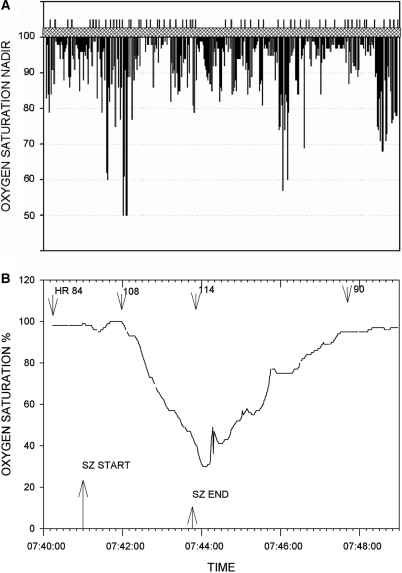
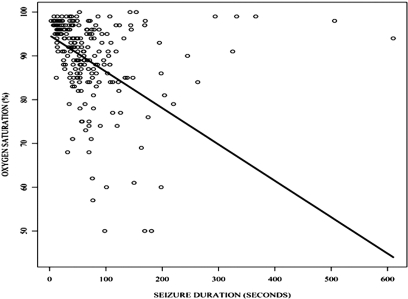
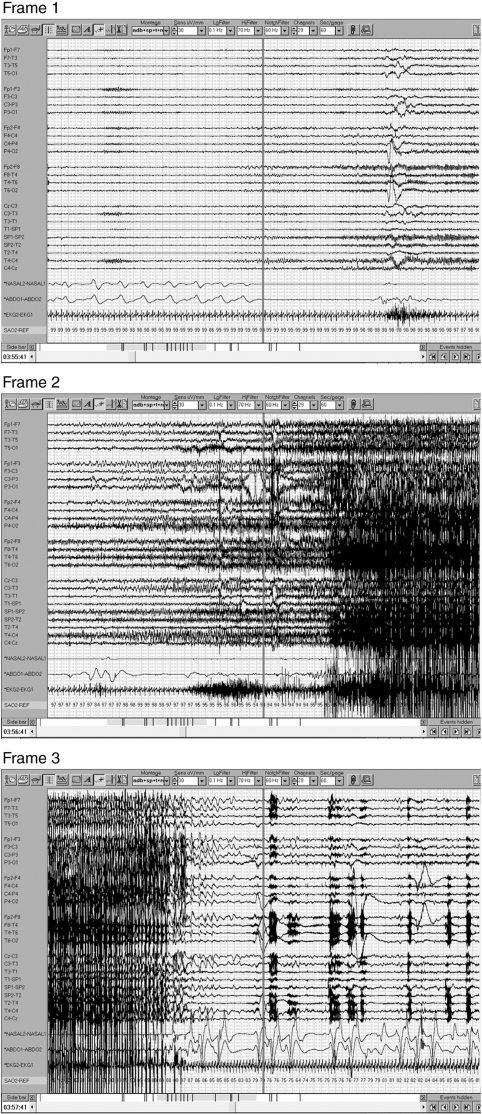
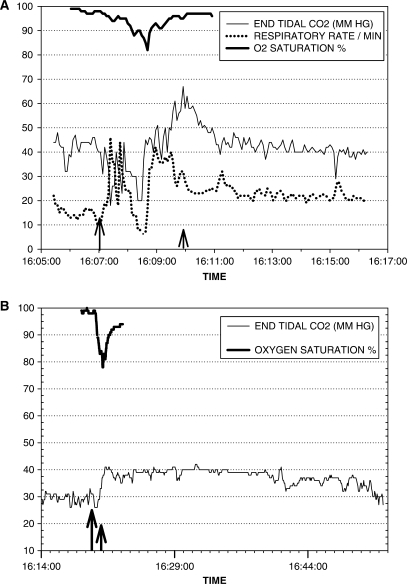
Ictal hypoxemia has been reported in small series of cases and may contribute to sudden unexpected death in epilepsy (SUDEP). We sought to determine the incidence and severity of ictal hypoxemia in patients with localization-related epilepsy undergoing in-patient video-EEG telemetry. We examined whether seizure-associated oxygen desaturation was a consequence of hypoventilation and whether factors such as seizure localization and lateralization, seizure duration, contralateral spread of seizures, patient position at seizure onset and body mass index influenced ictal-related hypoxemia. A total of 304 seizures with accompanying oxygen saturation data were recorded in 56 consecutive patients with intractable localization-related epilepsy; 51 of 304 seizures progressed to generalized convulsions. Pulse oximetry showed oxygen desaturations below 90% in 101 (33.2%) of all seizures with or without secondary generalization, with 31 (10.2%) seizures accompanied by desaturations below 80% and 11 (3.6%) seizures below 70%. The mean duration of desaturation below 90% was 69.2 +/- 65.2 s (47; 6-327). The mean oxygen saturation nadir following secondary generalization was 75.4% +/- 11.4% (77%; 42-100%). Desaturations below 90% were significantly correlated with seizure localization [P = 0.005; odds ratio (OR) of temporal versus extratemporal = 5.202; 95% CI = (1.665, 16.257)], seizure lateralization [P = 0.001; OR of right versus left = 2.098; 95% CI = (1.078, 4.085)], contralateral spread of seizures [P = 0.028; OR of contralateral spread versus no spread = 2.591; 95% CI = (1.112, 6.039)] and gender [P = 0.048; OR of female versus male = 0.422; 95% CI = (0.179, 0.994)]. In the subset of 253 partial seizures without secondary generalized convulsions, 34.8% of seizures had desaturations below 90%, 31.8% had desaturations below 80% and 12.5% had desaturations below 70%. The degree of desaturation was significantly correlated with seizure duration (P = 0.001) and with electrographic evidence of seizure spread to the contralateral hemisphere (P = 0.003). Central apnoeas or hypopnoeas occurred with 50% of 100 seizures. Mixed or obstructive apnoeas occurred with 9% of these seizures. End-tidal carbon dioxide (ETCO2) was recorded in seven patients (19 seizures). The mean increase in ETCO2 from preictal baseline was 18.6 +/- 17.7 mm Hg (13.2; 2.8-77.8). In these 19 seizures, all oxygen desaturations below 85% were accompanied by an increase in ETCO2. Ictal hypoxemia occurs often in patients with localization-related epilepsy and may be pronounced and prolonged; even with seizures that do not progress to generalized convulsions. Oxygen desaturations are accompanied by increases in ETCO2, supporting the assumption that ictal oxygen desaturation is a consequence of hypoventilation. Ictal hypoxemia and hypercapnia may contribute to SUDEP.
Figures
Comment in
-
Breathing new life into the fight against sudden death in epilepsy.Epilepsy Curr. 2009 Sep-Oct;9(5):137-9. doi: 10.1111/j.1535-7511.2009.01319.x. Epilepsy Curr. 2009. PMID: 19826505 Free PMC article. No abstract available.
References
-
- Bassal M, Bianchi AL. Inspiratory onset or termination induced by electrical stimulation of the brain. Respir Physiol. 1982;50:23–40. - PubMed
-
- Blum AS, Ives JR, Goldberger AL, Al-Aweel IC, Krishnamurthy KB, Drislane FW, et al. Oxygen desaturations triggered by partial seizures: implications for cardiopulmonary instability in epilepsy. Epilepsia. 2000;41:536–41. - PubMed
-
- Blumhardt LD, Smith PEM, Owen L. Electrographic accompaniments of temporal lobe epileptic seizures. Lancet. 1986;1:1051–6. - PubMed
-
- Frysinger RC, Harper RM. Cardiac and respiratory correlations with unit discharge in epileptic human temporal lobe. Epilepsia. 1990;31:162–71. - PubMed
-
- Hewertson J, Boyd SG, Samuels MP, Neville BG, Southall DP. Hypoxemia and cardiorespiratory changes during epileptic seizures in children. Dev Med Child Neurol. 1996;38:511–22. - PubMed
Publication types
MeSH terms
Grants and funding
LinkOut - more resources
Full Text Sources
Other Literature Sources
