. 2008;3(10):e3527.
doi: 10.1371/journal.pone.0003527. Epub 2008 Oct 27.

Telomeric expression sites are highly conserved in Trypanosoma brucei

Affiliations

Telomeric expression sites are highly conserved in Trypanosoma brucei

Christiane Hertz-Fowler et al. PLoS One. 2008.

Abstract

Subtelomeric regions are often under-represented in genome sequences of eukaryotes. One of the best known examples of the use of telomere proximity for adaptive purposes are the bloodstream expression sites (BESs) of the African trypanosome Trypanosoma brucei. To enhance our understanding of BES structure and function in host adaptation and immune evasion, the BES repertoire from the Lister 427 strain of T. brucei were independently tagged and sequenced. BESs are polymorphic in size and structure but reveal a surprisingly conserved architecture in the context of extensive recombination. Very small BESs do exist and many functioning BESs do not contain the full complement of expression site associated genes (ESAGs). The consequences of duplicated or missing ESAGs, including ESAG9, a newly named ESAG12, and additional variant surface glycoprotein genes (VSGs) were evaluated by functional assays after BESs were tagged with a drug-resistance gene. Phylogenetic analysis of constituent ESAG families suggests that BESs are sequence mosaics and that extensive recombination has shaped the evolution of the BES repertoire. This work opens important perspectives in understanding the molecular mechanisms of antigenic variation, a widely used strategy for immune evasion in pathogens, and telomere biology.


Conflict of interest statement

Competing Interests: The authors have declared that no competing interests exist.

Figures

Figure 1
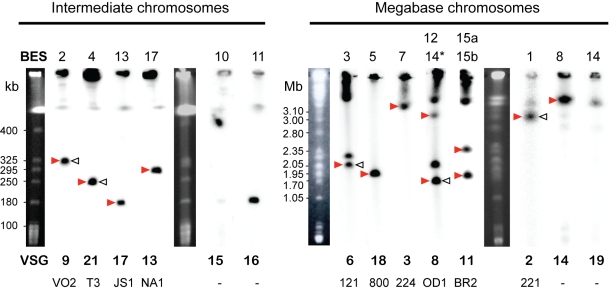
Figure 1. Chromosomal distribution of BES-resident VSGs.
Red arrows indicate BES randomly tagged in this study with NEO. Open arrows indicate BES activated by and subsequently tagged. Names of VSG genes are indicated at the bottom, using the newly proposed strain-specific numbering (top row) and lab-specific names (bottom row). BES10 and 11 were not tagged in either study. BES14 is represented in two lanes: 14* refers to TAR117 (which was not sequenced and harbours VSG8), whereas 14$ refers to TAR10 (which was sequenced and harbours VSG9).
Figure 2
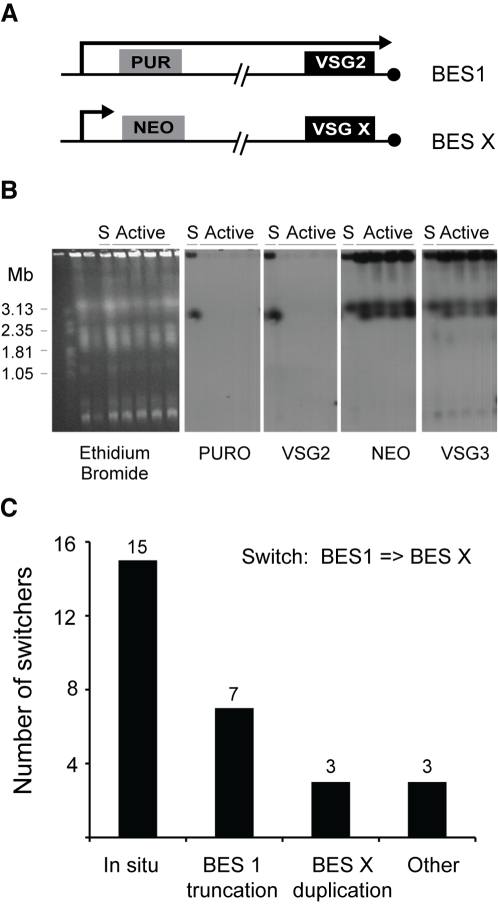
Figure 2. Types of switching mechanisms observed for tagged BES clones in vitro.
A. NEO-tagged clones have PUR in BES1 and NEO in an unknown BES. B. Example of a BES duplication. PFGE analysis of a BES7-tagged clone (17.9), when this BES is silent (S) and after activation. NEO and VSG3 genes were duplicated onto the chromosome that originally contained PUR and VSG221/427-2. C. Quantification of the frequency of the different types of mechanisms. “Other” refers to recombination events that involved more than 2 chromosomes.
Figure 3
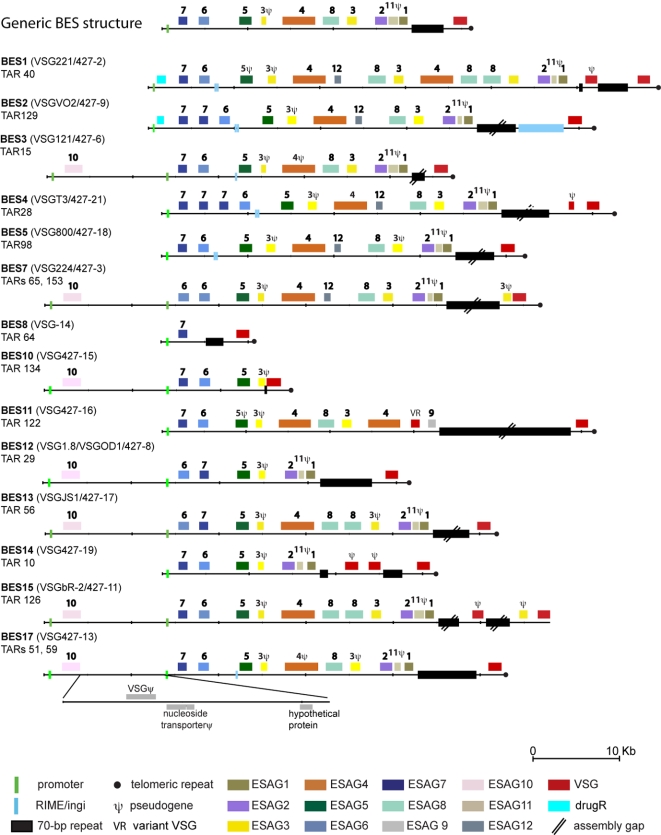
Figure 3. Overview of T. brucei Lister 427 BES.
BES are drawn to scale and have been aligned at their 5′-most ESAG7 or ESAG6 sequence. The inset shows the regions conserved between the dual promoters present in some of the clones. The VSG indicated in front of the BES label refers to the telomere-proximal VSG.
Figure 4
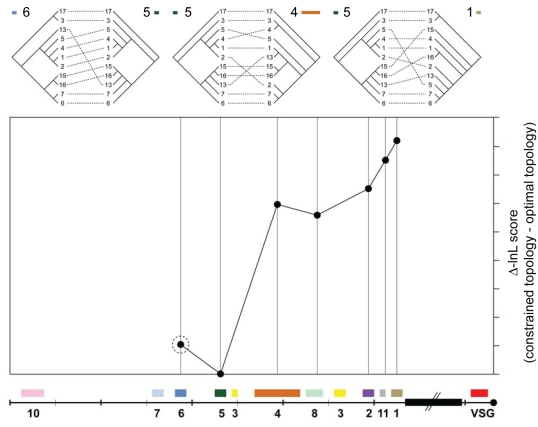
Figure 4. Quantifying the difference in phylogenetic signal along the bloodstream expression site.
A. Three tanglegrams relate the ESAG5 phylogeny with those of ESAG6 (close match), ESAG4 (moderate incongruence) and ESAG1 (severe incongruence). Dashed lines link corresponding expression sites in each tree. Incongruence between trees increases from left to right. B. Comparison of likelihood scores between optimal and constrained tree topologies for ESAG5. The phylogenies of six other ESAG loci (indicated by a cartoon of the expression site) were used to constrain the estimation of the ESAG5 tree; the difference in likelihood score between each of these constrained trees and the optimal ESAG5 tree is plotted along the expression site. Non-significant differences in likelihood are denoted by a dashed circle as evident when constraining the ESAG5 topology with the ESAG6 topology; however, enforcing the topologies of central loci (ESAGs 4 and 8) caused a moderate decrease in likelihood, whilst constraining with ESAGs 2, 11 or 1 caused a larger decrease.

References

    1. Mefford HC, Trask BJ. The complex structure and dynamic evolution of human subtelomeres. Nat Rev Genet. 2002;3:91–102. - PubMed
    1. Horn D, Barry JD. The central roles of telomeres and subtelomeres in antigenic variation in African trypanosomes. Chromosome Res. 2005;13:525–533. - PubMed
    1. Fedorova ND, Khaldi N, Joardar VS, Maiti R, Amedeo P, et al. Genomic islands in the pathogenic filamentous fungus Aspergillus fumigatus. PLoS Genet. 2008;4:e1000046. - PMC - PubMed
    1. Pryde FE, Gorham HC, Louis EJ. Chromosome ends: all the same under their caps. Curr Opin Genet Dev. 1997;7:822–828. - PubMed
    1. Pays E. Regulation of antigen gene expression in Trypanosoma brucei. Trends Parasitol. 2005;21:517–520. - PubMed

Publication types