


HPV16 E7-dependent transformation activates NHE1 through a PKA-RhoA-induced inhibition of p38alpha
- PMID: 18953413
- PMCID: PMC2568952
- DOI: 10.1371/journal.pone.0003529
HPV16 E7-dependent transformation activates NHE1 through a PKA-RhoA-induced inhibition of p38alpha
Retraction in
-
Retraction: HPV16 E7-Dependent Transformation Activates NHE1 through a PKA-RhoA-Iinduced Inhibition of p38alpha.PLoS One. 2019 Jun 10;14(6):e0218402. doi: 10.1371/journal.pone.0218402. eCollection 2019. PLoS One. 2019. PMID: 31181118 Free PMC article. No abstract available.
Abstract
Background: Neoplastic transformation originates from a large number of different genetic alterations. Despite this genetic variability, a common phenotype to transformed cells is cellular alkalinization. We have previously shown in human keratinocytes and a cell line in which transformation can be turned on and followed by the inducible expression of the E7 oncogene of human papillomavirus type 16 (HPV16), that intracellular alkalinization is an early and essential physiological event driven by the up-regulation of the Na/(+)H(+) exchanger isoform 1 (NHE1) and is necessary for the development of other transformed phenotypes and the in vivo tumor formation in nude mice.
Methodology: Here, we utilize these model systems to elucidate the dynamic sequence of alterations of the upstream signal transduction systems leading to the transformation-dependent activation of NHE1.
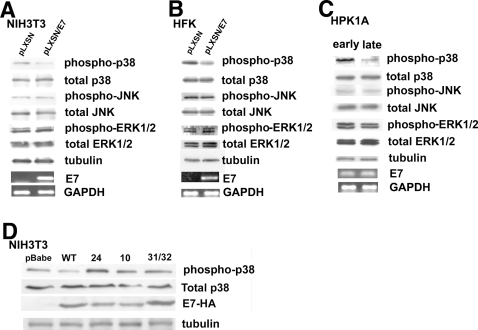
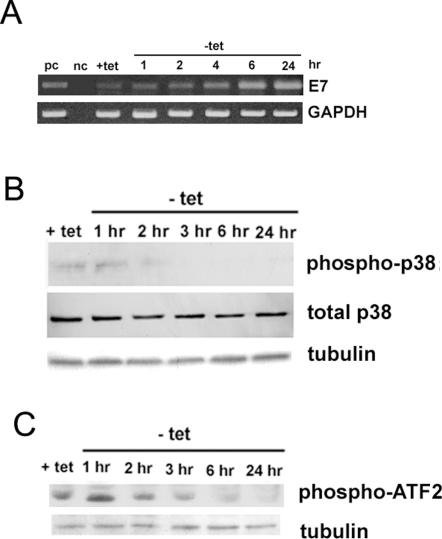
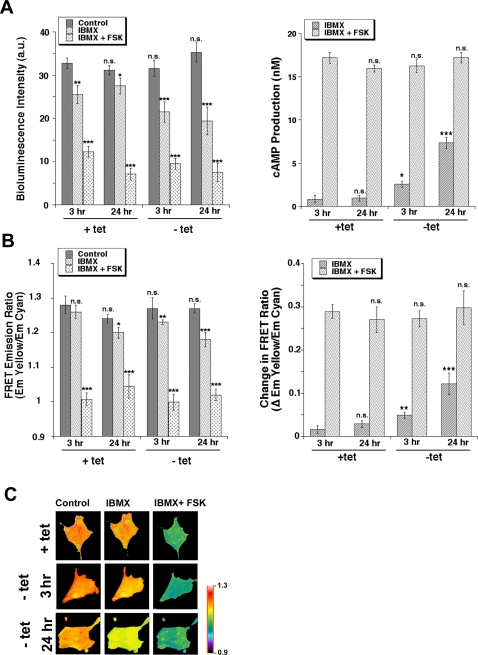
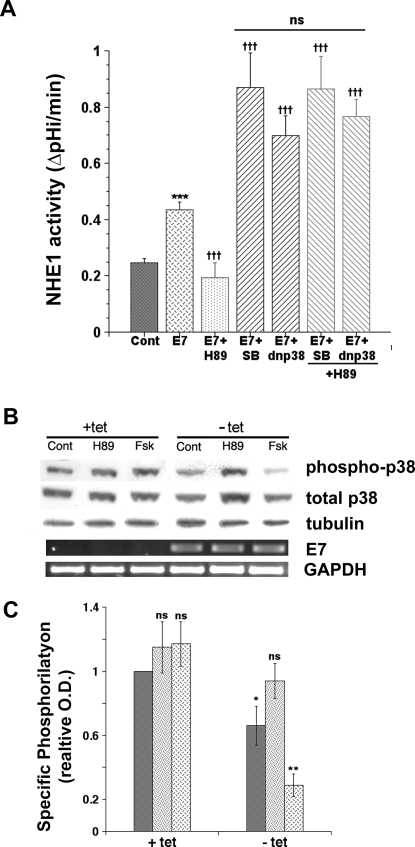
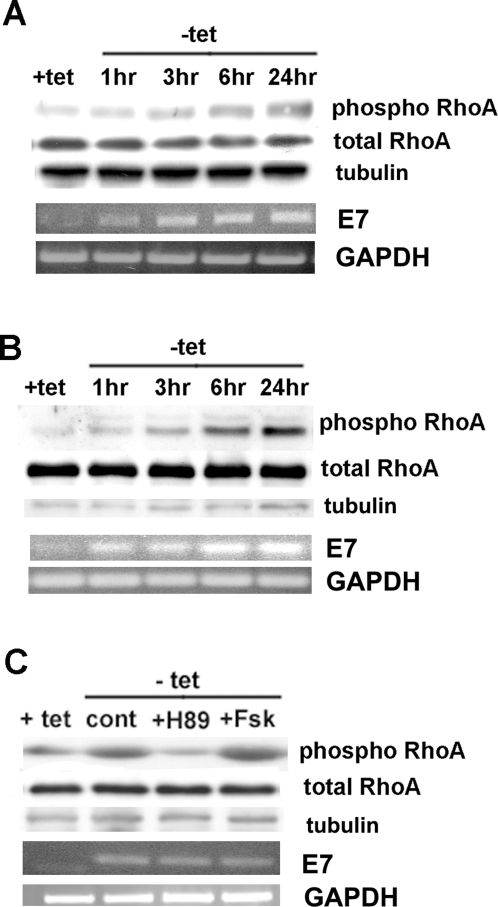
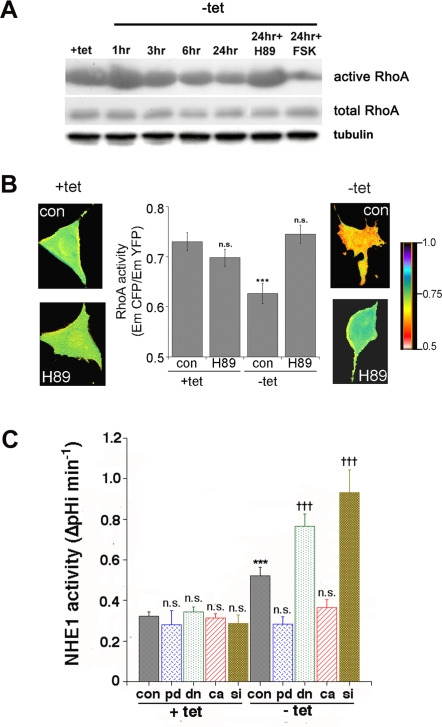
Principal findings: We observe that a down-regulation of p38 MAPK activity is a fundamental step in the ability of the oncogene to transform the cell. Further, using pharmacological agents and transient transfections with dominant interfering, constitutively active, phosphorylation negative mutants and siRNA strategy to modify specific upstream signal transduction components that link HPV16 E7 oncogenic signals to up-regulation of the NHE1, we demonstrate that the stimulation of NHE1 activity is driven by an early rise in cellular cAMP resulting in the down-stream inhibition of p38 MAPK via the PKA-dependent phosphorylation of the small G-protein, RhoA, and its subsequent inhibition.
Conclusions: All together these data significantly improve our knowledge concerning the basic cellular alterations involved in oncogene-driven neoplastic transformation.
Conflict of interest statement
Figures
References
-
- Hanahan D, Weinberg RA. The hallmarks of cancer. Cell. 2000;100(1):57–70. - PubMed
-
- Harguindey S, Orive G, Luis Pedraz J, Paradiso A, Reshkin SJ. The role of pH dynamics and the Na+/H+ antiporter in the etiopathogenesis and treatment of cancer. Two faces of the same coin–one single nature. Biochim Biophys Acta. 2005;1756(1):1–24. - PubMed
-
- Khavari TA, Rinn J. Ras/Erk MAPK signaling in epidermal homeostasis and neoplasia. Cell Cycle. 2007;6(23):2928–2931. - PubMed
-
- Cuevas BD, Abell AN, Johnson GL. Role of mitogen-activated protein kinase kinase kinases in signal integration. Oncogene. 2007;26(22):3159–3171. - PubMed
Publication types
MeSH terms
Substances
LinkOut - more resources
Full Text Sources
Molecular Biology Databases
Miscellaneous
