


Patterns and outcomes of pediatric facial fractures in the United States: a survey of the National Trauma Data Bank
- PMID: 18954784
- PMCID: PMC3049162
- DOI: 10.1016/j.jamcollsurg.2008.06.333
Patterns and outcomes of pediatric facial fractures in the United States: a survey of the National Trauma Data Bank
Erratum in
- J Am Coll Surg.2009 Feb;208(2):325
Abstract
Background: Pediatric trauma involving the bones of the face is associated with severe injury and disability. Although much is known about the epidemiology of facial fractures in adults, little is known about national injury patterns and outcomes in children in the US.
Study design: The epidemiology of facial injuries in children and adolescents (ages 0 to 18 years) was described using the National Trauma Data Bank (2001 to 2005) to examine facial fracture pattern, mechanism, and concomitant injury by age.
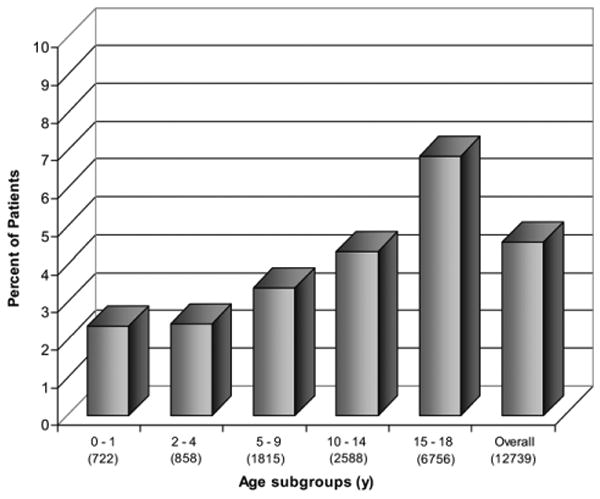
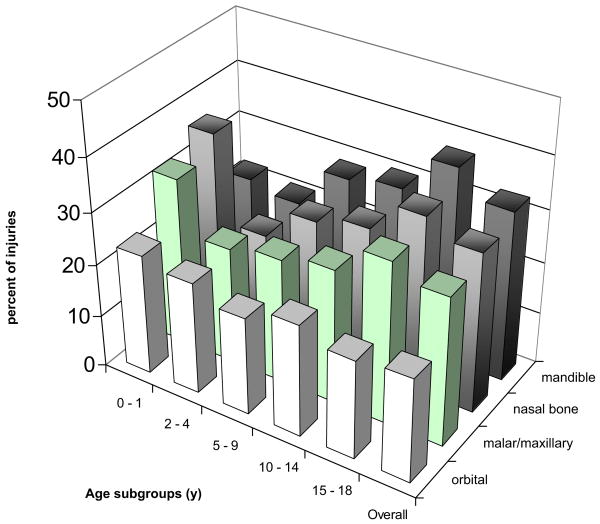
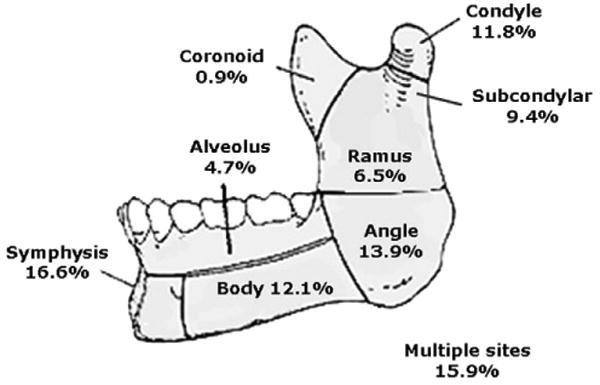
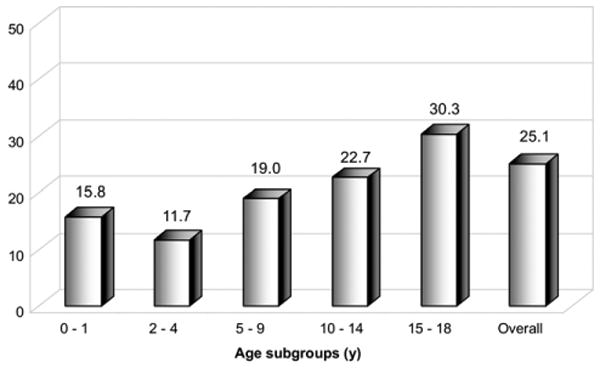
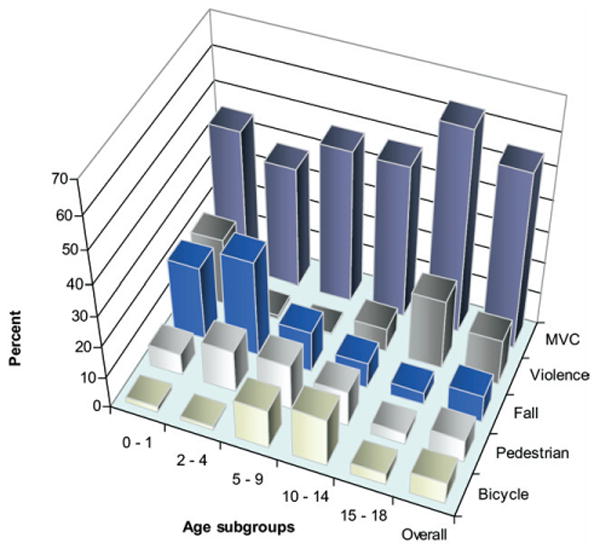
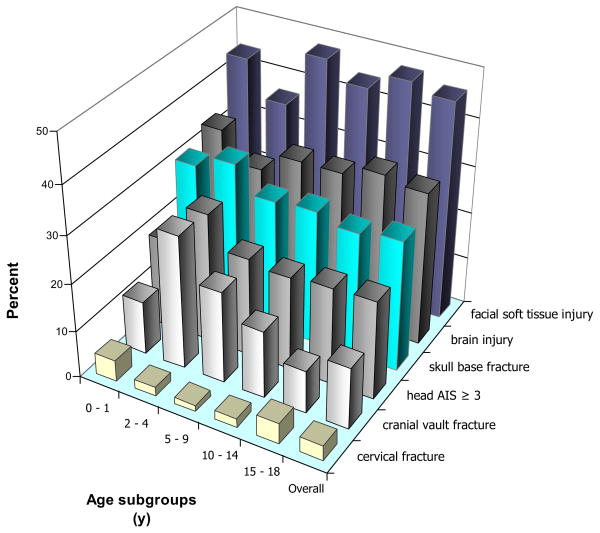
Results: A total of 12,739 (4.6%) facial fractures were identified among 277,008 pediatric trauma patient admissions. The proportion of patients with facial fractures increased substantially with age. The most common facial fractures were mandible (32.7%), nasal (30.2%), and maxillary/zygoma (28.6%). The most common mechanisms of injury were motor vehicle collision (55.1%), violence (11.8%), and falls (8.6%). These fracture patterns and mechanisms of injury varied with age. Compared with patients without facial fractures, patients with fractures exhibited substantial injury severity, hospital lengths of stay, ICU lengths of stay, ventilator days, and hospital charges. In addition, patients with facial fractures had more severe associated injury to the head and chest and considerably higher overall mortality.
Conclusions: Causes and patterns of facial fractures vary with age. Cranial and central facial injuries are more common among toddlers and infants, and mandible injuries are more common among adolescents. Although bony craniofacial trauma is relatively uncommon among the pediatric population, it remains a substantial source of mortality, morbidity, and hospital resource use. Continued efforts toward injury prevention are warranted.
Figures
References
-
- 10 Leading Causes of Death, US. Atlanta, GA: Center for Disease Control and Prevention, National Center for Injury Prevention and Control; 2004.
-
- Nawar EW, Niska RW, Xu J. National Hospital Ambulatory Medical Care Survey: 2005 Emergency Department Survey. Atlanta, GA: Center for Disease Control and Prevention, National Center for Health Statistics; 2007.
-
- National Hospital Ambulatory Medical Care Survey (NHAMCS) Atlanta, GA: Center for Disease Control and Prevention, National Center for Health Statistics; 1999.
-
- Dufresne C, Manson P. Plastic surgery. 2nd. Philadelphia: Elsevier; 2006. Pediatric facial injuries; pp. 381–462.
-
- Parks S, Kaufmann C, editors. Advanced trauma life support. Chicago: American College of Surgeons; 2004. pp. 243–262.
Publication types
MeSH terms
Grants and funding
LinkOut - more resources
Full Text Sources
Medical
