


Use, Attitudes and Knowledge of Complementary and Alternative Drugs (CADs) Among Pregnant Women: a Preliminary Survey in Tuscany
- PMID: 18955336
- PMCID: PMC2892351
- DOI: 10.1093/ecam/nen031
Use, Attitudes and Knowledge of Complementary and Alternative Drugs (CADs) Among Pregnant Women: a Preliminary Survey in Tuscany
Abstract
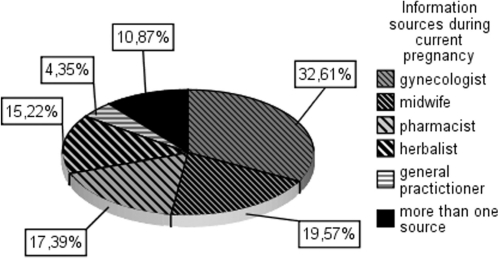
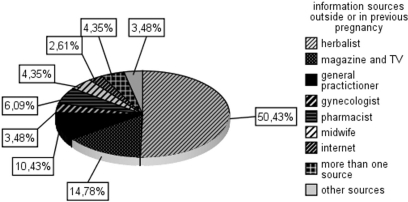
To explore pregnant women's use, attitudes, knowledge and beliefs of complementary and alternative drugs (CADs) defined as products manufactured from herbs or with a natural origin. A preliminary survey was conducted among 172 pregnant women in their third trimester of pregnancy, consecutively recruited in two obstetrical settings; 15 women were randomly selected to compute a test-to-retest analysis. Response rate was 87.2%. Test-to-retest analysis showed a questionnaire's reproducibility exceeding a K-value of 0.7 for all items. Mean age was 32.4 ± 0.4 years; most women were nulliparae (62.7%). The majority of subjects (68%) declared to have used one or more CADs during their lifetime; 48% of pregnant women reported taking at least one CAD previously and during the current pregnancy. Women's habitual use of CADs meant they were at higher risk of taking CADs also during pregnancy (adjusted odds ratio = 10.8; 95% confidence interval: 4.7-25.0). Moreover, 59.1% of the subjects were unable to correctly identify the type of CADs they were using. The majority of women resorted to gynecologists as the primary information source for CADs during pregnancy, while they mainly referred to herbalists when not pregnant. Habitual use of CADs seems to be a strong predictor for their ingestion also during pregnancy; in addition most subjects were unable to correctly identify the products they were taking. In the light of the scanty data concerning the safety of CADs during pregnancy, these preliminary results confirm the need to investigate thoroughly the situation of pregnant women and CADs consumption.
Figures
Comment in
-
Complementary and alternative drugs.Midwives. 2010 Oct-Nov:19. Midwives. 2010. PMID: 24888114 No abstract available.
References
-
- National Center for Complementary and Alternative Medicine (NCCAM) Available at: http://nccam.nih.gov/
-
- World Health Organization. 2003. Fact Sheet No 134: Traditional Medicine. Available at: http://www.who.int/mediacentre/fact-sheets/fs134/en/index.html.
-
- Eisenberg DM, Davis RB, Ettner SL, Appel S, Wilkey S, Van Rompay M, et al. Trends in alternative medicine use in the United States, 1990–1997: results of a follow-up national survey. JAMA. 1998;280:1569–75. - PubMed
LinkOut - more resources
Full Text Sources
Miscellaneous
