. 2011:2011:512697.
doi: 10.1093/ecam/nen045. Epub 2011 Jun 22.

Antidepressant-like Effect of l-perillaldehyde in Stress-induced Depression-like Model Mice through Regulation of the Olfactory Nervous System

Affiliations

Antidepressant-like Effect of l-perillaldehyde in Stress-induced Depression-like Model Mice through Regulation of the Olfactory Nervous System

N Ito et al. Evid Based Complement Alternat Med. 2011.

Abstract

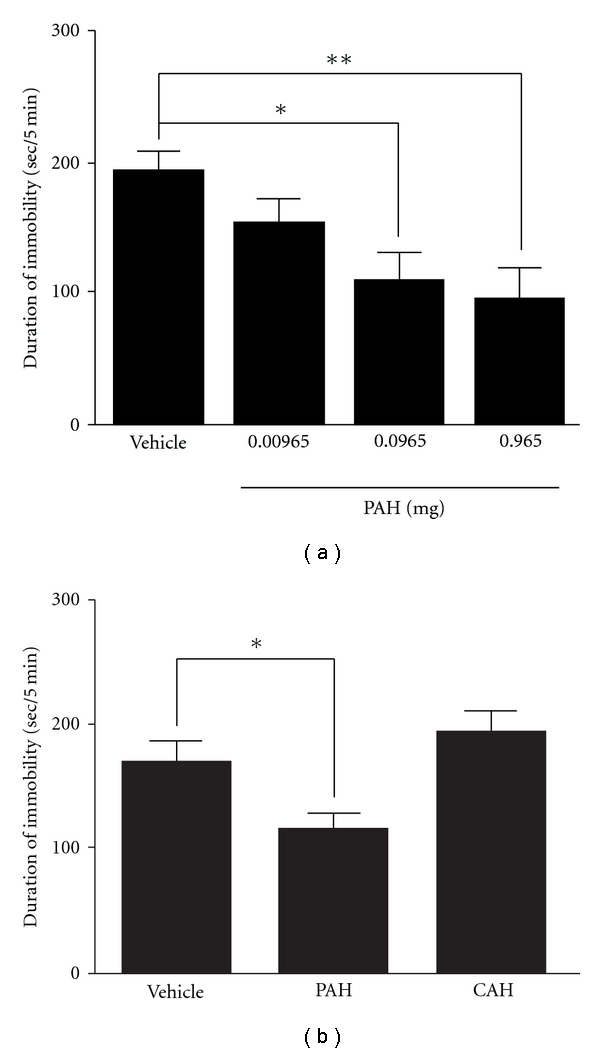
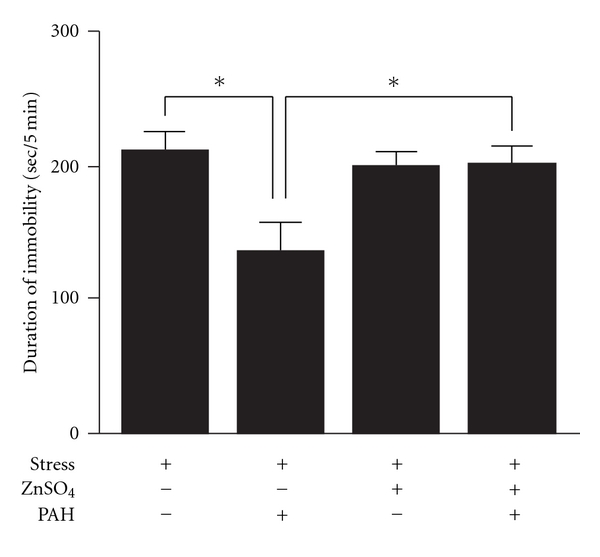
Perillae Herba (a leaf of Perilla frutescens) has been prescribed as one of the component herbs in certain Kampo (Japanese herbal) medicines that are used clinically for the improvement of depressive mood. l-Perillaldehyde (PAH) is a major component in the essential oil containing in Perillae Herba, but its antidepressant-like effect has not been reported. To clarify the antidepressant-like effect of PAH, the inhaled effect of PAH on stress-induced depression-like model mice prepared by subjection to a combination of forced swimming and chronic mild stresses was investigated. The degree of the depression-like state was measured by the animal's duration of immobility using a forced swimming test. Inhalation of PAH (0.0965 and 0.965 mg/mouse/day, 9 days) significantly shortened the duration of immobility of the depression-like model mice and did not affect locomotor activity. However, another odor substance, cinnamaldehyde containing in Cinnamomi Cortex, exhibited no reduction in the immobility. The reduction in the immobility induced by the inhalation of PAH was prevented on anosmia-induced mice prepared by intranasal irrigation with zinc sulfate. These results suggest that the inhalation of PAH shows antidepressant-like activity through the olfactory nervous function.


Figures
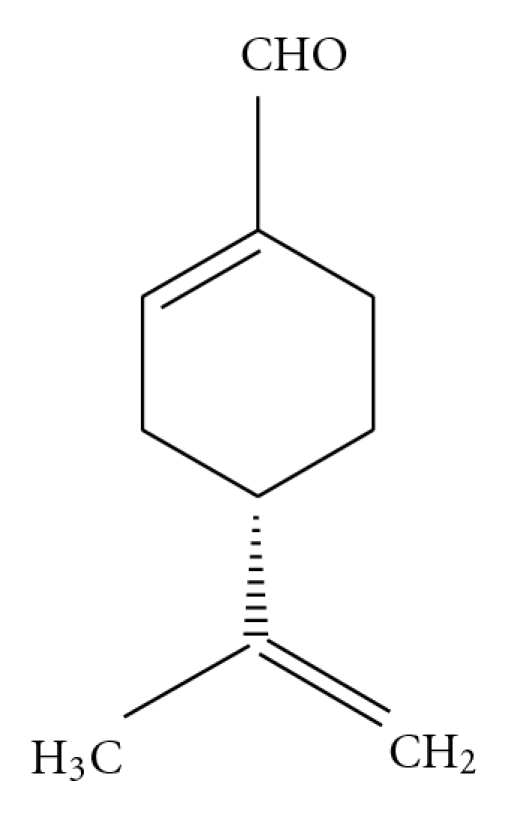
Figure 1
Figure 1
Structure of l-perillaldehyde (PAH).
Scheme 1
Scheme 1
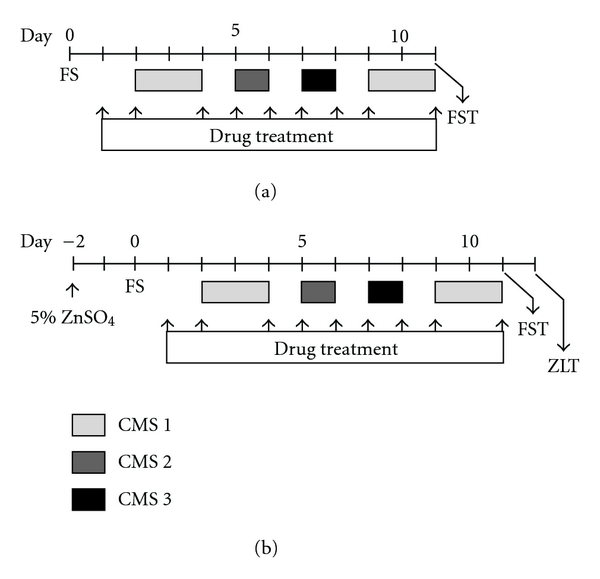
Schedule for the drug treatment on stress-induced depression-like model mice (a) and preparation of anosmia-induced mice (b). (a) Briefly, mice were individually placed into water for 15 min (forced swimming; FS). After 2 days, the mice were exposed to chronic mild stress (CMS 1, CMS 2 and CMS 3), which consisted of three different stress situations. The mice were then placed again into water at 60 min after the final treatment of the drug, and the total duration of immobility during a 5 min forced swimming test (FST) was measured. Drugs were treated at days 1, 2, 4, 5, 6, 7, 8, 9 and 11 (9 times). (b) Briefly, intranasal irrigation with 20 μl of 5% ZnSO4 was performed slowly into the bilateral nose under light anesthesia 2 days before FS. After exposure to stresses (mentioned above), the total duration of immobility during a 5 min FST was measured. Following day, the time which the mice spent on the 1% isovaleric acid side was measured for 5 min in the ZnSO4-lesioned test (ZLT). Drugs were treated as same schedule as above (9 times).
Figure 2
Figure 2
Effects of the inhalation of PAH and/or CAH on the duration of immobility of stress-induced depression-like model mice in the FST. (a) After treatments of PAH (0.00965, 0.0965 and 0.965 mg) for 9 days, the duration of immobility was measured. (b) After treatments of PAH (0.965 mg) and CAH (1.05 mg) for 9 days, the duration of immobility was measured. Each column represents the mean ± SEM of 8–10 mice per group. *P <  .05 and **P <  .01 with Dunnett's test (a) or Fisher's PLSD test (b). CAH, cinnamaldehyde.
Figure 3
Figure 3
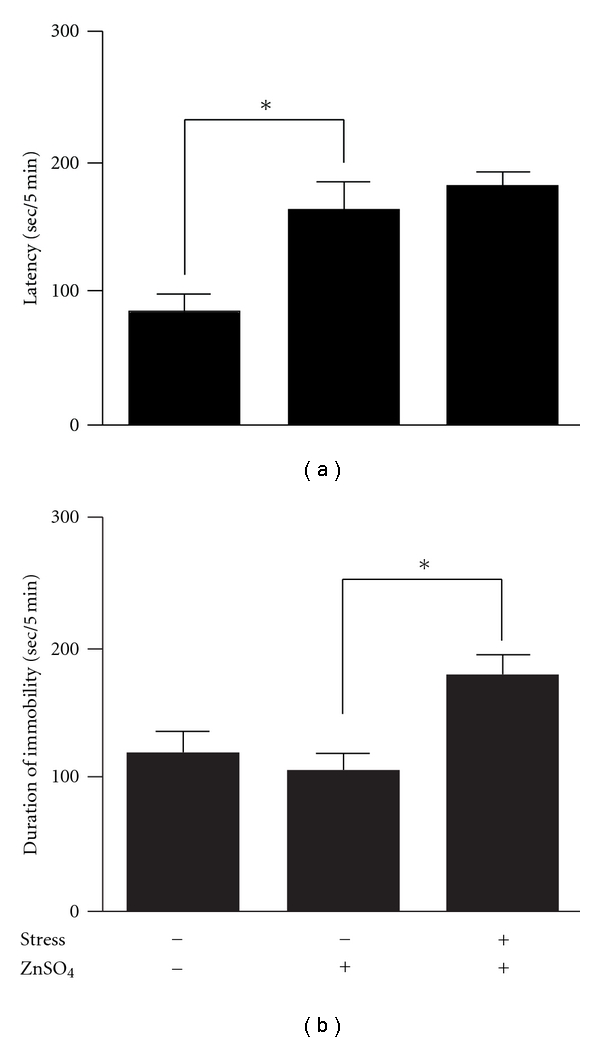
Influences of ZnSO4 on the latency of 1% isovaleric acid side in the ZLT (a) and the duration of immobility of stress-induced depression-like model mice in the FST (b). Each column represents the mean ± SEM of 10–11 mice per group. *P <  .01 with Fisher's PLSD test. ZLT, ZnSO4-lesioned test.
Figure 4
Figure 4
Effects of PAH on the duration of immobility in the FST against anosmia-induced depression-like model mice. After treatments of PAH (0.965 mg) for 9 days, the duration of immobility was measured. Each column represents the mean ± SEM of 10–11 mice per group. *P <  .01 with Tukey's test.

References

    1. Andrade L, Caraveo-Anduaga JJ, Berglund P, Bijl RV, De Graaf R, Vollebergh W. The epidemiology of major depressive episodes: results from the International Consortium of Psychiatric Epidemiology (ICPE) Surveys. International Journal of Methods in Psychiatric Research. 2003;12:3–21. - PMC - PubMed
    1. Komori T, Fujiwara R, Tanida M, Nomura J. Potential antidepressant effects of lemon odor in rats. European Neuropsychopharmacology. 1995;5(4):477–480. - PubMed
    1. Ito N, Nagai T, Yabe T, Nunome S, Hanawa T, Yamada H. Antidepressant-like activity of a Kampo (Japanese herbal) medicine, Koso-san (Xiang-Su-San), and its mode of action via the hypothalamic-pituitary-adrenal axis. Phytomedicine. 2006;13(9-10):658–667. - PubMed
    1. Luo L, Nong Wang J, Kong LD, Jiang QG, Tan RX. Antidepressant effects of Banxia Houpu decoction, a traditional Chinese medicinal empirical formula. Journal of Ethnopharmacology. 2000;73(1-2):277–281. - PubMed
    1. Takeda H, Tsuji M, Inazu M, Egashira T, Matsumiya T. Rosmarinic acid and caffeic acid produce antidepressive-like effect in the forced swimming test in mice. European Journal of Pharmacology. 2002;449(3):261–267. - PubMed

LinkOut - more resources