


Cohort study of fatty acid synthase expression and patient survival in colon cancer
- PMID: 18955444
- PMCID: PMC2630484
- DOI: 10.1200/JCO.2008.18.2675
Cohort study of fatty acid synthase expression and patient survival in colon cancer
Abstract
Purpose: Energy balance seems to be important in the pathogenesis of colon cancer. Fatty acid synthase (FASN) is physiologically regulated by energy balance and is often upregulated in colorectal cancer. Nonetheless, the influence of FASN expression on patient outcome is uncertain.
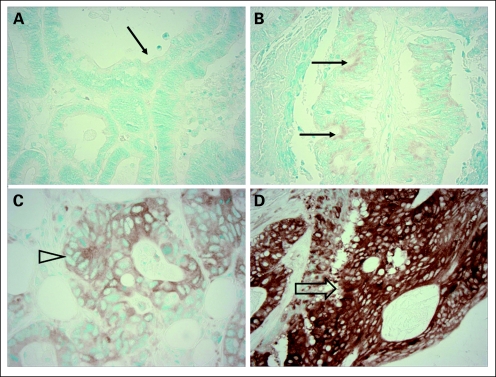
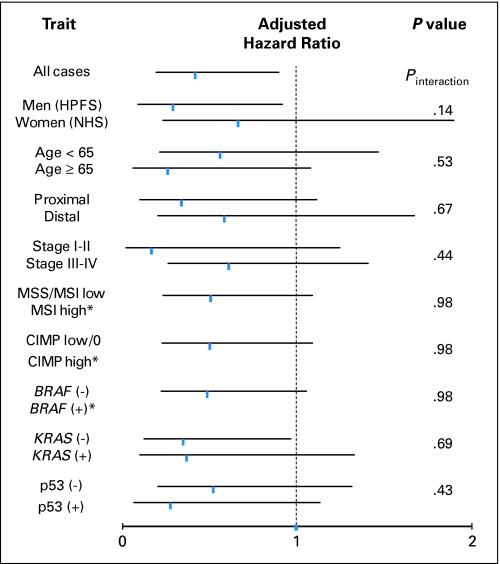
Patients and methods: Using the database of 647 patients with colon cancer in two independent cohort studies, FASN overexpression was detected in 84 tumors (13%) by immunohistochemistry. Cox proportional hazards models calculated hazard ratios (HRs) of colon cancer-specific and overall mortalities, adjusted for patient characteristics and related tumoral features, including KRAS, BRAF, p53, microsatellite instability and the CpG island methylation phenotype.
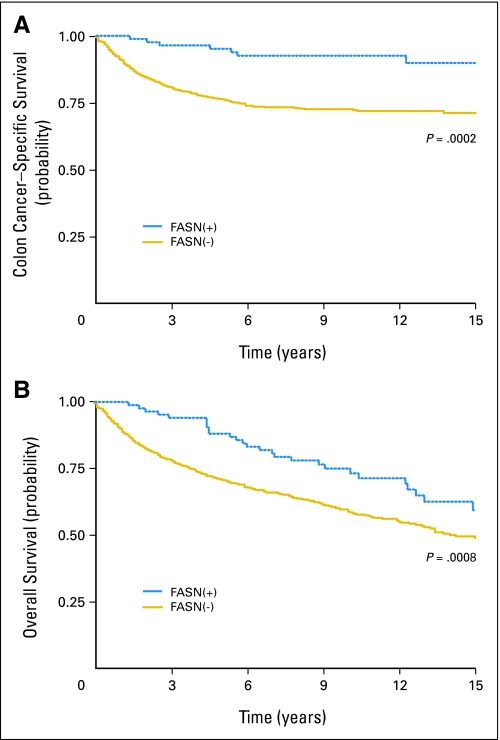
Results: There were 279 deaths, including 160 colon cancer-specific deaths. FASN overexpression was associated with a significant reduction in colon cancer-specific mortality by both univariate and multivariate analyses (adjusted HR, 0.41; 95% CI, 0.19 to 0.89) and an insignificant trend toward improved overall mortality (adjusted HR, 0.75; 95% CI, 0.50 to 1.13). Notably, the effect of FASN expression on mortality might be different according to body mass index (BMI; P(interaction) = .019); the adjusted HR of overall mortality for FASN overexpression was 0.63 (95% CI, 0.39 to 1.02) among patients with BMI less than 27.5 kg/m(2) and 2.91 (95% CI, 1.19 to 7.12) among those with BMI >or= 27.5 kg/m(2). Moreover, the adverse effect of moderate overweight/obesity on overall survival was limited to FASN-positive tumors (adjusted HR, 4.10; 95% CI, 1.14 to 14.8; BMI >or= 27.5 kg/m(2) v < 27.5 kg/m(2)). CONCLUSION Among nonobese patients with colon cancer, tumoral FASN overexpression is associated with improved survival, whereas among moderately overweight or obese patients (BMI >or= 27.5 kg/m(2)), FASN overexpression may predict a worse outcome.
Figures
References
-
- Menendez JA, Lupu R: Fatty acid synthase and the lipogenic phenotype in cancer pathogenesis. Nat Rev Cancer 7:763-777, 2007 - PubMed
-
- Chen YQ, Edwards IJ, Kridel SJ, et al: Dietary fat-gene interactions in cancer. Cancer Metastasis Rev 26:535-551, 2007 - PubMed
-
- Hursting SD, Nunez NP, Patel AC, et al: The utility of genetically altered mouse models for nutrition and cancer chemoprevention research. Mutat Res 576:80-92, 2005 - PubMed
-
- Gunter MJ, Leitzmann MF: Obesity and colorectal cancer: Epidemiology, mechanisms and candidate genes. J Nutr Biochem 17:145-156, 2006 - PubMed
-
- Meyerhardt JA, Giovannucci EL, Holmes MD, et al: Physical activity and survival after colorectal cancer diagnosis. J Clin Oncol 24:3527-3534, 2006 - PubMed
Publication types
MeSH terms
Substances
Grants and funding
LinkOut - more resources
Full Text Sources
Research Materials
Miscellaneous
