


Cementing the metaphyseal stem in metal-on-metal resurfacing: when and why
- PMID: 18972179
- PMCID: PMC2600982
- DOI: 10.1007/s11999-008-0570-3
Cementing the metaphyseal stem in metal-on-metal resurfacing: when and why
Abstract
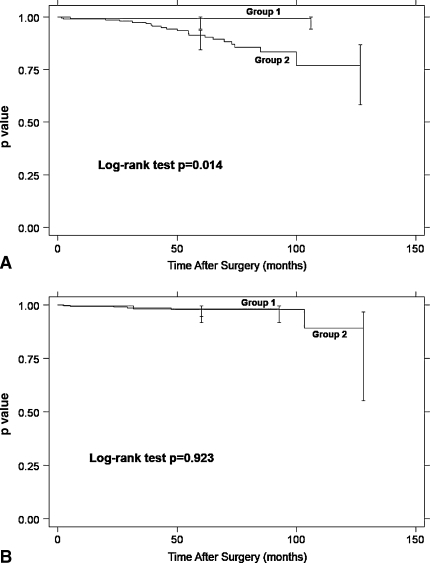
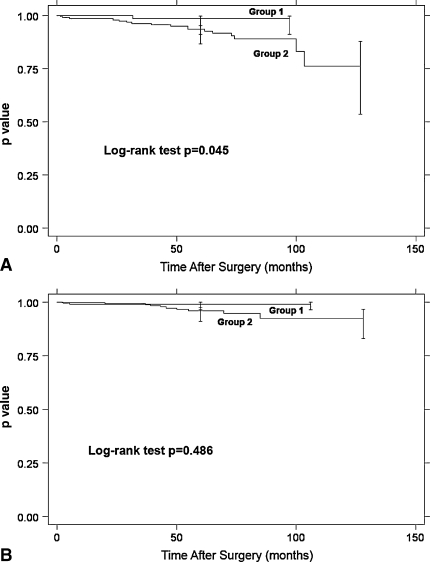
Initial fixation of the femoral component in hip resurfacing is key to the enduring survival of the prosthesis. Cementing the metaphyseal stem increases the interface area between bone and cement. We compared the clinical and survivorship results of two groups in a cohort of 1000 hips (838 patients) implanted with Conserve((R)) Plus hip resurfacing; one group was resurfaced with a cemented metaphyseal stem (400 hips; Group 1) and the other with a press-fit stem (600 hips; Group 2). We carried out a time-dependent analysis to determine the indications for cementing the stem. The 5-year Kaplan-Meier survival estimate was 98.2% for Group 1 and 94.4% for Group 2, using any revision as an endpoint. Femoral aseptic failure was reduced in Group 1 compared to Group 2. Cementing the metaphyseal stem is particularly effective for hips with a small femoral component size (< 48 mm) and hips with large femoral defects (> 1 cm). There was no difference between groups in incidence of femoral neck narrowing or femoral neck fractures. Longer followup is needed to determine if cementing the stem can be detrimental to the long-term durability of the femoral implant.
Level of evidence: Level III, therapeutic study. See Guidelines for Authors for a complete description of levels of evidence.
Figures
References
-
- Amstutz H, Ball S, Le Duff M, Dorey F. Hip resurfacing for patients under 50 years of age. Results of 350 Conserve Plus with a 2–9 year follow-up. Clin. Orthop Relat Res. 2007;460:159–164. - PubMed
-
- Amstutz H, Beaulé P, Dorey F, Le Duff M, Campbell P, Gruen T. Metal-on-metal hybrid surface arthroplasty: two to six year follow-up.J. Bone Joint Surg Am. 2004;86:28–39. - PubMed
-
- Amstutz H, Le Duff M. Results of Conserve®Plus hip resurfacing. In: Amstutz HC, ed. Hip Resurfacing: Principles, Indications, Technique and Results. Philadelphia, PA: Elsevier; 2008:103–117.
Publication types
MeSH terms
Substances
LinkOut - more resources
Full Text Sources
Medical
