


A novel association between p130Cas and resistance to the chemotherapeutic drug adriamycin in human breast cancer cells
- PMID: 18974122
- PMCID: PMC2597570
- DOI: 10.1158/0008-5472.CAN-08-2426
A novel association between p130Cas and resistance to the chemotherapeutic drug adriamycin in human breast cancer cells
Abstract
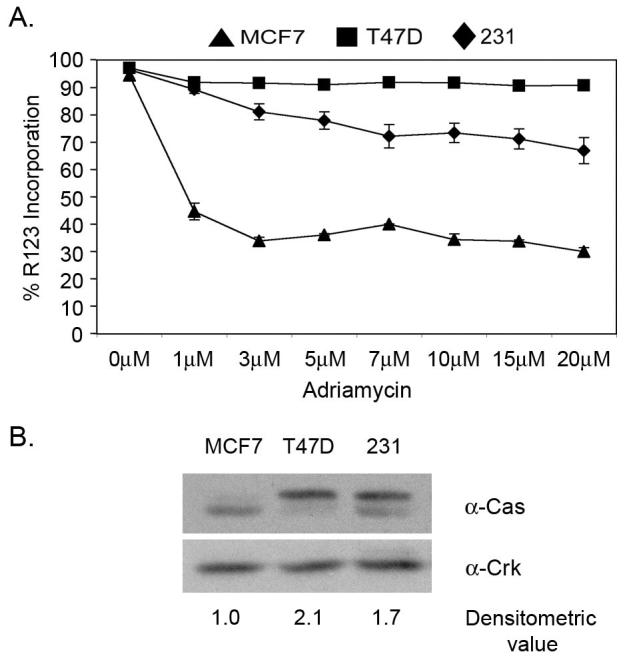
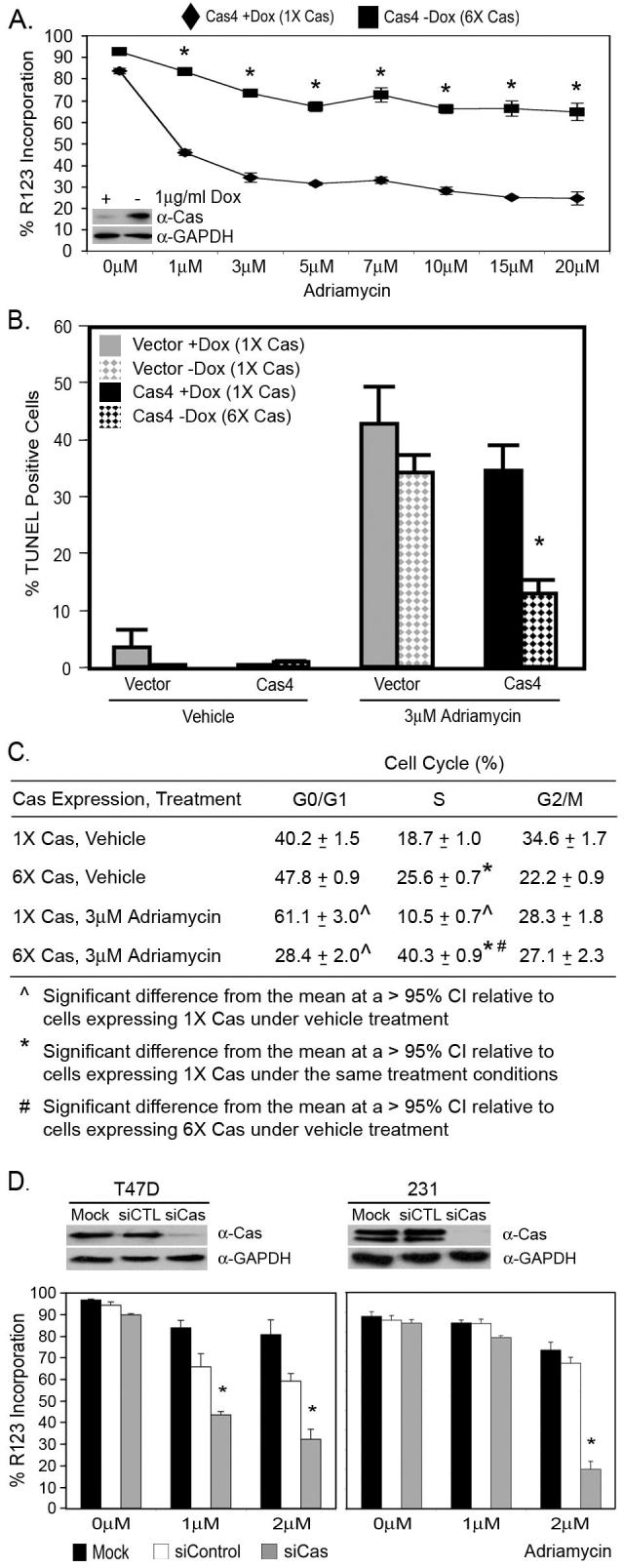
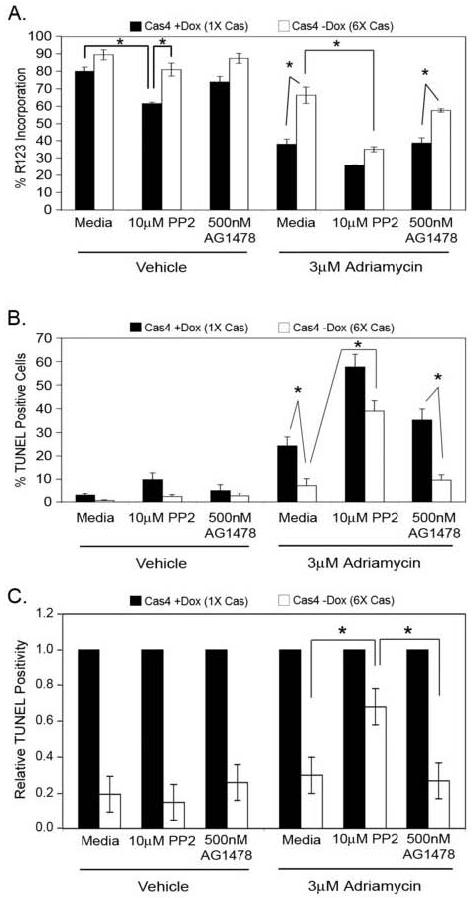
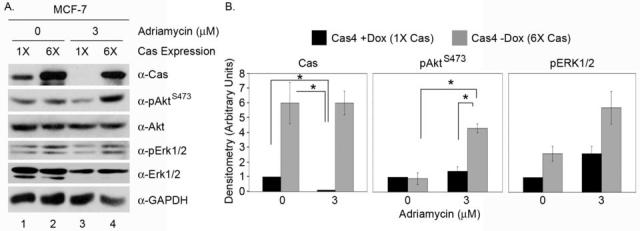
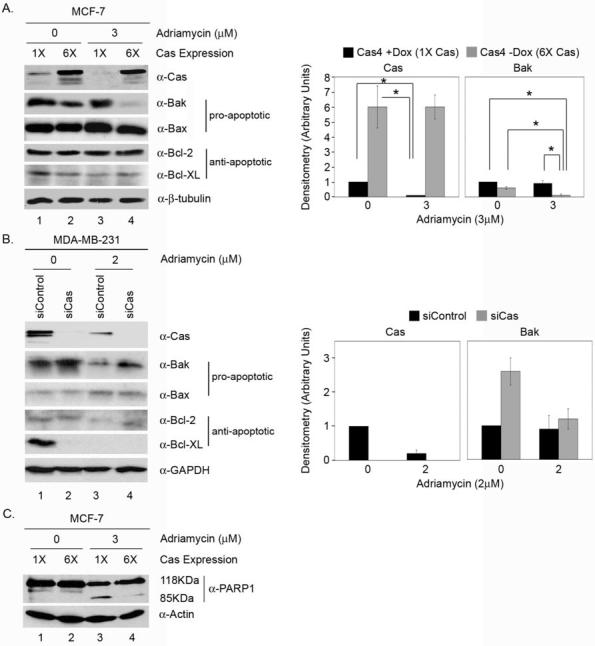
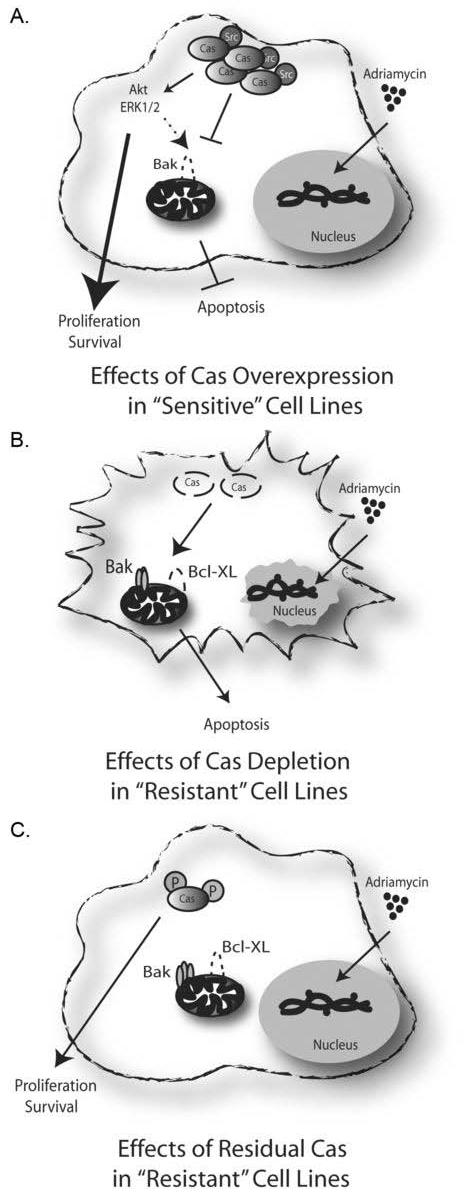
Resistance to chemotherapy remains a major obstacle for the treatment of breast cancer. Understanding the molecular mechanism(s) of resistance is crucial for the development of new effective therapies to treat this disease. This study examines the putative role of p130(Cas) (Cas) in resistance to the cytotoxic agent Adriamycin. High expression of Cas in primary breast tumors is associated with the failure to respond to the antiestrogen tamoxifen and poor prognosis, highlighting the potential clinical importance of this molecule. Here, we show a novel association between Cas and resistance to Adriamycin. We show that Cas overexpression renders MCF-7 breast cancer cells less sensitive to the growth inhibitory and proapoptotic effects of Adriamycin. The catalytic activity of the nonreceptor tyrosine kinase c-Src, but not the epidermal growth factor receptor, is critical for Cas-mediated protection from Adriamycin-induced death. The phosphorylation of Akt and extracellular signal-regulated kinase 1/2 (ERK1/2) is elevated in Cas-overexpressing cells treated with Adriamycin, whereas expression of the proapoptotic protein Bak is decreased. Conversely, Cas depletion in the more resistant T47D and MDA-MB-231 cell lines increases sensitivity to Adriamycin. Based on these data, we propose that Cas activates growth and survival pathways regulated by c-Src, Akt, and ERK1/2 that lead to the inhibition of mitochondrial-mediated apoptosis in the presence of Adriamycin. Because Cas is frequently expressed at high levels in breast cancers, these findings raise the possibility of resensitizing Cas-overexpressing tumors to chemotherapy through perturbation of Cas signaling pathways.
Figures
References
-
- Fleming G. Oncologic Therapies. 2nd edition Springer; Chicago: 2003.
-
- Faneyte IF, Kristel PM, Maliepaard M, et al. Expression of the breast cancer resistance protein in breast cancer. Clin Cancer Res. 2002;8:1068–74. - PubMed
-
- Walker J, Martin C, Callaghan R. Inhibition of P-glycoprotein function by XR9576 in a solid tumour model can restore anticancer drug efficacy. Eur J Cancer. 2004;40:594–605. - PubMed
-
- Ruiz de Almodovar C, Ruiz-Ruiz C, Munoz-Pinedo C, Robledo G, Lopez-Rivas A. The differential sensitivity of Bcl-2-overexpressing human breast tumor cells to TRAIL or doxorubicin-induced apoptosis is dependent on Bcl-2 protein levels. Oncogene. 2001;20:7128–33. - PubMed
-
- Gariboldi MB, Ravizza R, Riganti L, et al. Molecular determinants of intrinsic resistance to doxorubicin in human cancer cell lines. Int J Oncol. 2003;22:1057–64. - PubMed
Publication types
MeSH terms
Substances
Grants and funding
LinkOut - more resources
Full Text Sources
Medical
Research Materials
Miscellaneous
