


Late onset Huntington Disease: clinical and genetic characteristics of 34 cases
- PMID: 18977004
- PMCID: PMC3140172
- DOI: 10.1016/j.jns.2008.09.029
Late onset Huntington Disease: clinical and genetic characteristics of 34 cases
Abstract
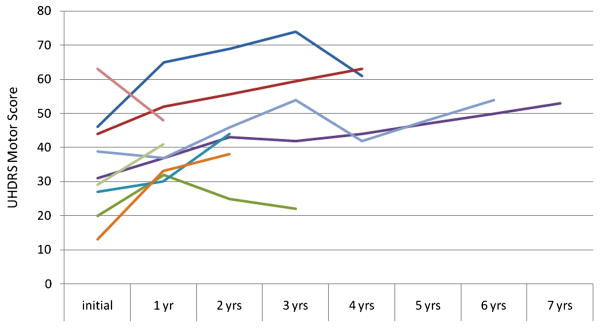
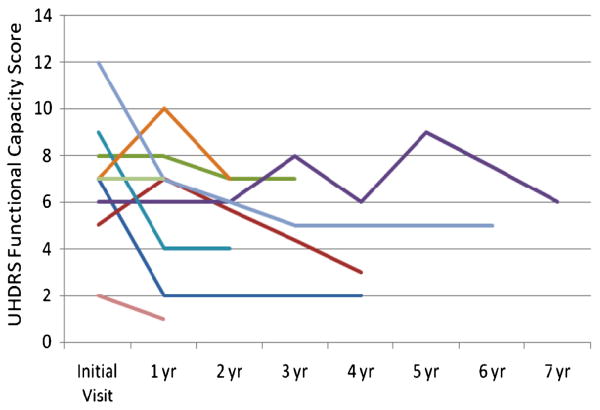
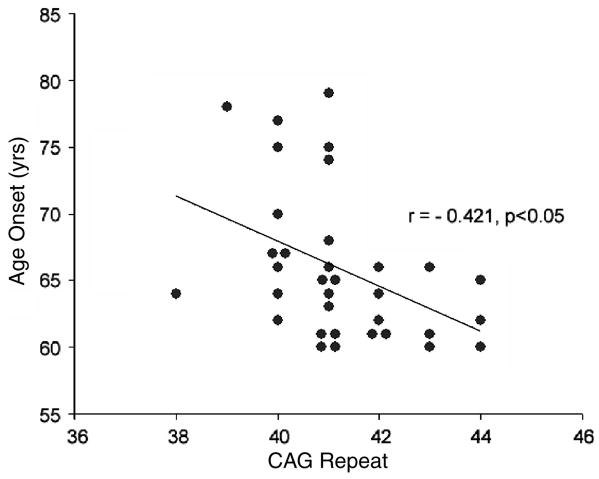
We performed a retrospective observational study of thirty-four persons with late onset of Huntington Disease (HD) (onset range 60-79 years). CAG trinucleotide expansion size ranged from 38-44 repeats. Even at this late age a significant negative correlation (r=-0.421, p<0.05) was found between the length of repeat and age of onset. Important characteristics of these older subjects were: (1)Most (68%) were the first in the family to have a diagnosis of HD, (2) Motor problems were the initial symptoms at onset, (3) Disability increased and varied from mild to severe (4) Disease duration was somewhat shorter (12 years) than that reported for mid-life onset, (5) Death was often related to diseases of old age, such as cancer and cerebrovascular disease, (6) Serious falls were a major risk and (7) Global dementia may be associated with coincident Alzheimer disease. Recognizing these characteristics will help physicians and other health care providers better identify and follow the late onset presentation of this disease.
Figures
References
-
- Kremer B. Clinical neurology of Huntington's disease. In: Bates G, Harper P, Jones L, editors. Huntington's Disease, Third Edition Oxford Monographs on Medical Genetics. New York: Oxford University Press; 2002. p. 30.
-
- Huntington Disease Collaborative Research Group. A novel gene containing a trinucleotide repeat that is expanded and unstable in Huntington disease chromosomes. Cell. 1993;72:971–983. - PubMed
-
- Mahant N, McCusker EA, Byth K, Graham S The Huntington Study Group. Huntington's Disease: Clinical correlates of disability and progression. Neurol. 2003;61:1085–1092. - PubMed
Publication types
MeSH terms
Grants and funding
LinkOut - more resources
Full Text Sources
Medical
