


Structure-based antigen design: a strategy for next generation vaccines
- PMID: 18977045
- PMCID: PMC7114313
- DOI: 10.1016/j.tibtech.2008.08.002
Structure-based antigen design: a strategy for next generation vaccines
Abstract
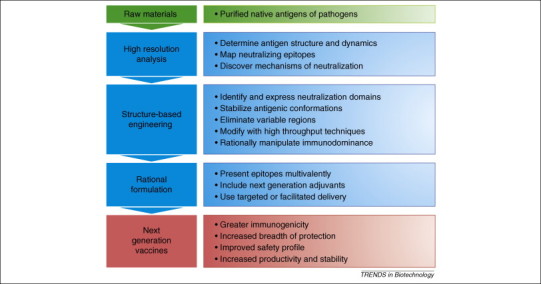
Vaccine design is progressing from empiricism towards the increasingly rational presentation of the targets of protective immunity. Nevertheless, most current vaccine antigens are essentially the native macromolecules of pathogens. These molecules are adapted to evade, not induce, immunity. High resolution structures reveal the electrostatic surfaces recognized by neutralizing antibodies and the architectures underlying these surfaces, thereby identifying which substructures must be left intact and which can be changed to optimize biochemical and immunologic performance. Armed with detailed structural information, we can engineer optimized antigens that are more stable, homogeneous, and efficiently produced, making immunization more practical and affordable. Understanding the structural basis for immunogenicity and immunodominance will allow us to improve vaccine efficacy and broaden the range of vaccine-preventable diseases.
Figures
References
-
- Subbarao K. Evaluation of a genetically modified reassortant H5N1 influenza A virus vaccine candidate generated by plasmid-based reverse genetics. Virology. 2003;305:192–200. - PubMed
-
- Pizza M. Mutants of pertussis toxin suitable for vaccine development. Science. 1989;246:497–500. - PubMed
-
- Choe S. The crystal structure of diphtheria toxin. Nature. 1992;357:216–222. - PubMed
-
- Rappuoli R. Bridging the knowledge gaps in vaccine design. Nat. Biotechnol. 2007;25:1361–1366. - PubMed
Publication types
MeSH terms
Substances
LinkOut - more resources
Full Text Sources
Other Literature Sources
Medical
