


Preclinical modeling of a phase 0 clinical trial: qualification of a pharmacodynamic assay of poly (ADP-ribose) polymerase in tumor biopsies of mouse xenografts
- PMID: 18980982
- PMCID: PMC2766769
- DOI: 10.1158/1078-0432.CCR-08-0214
Preclinical modeling of a phase 0 clinical trial: qualification of a pharmacodynamic assay of poly (ADP-ribose) polymerase in tumor biopsies of mouse xenografts
Abstract
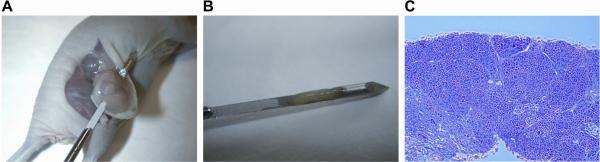
Purpose: The National Cancer Institute has completed a first-in-human clinical pharmacodynamic trial of the targeted agent ABT-888, a poly (ADP-ribose) polymerase (PARP) inhibitor, under the auspices of the U.S. Food and Drug Administration's Exploratory Investigational New Drug Application. Performance of the study design, needle biopsy procedure, and validated pharmacodynamic assay were evaluated in human tumor xenograft models.
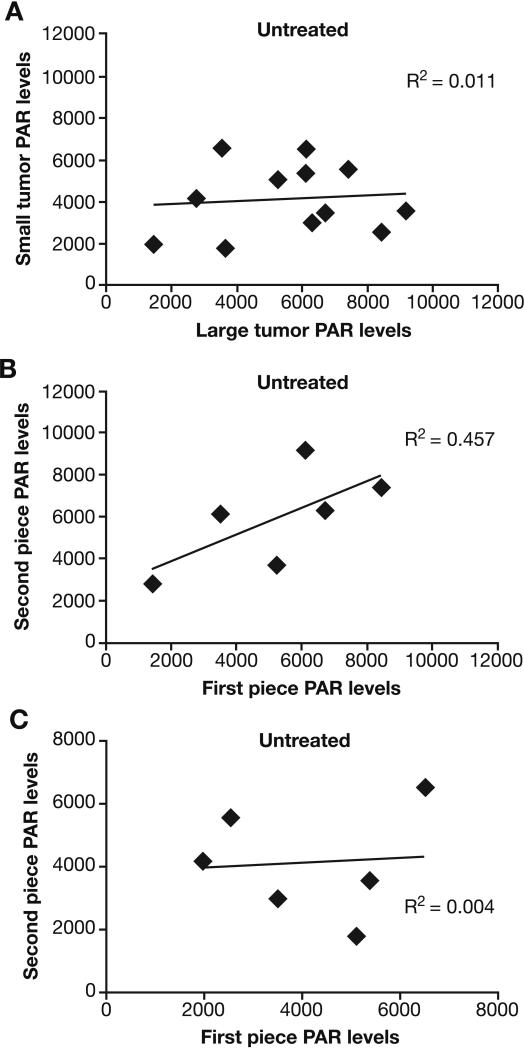
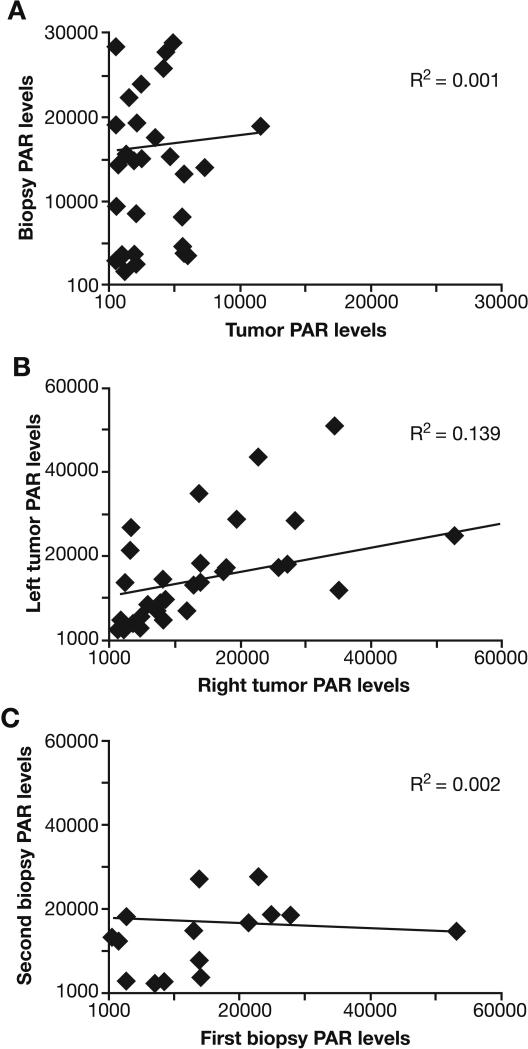
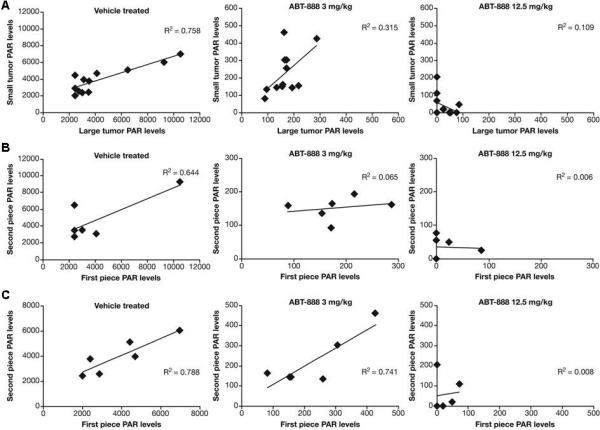
Experimental design: A validated ELISA was used to quantify PAR, a product of the PARP 1/2 enzyme activity. Sampling variability from tumor heterogeneity was determined by comparing PAR content in multiple tumors, and in different areas of the same tumor in a particular animal, collected under anesthesia by needle biopsy or resection before and after administration of nontoxic doses of ABT-888. The degree of PARP inhibition following single-dose treatment was evaluated in the time frame anticipated for biopsy in humans.
Results: Sampling variability around the mean (approximately 50%) for untreated and vehicle-treated animals was random and due to specimen heterogeneity. PAR levels in initial and repeat tumor biopsies, separated by 1 week, were not altered by the stress induced by daily handling of the animals. A single ABT-888 dose (3 or 12.5 mg/kg) reduced intratumor PAR levels by >95%. ABT-888 (1.56-25 mg/kg) significantly decreased PAR levels at 2 h post-dosing.
Conclusion: The detailed methodologies developed for this study facilitated the design of a phase 0, first-in-human clinical trial of ABT-888 and could serve as a model for developing proof-of-principle clinical trials of molecularly targeted anticancer agents.
Figures
References
-
- Kola I, Landis J. Can the pharmaceutical industry reduce attrition rates? Nat Rev Drug Discov. 2004;3:711–5. - PubMed
-
- Kummar S, Kinders RJ, Rubinstein L, Parchment RE, Murgo AJ, Collins J. Compressing drug development timelines in oncology using phase '0' trials. Nat Rev Cancer. 2007;7:131–9. - PubMed
-
- Parchment RE, Kinders RJ, Hollingshead MG. Technical criteria of “clinical readiness” to qualify validated pharmacodynamic (PD) assays for clinical trial use. J Clin Oncol. 2007;25 Abstract 14068.
-
- Memisoglu A, Samson L. Base excision repair in yeast and mammals. Mutat Res. 2000;451:39–51. - PubMed
-
- Schreiber V, Ame JC, Dolle P, et al. Poly(ADP-ribose) polymerase-2 (PARP-2) is required for efficient base excision DNA repair in association with PARP-1 and XRCC1. J Biol Chem. 2002;277:23028–36. - PubMed
Publication types
MeSH terms
Substances
Grants and funding
LinkOut - more resources
Full Text Sources
Other Literature Sources
Medical
