


Prevalence and clinical impact of anaplasia in childhood rhabdomyosarcoma : a report from the Soft Tissue Sarcoma Committee of the Children's Oncology Group
- PMID: 18985676
- PMCID: PMC2727712
- DOI: 10.1002/cncr.23929
Prevalence and clinical impact of anaplasia in childhood rhabdomyosarcoma : a report from the Soft Tissue Sarcoma Committee of the Children's Oncology Group
Erratum in
- Cancer. 2009 Jun 15;115(12):2806
Abstract
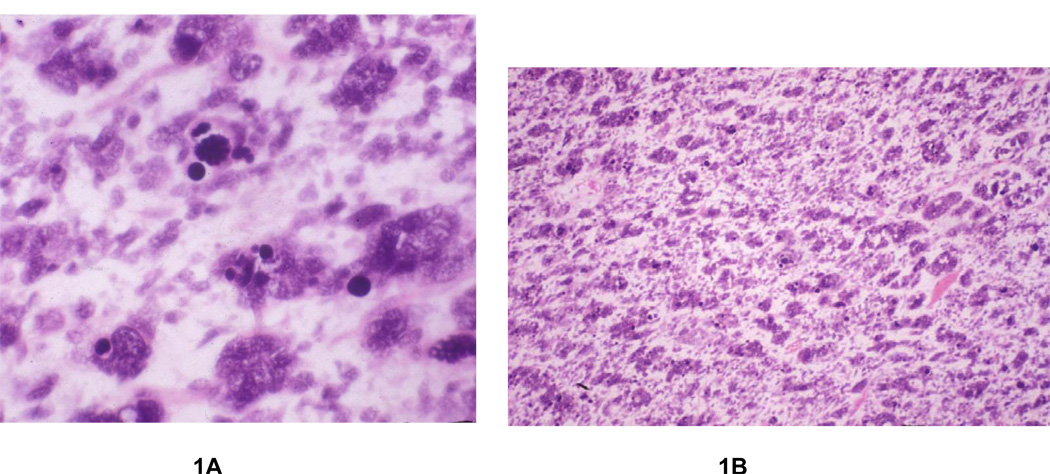
Background: Anapalsia is rare in childhood rhabdomyosarcoma and has not been included in the International Classification of Rhabdomyosarcoma (ICR). A recent review of cases from the Soft Tissue Sarcoma Committee of the Children's Oncology Group (COG) suggests that anaplasia might be more common than previously reported and may impact clinical outcome.
Methods: The prevalence of anaplasia (focal or diffuse) was prospectively assessed in 546 eligible cases who were registered in an Intergroup Rhabdomyosarcoma Study Group (IRSG) or COG therapeutic trial from 1995 through 1998. The incidence of anaplasia in tumor samples and its impact in predicting clinical outcome was assessed.
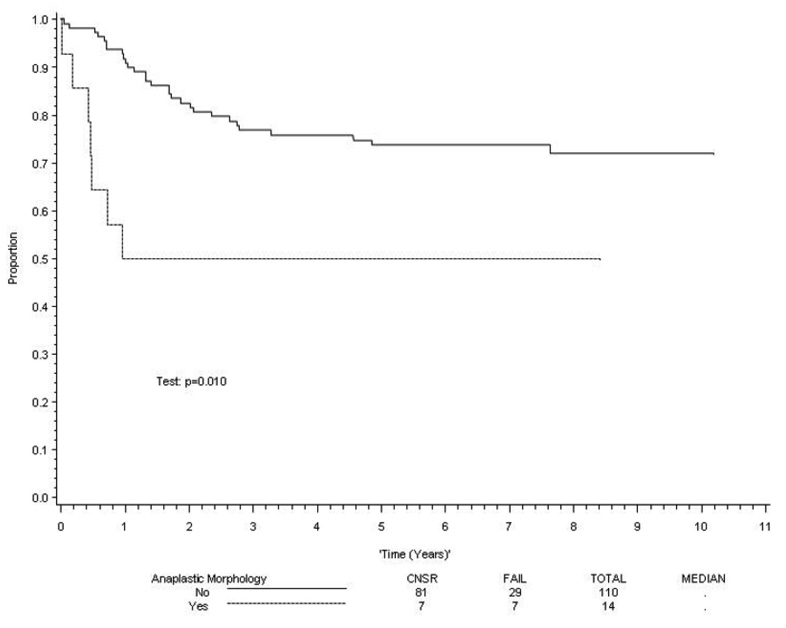
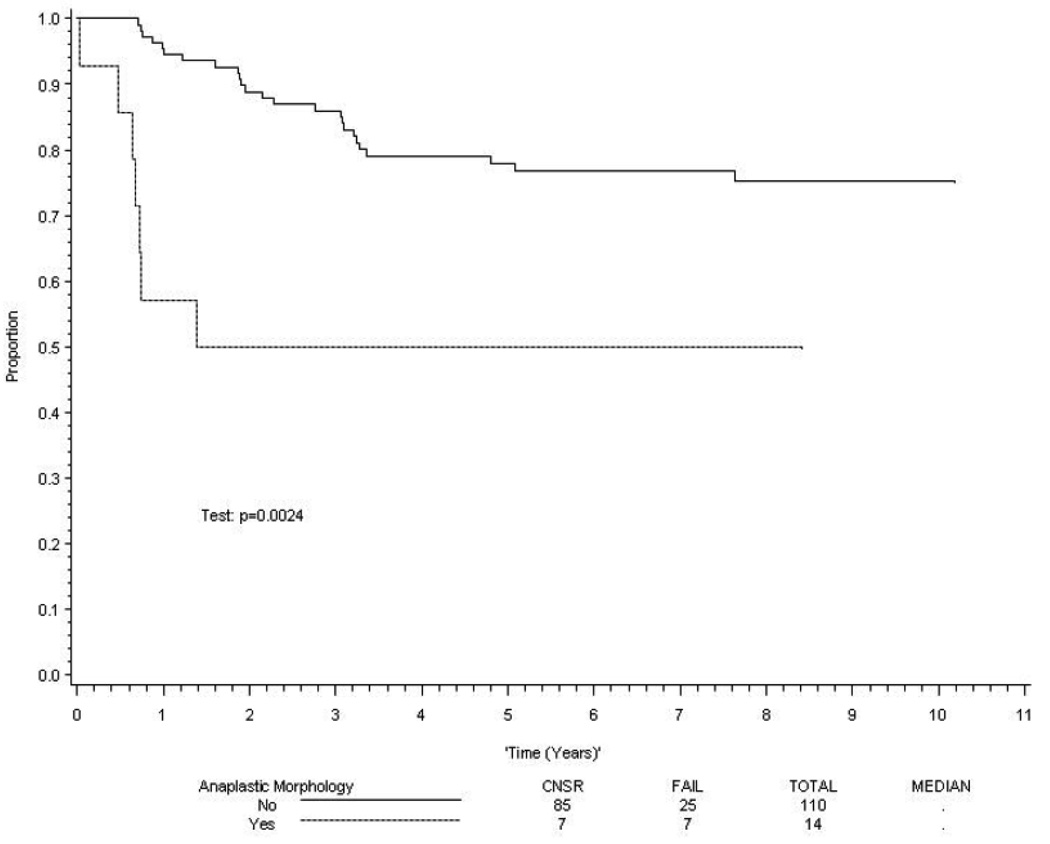
Results: Overall, 71 (13%) of all samples analyzed had anaplasia. Anaplasia was more common in patients with tumors in favorable sites and was less commonly observed in younger patients and in those with stage II, III, or clinical group III disease. Regardless of its distribution (focal or diffuse), on univariate analysis the presence of anaplasia negatively influenced the failure-free survival rate (63% vs 77% at 5 years) and overall survival (68% vs 82% at 5 years) rates in patients with embryonal rhabdomyosarcoma. This effect was most pronounced in children with intermediate-risk tumors. Anaplasia did not affect outcome in patients with alveolar tumors.
Conclusions: The incidence of anaplasia in patients with rhabdomyosarcoma is higher than previously described and may be of prognostic significance in children with intermediate-risk embryonal rhabdomyosarcoma.
(c) 2008 American Cancer Society
Figures
References
-
- Ries L, Smith M, Gurney J, et al. Bethesda, MD: National Cancer Institute; 1999. Cancer Incidence and Survival among Children and Adolescents: United States SEER Program 1975–1995. SEER program Pub No 99–4649.
-
- Qualman SJ, Bowen J, Parham DM, et al. Protocol for the examination of specimens from patients (children and young adults) with rhabdomyosarcoma. Arch Pathol Lab Med. 2003;127:1290–1297. - PubMed
-
- Raney RB, Anderson JR, Barr FG, et al. Rhabdomyosarcoma and undifferentiated sarcoma in the first two decades of life: a selective review of intergroup rhabdomyosarcoma study group experience and rationale for Intergroup Rhabdomyosarcoma Study V. J Pediatr Hematol Oncol. 2001;23:215–220. - PubMed
-
- Qualman SJ, Coffin CM, Newton WA, et al. Intergroup Rhabdomyosarcoma Study: update for pathologists. Pediatr Dev Pathol. 1998;1:550–561. - PubMed
-
- Crist WM, Anderson JR, Meza JL, et al. Intergroup rhabdomyosarcoma study-IV: results for patients with nonmetastatic disease. J.Clin.Oncol. 2001;19:3091–3102. - PubMed
Publication types
MeSH terms
Grants and funding
LinkOut - more resources
Full Text Sources
Medical
