


The hidden island of addiction: the insula
- PMID: 18986715
- PMCID: PMC3698860
- DOI: 10.1016/j.tins.2008.09.009
The hidden island of addiction: the insula
Abstract
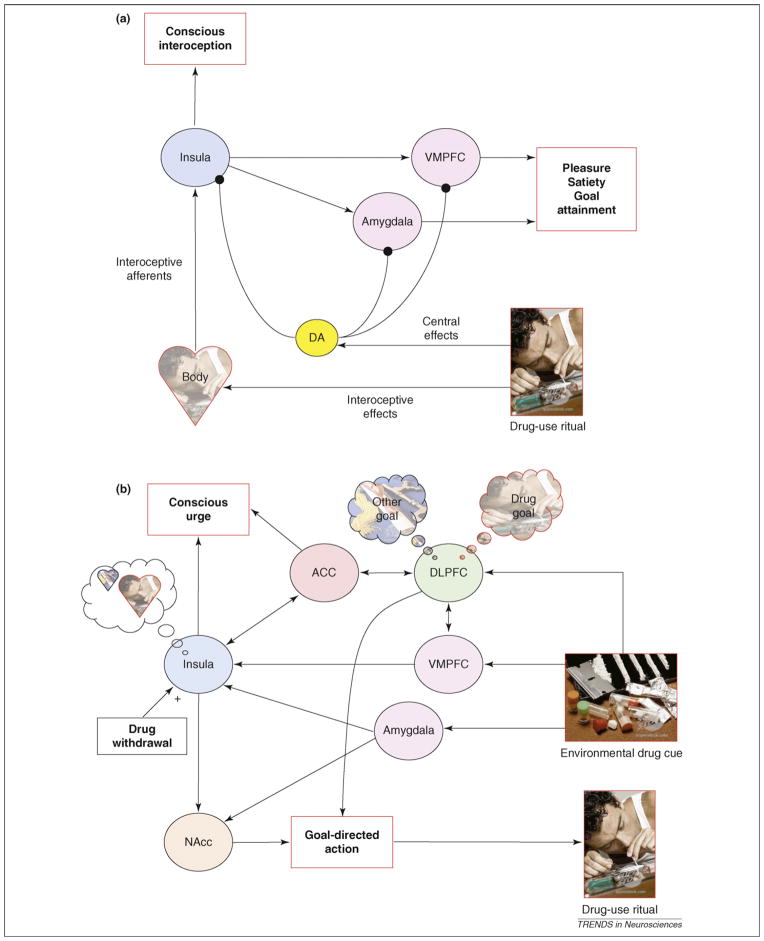
Most prior research on the neurobiology of addiction has focused on the role of subcortical systems, such as the amygdala, the ventral striatum and mesolimbic dopamine system, in promoting the motivation to seek drugs. Recent evidence indicates that a largely overlooked structure, the insula, plays a crucial part in conscious urges to take drugs. The insula has been highlighted as a region that integrates interoceptive (i.e. bodily) states into conscious feelings and into decision-making processes that involve uncertain risk and reward. Here, we propose a model in which the processing of the interoceptive effects of drug use by the insula contributes to conscious drug urges and to decision-making processes that precipitate relapse.
Figures
References
-
- Peto R, et al. Mortality from tobacco in developed countries: indirect estimation from national vital statistics. Lancet. 1992;339:1268–1278. - PubMed
-
- American Psychiatric Association. Diagnostic and Statistical Manual of Mental Disorders. 4. American Psychiatric Association; 2001.
-
- Everitt BJ, Robbins TW. Neural systems of reinforcement for drug addiction: from actions to habits to compulsion. Nat Neurosci. 2005;8:1481–1489. - PubMed
-
- Robinson T, Berridge KC. Incentive-sensitization and addicition. Addiction. 2001;96:106–114. - PubMed
-
- Tiffany ST. Is craving the source of compulsive drug use? J Psychopharmacol. 1998;12:23–30. - PubMed
