


Serological responses to microbial antigens in celiac disease patients during a gluten-free diet
- PMID: 18987962
- PMCID: PMC3770459
- DOI: 10.1007/s10875-008-9255-7
Serological responses to microbial antigens in celiac disease patients during a gluten-free diet
Abstract
Background: Immunoglobulin A (IgA) autoantibodies to tissue transglutaminase (tTG) are commonly used for screening and diagnosing of celiac disease (CD). Seroreactivity for anti-Saccharomyces cerevisiae antibody (ASCA) and bacterial antigens have also been detected in CD patients. The aim of this study was to examine prospectively serologic responses to microbial targets in adult CD patients at the time of diagnosis and during a gluten-free diet (GFD). Further, we wanted to evaluate whether these serologic specificities could provide new tools for the follow-up of CD patients.
Methods: Data on 55 adult biopsy-proven CD patients were available for follow-up study. Upper gastrointestinal endoscopy was performed on all patients. Sera from patients were tested for antibodies to tTG and ASCA and additionally analyzed with IgA enzyme-linked immunosorbent assays to Pseudomonas fluorescens-associated sequence, I2, and to a Bacteroides caccae TonB-linked outer membrane protein, OmpW.
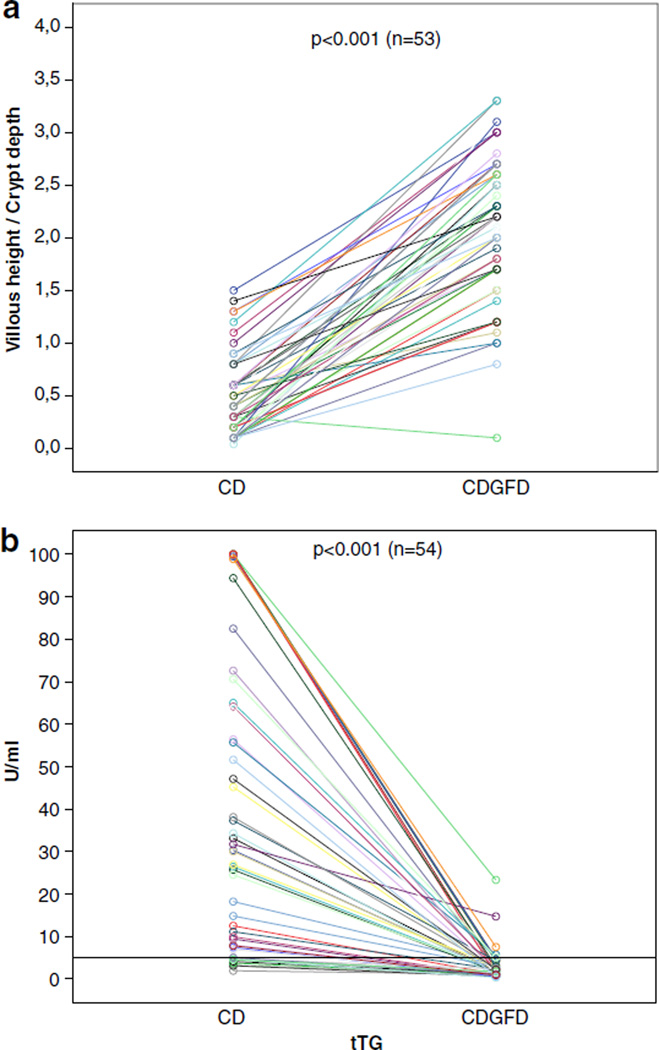
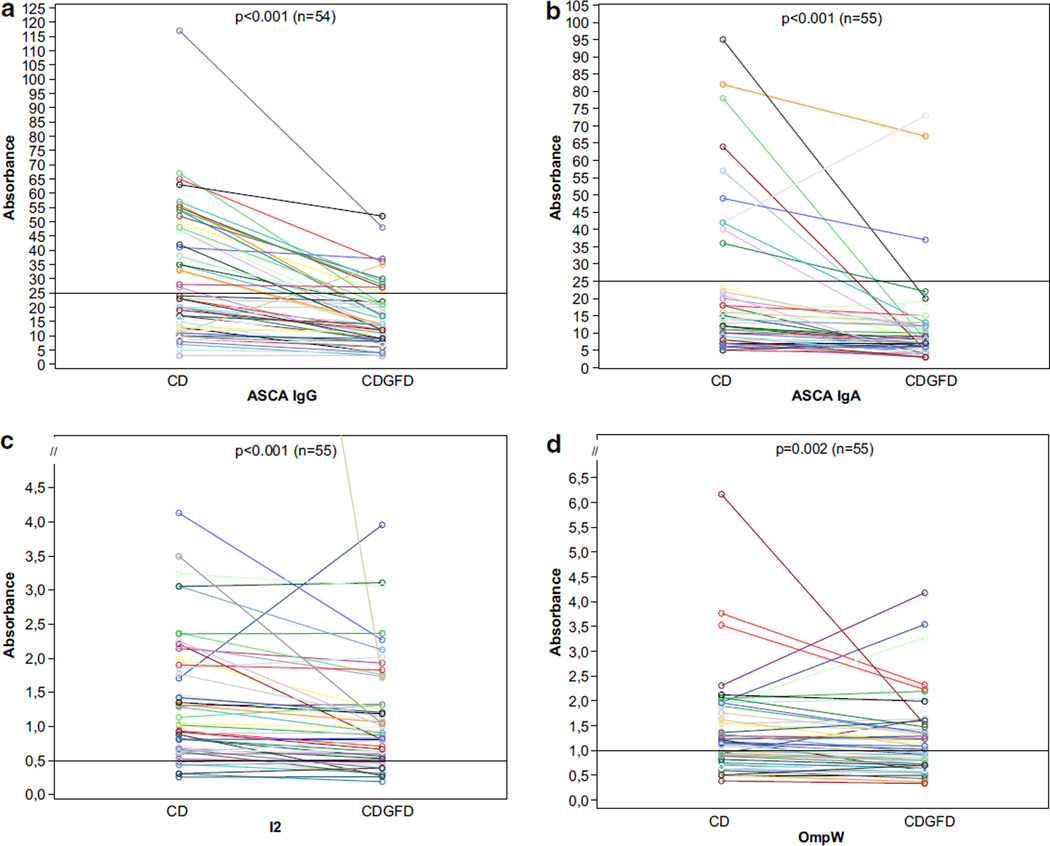
Results: At the time of diagnosis, 91% of CD cases were positive for tTG and 49% for ASCA; positive seroreactivity to I2 was found in 86% and to OmpW in 60% of CD patients at the time of diagnosis. The frequency of seropositivity and serum levels of these antibodies decreased during GFD. Moreover, we found that the decline in the serum levels was significant in all of these markers (p < 0.005). Interestingly, we also found that serum levels of ASCA correlated with the grade of mucosal morphology (p = 0.021), as the ASCA serum levels declined in accordance with mucosal healing.
Conclusions: Commensal enteric bacteria seem to play a role in the small intestinal mucosal damage in CD. This was proven by the serological responses to different microbial antigens shown in this study. Serum levels of ASCA, anti-I2, and anti-OmpW antibodies decreased significantly during GFD, indicating that these serologic markers are gluten dependent in CD patients. These specificities could provide new tools in the follow-up of CD patients.
Figures
References
-
- Marsh MN. Gluten major histocompatibility complex, the small intestine. A molecular and immunobiologic approach to the spectrum of gluten sensitivity (‘celiac sprue’) Gastroenterology. 1992;102:330–354. - PubMed
-
- Dieterich W, Ehnis T, Bauer M, Donner P, Volta U, Riecken EO, et al. Identification of tissue transglutaminase as the autoantigen of celiac disease. Nat Med. 1997;3:797–801. - PubMed
-
- Troncone R, Maurano F, Rossi M, Micillo M, Greco L, Auricchio R, et al. IgA antibodies to tissue transglutaminase: an effective diagnostic test for celiac disease. J Pediatr. 1999;134:166–171. - PubMed
Publication types
MeSH terms
Substances
Grants and funding
LinkOut - more resources
Full Text Sources
Other Literature Sources
Medical
Miscellaneous
