


Pediatric antifungal utilization: new drugs, new trends
- PMID: 18989239
- PMCID: PMC7006227
- DOI: 10.1097/INF.0b013e31817eeee5
Pediatric antifungal utilization: new drugs, new trends
Abstract
Background: The frequency and severity of invasive fungal infections in immunocompromised patients has increased steadily over the last 2 decades. In response to the increased incidence and high mortality rates, novel antifungal agents have been developed to expand the breadth and effectiveness of treatment options available to clinicians. Despite these therapeutic advances, the impact of the availability of new antifungal agents on pediatric practice is unknown.
Methods: A retrospective cohort study was conducted using the Pediatric Health Information System database to describe the changes in pediatric antifungal therapy at 25 freestanding United States children's hospitals from 2000 to 2006. All pediatric inpatients who received a charge for one or more of the following agents were included in the analysis: conventional amphotericin B (AMB), lipid amphotericin B, fluconazole, itraconazole, voriconazole, flucytosine, caspofungin, and micafungin. Underlying conditions and fungal infection status were ascertained.
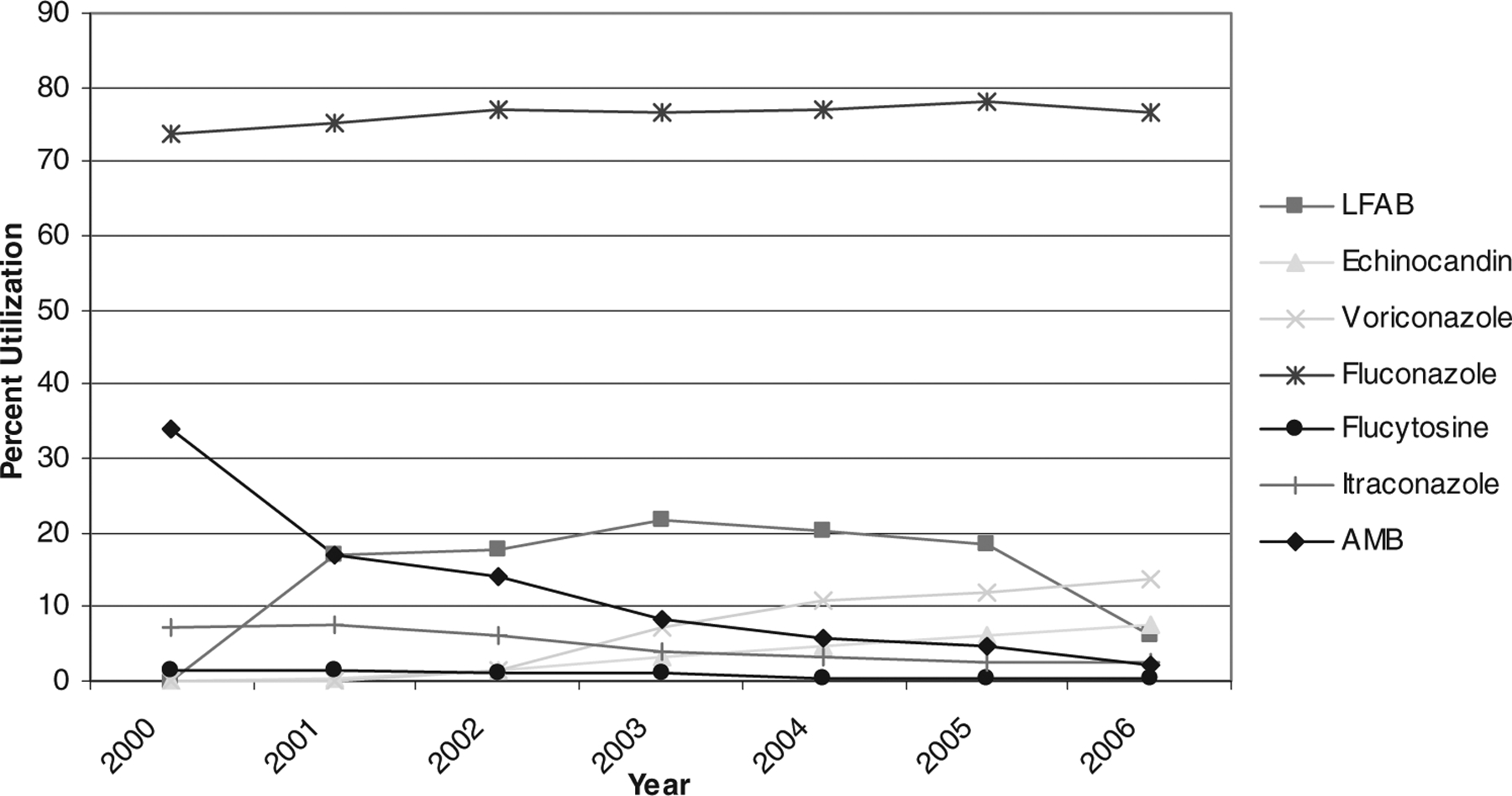
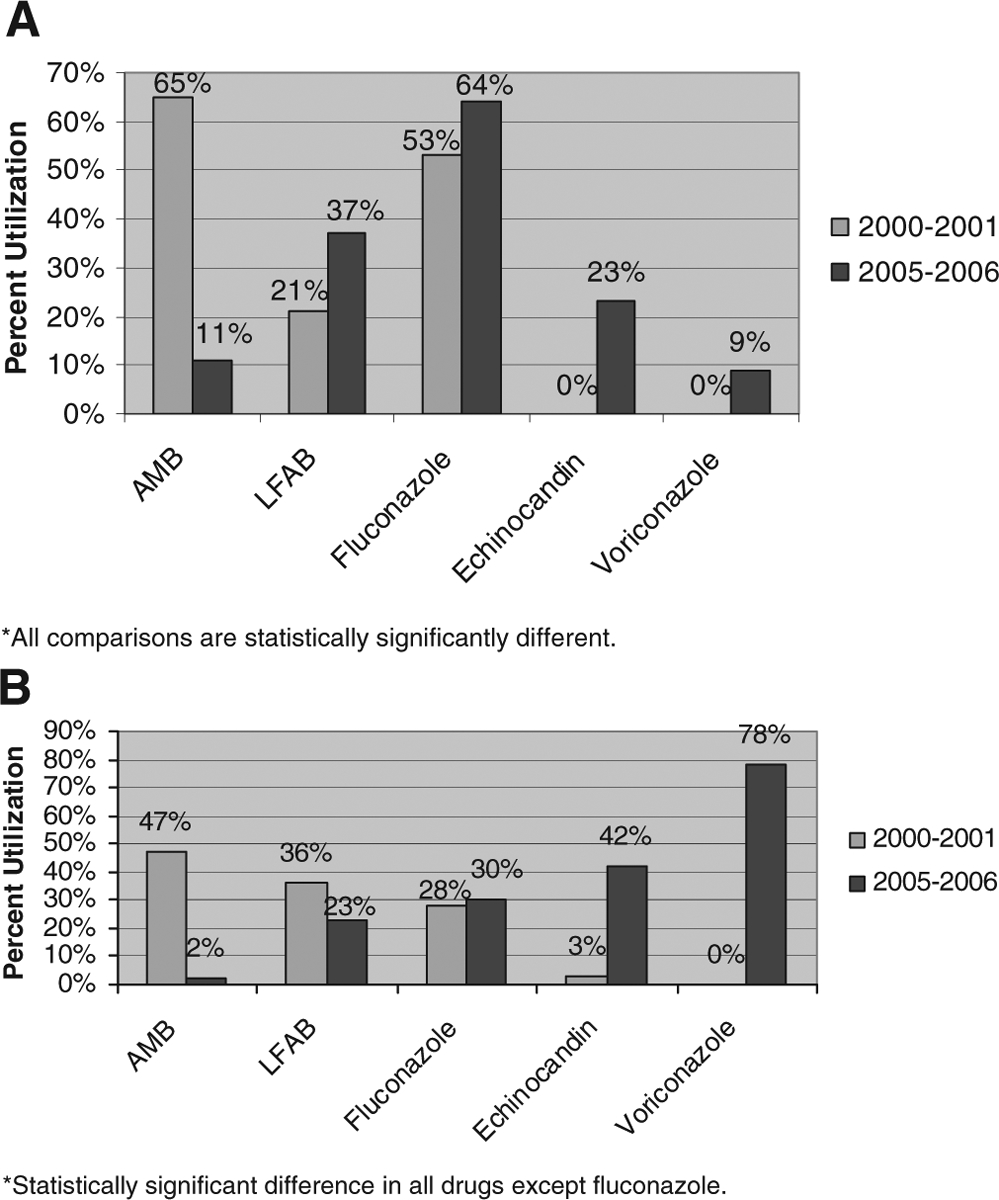
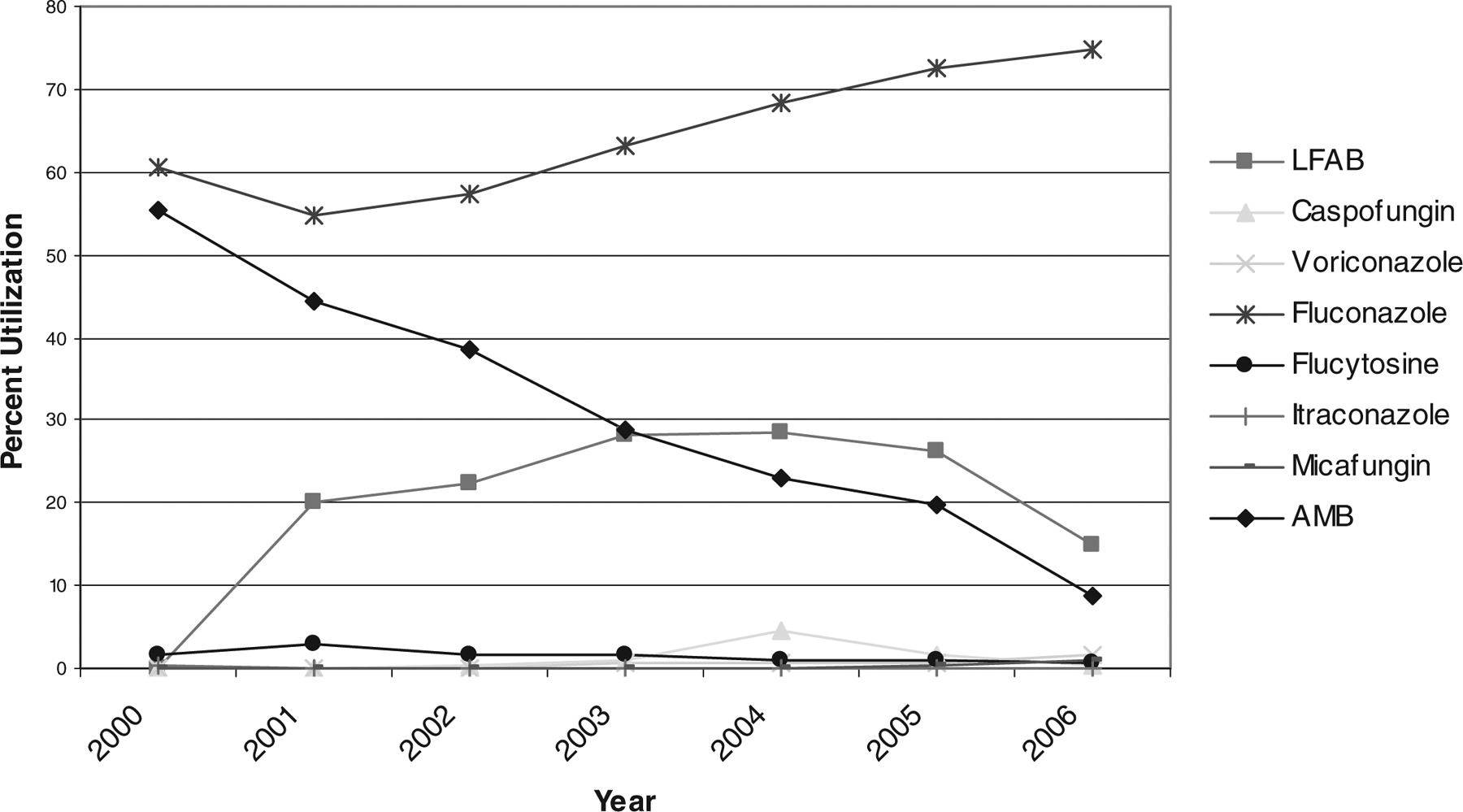
Results: A total of 62,842 patients received antifungal therapy, with prescriptions significantly increasing during the 7-year study period (P = 0.03). The most commonly prescribed antifungal agent was fluconazole (76%), followed by amphotericin preparations (26%). Prescription of AMB steadily decreased from 2000 to 2006 (P = 0.02). Prescription of voriconazole steadily increased during the study period and replaced AMB for the treatment of aspergillosis. The echinocandins steadily increased in prescription for treatment of fungal infections, particularly in disseminated/systemic candidiasis.
Conclusions: We found that the number of pediatric inpatients requiring antifungal therapy has increased significantly and the choice of treatment has changed dramatically with the introduction of newer antifungal agents.
Conflict of interest statement
Dr. Zaoutis has received research funding from Merck. All other authors report no conflicts of interest relevant to this article.
Figures
References
-
- Steinbach WJ, Walsh TJ. Mycoses in pediatric patients. Infect Dis Clin North Am. 2006;20:663–678. - PubMed
-
- Dvorak CC, Steinbach WJ, Brown JM, Agarwal R. Risks and outcomes of invasive fungal infections in pediatric patients undergoing allogeneic hematopoietic cell transplantation. Bone Marrow Transplant. 2005;36: 621–629. - PubMed
-
- Zaoutis TE, Argon J, Chu J, Berlin JA, Walsh TJ, Feudtner C. The epidemiology and attributable outcomes of candidemia in adults and children hospitalized in the United States: a propensity analysis. Clin Infect Dis. 2005;41:1232–1239. - PubMed
-
- Zaoutis TE, Coffin SE, Chu JH, et al. Risk factors for mortality in children with candidemia. Pediatr Infect Dis J. 2005;24:736–739. - PubMed
-
- Zaoutis TE, Heydon K, Localio R, Walsh TJ, Feudtner C. Outcomes attributable to neonatal candidiasis. Clin Infect Dis. 2007;44:1187–1193. - PubMed
Publication types
MeSH terms
Substances
Grants and funding
LinkOut - more resources
Full Text Sources
