


Viral evasion and subversion of pattern-recognition receptor signalling
- PMID: 18989317
- PMCID: PMC7097711
- DOI: 10.1038/nri2436
Viral evasion and subversion of pattern-recognition receptor signalling
Abstract
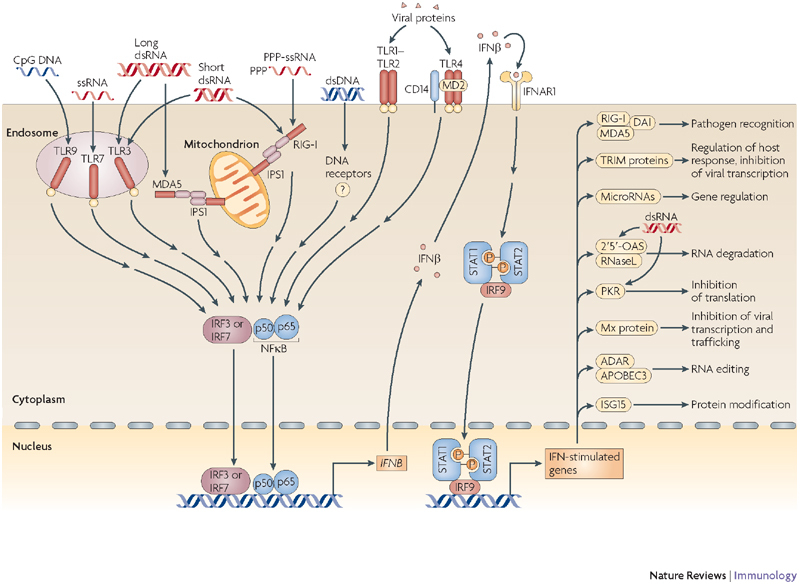
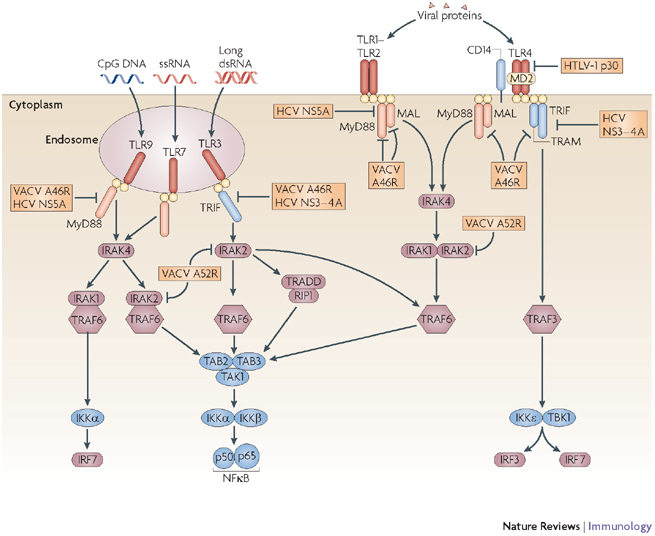
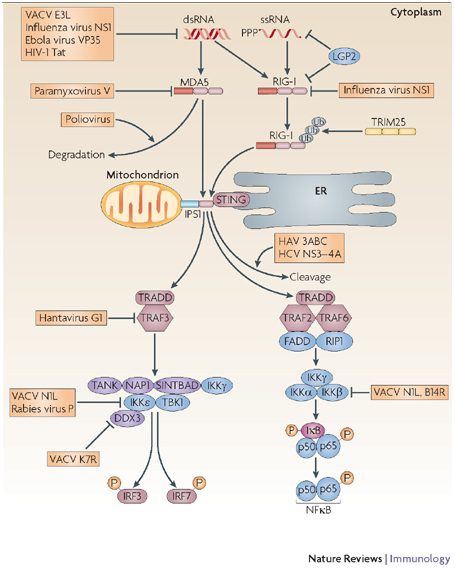
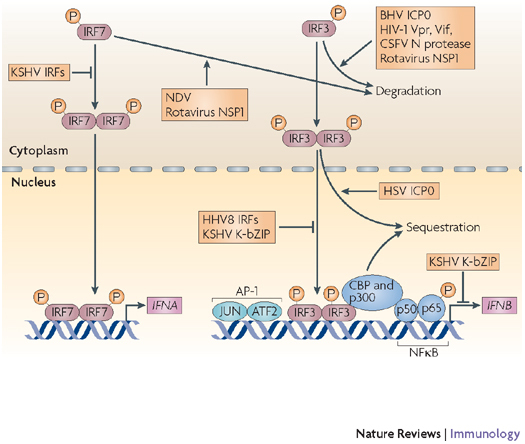
The expression of pattern-recognition receptors (PRRs) by immune and tissue cells provides the host with the ability to detect and respond to infection by viruses and other microorganisms. Significant progress has been made from studying this area, including the identification of PRRs, such as Toll-like receptors and RIG-I-like receptors, and the description of the molecular basis of their signalling pathways, which lead to the production of interferons and other cytokines. In parallel, common mechanisms used by viruses to evade PRR-mediated responses or to actively subvert these pathways for their own benefit are emerging. Accumulating evidence on how viral infection and PRR signalling pathways intersect is providing further insights into the function of the pathways involved, their constituent proteins and ways in which they could be manipulated therapeutically.
Figures
References
-
- Janeway CA., Jr. Approaching the asymptote? Evolution and revolution in immunology. Cold Spring Harb. Symp. Quant. Biol. 1989;54:1–13. - PubMed
-
- Ishii KJ, et al. A Toll-like receptor-independent antiviral response induced by double-stranded B-form DNA. Nature Immunol. 2006;7:40–48. - PubMed
-
- Takaoka A, et al. DAI (DLM-1/ZBP1) is a cytosolic DNA sensor and an activator of innate immune response. Nature. 2007;448:501–505. - PubMed
Publication types
MeSH terms
Substances
LinkOut - more resources
Full Text Sources
Other Literature Sources
Medical
