


Parenting, autonomy and self-care of adolescents with Type 1 diabetes
- PMID: 18991978
- PMCID: PMC4797949
- DOI: 10.1111/j.1365-2214.2008.00892.x
Parenting, autonomy and self-care of adolescents with Type 1 diabetes
Abstract
Background: During adolescence diabetes creates a juncture of very complex disease management demands with developmental needs, including the striving of adolescents for greater autonomy. Parents' concerns and fears about the teen's diabetes self-management abilities during this time can heighten parental attachment behaviour and affect the parents' ability to support autonomy development necessary for effective self-care. Maternal parenting processes may be especially important for those adolescents who have Type 1 diabetes because mothers are the primary caregivers.
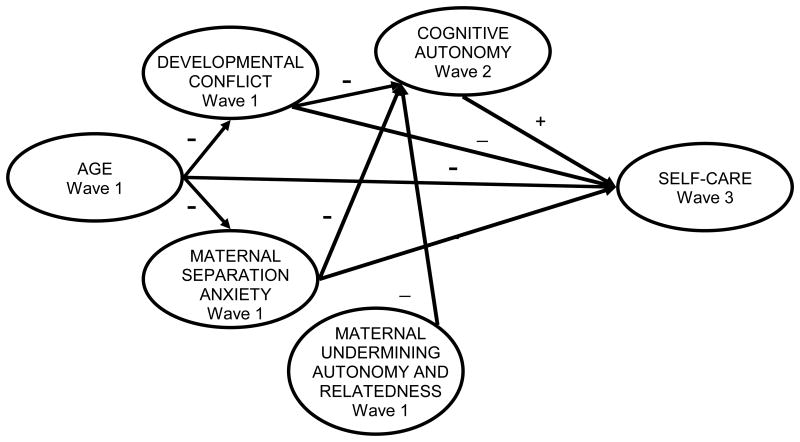
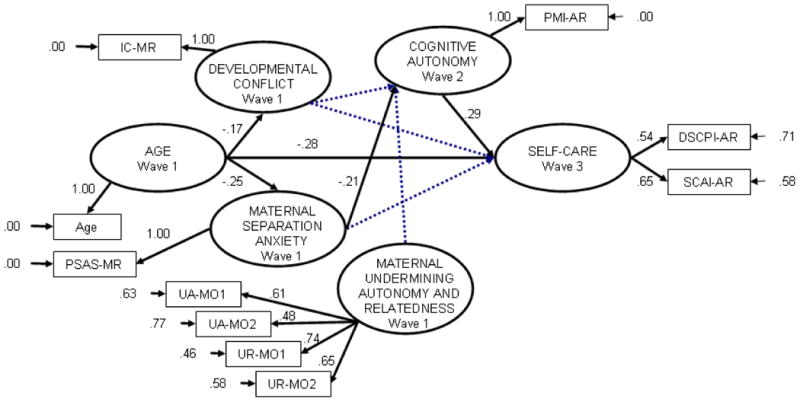
Purpose: Based on attachment theory, the aim was to test a model of the influence of mother-adolescent developmental conflict, maternal separation anxiety and maternal inhibition of autonomy and relatedness on cognitive autonomy and self-care of adolescents with Type 1 diabetes.
Method: A total of 131 families with an adolescent, aged 11-15 years, contributed data annually across three waves. Mothers and adolescents completed paper-and-pencil measures and two interaction scenarios that were coded by trained staff from audio-tapes. The adolescent also completed a structured interview and questionnaire to assess self-care.
Results: Maternal separation anxiety when adolescents were 11-15 years of age directly predicted cognitive autonomy at 1-year follow-up, and that cognitive autonomy was directly related to self-care 1 year later, but did not mediate between separation anxiety and self-care.
Conclusions: Future investigation of the influence of separation anxiety of parents on adolescent autonomy development is warranted, as well as the contribution of autonomy development to diabetes self-management behaviours of adolescents.
Figures
References
-
- Allen JP, Hauser S. Predictions of adult attachment representations, psychological distress, and competence from family interactions in adolescence. Paper presented at the 1991 meeting of the Society for Research in Child Development; Kansas City, MO. 1991.
-
- Allen JP, Hauser ST. Autonomy and relatedness in adolescent-family interactions as predictors of young adults' states of mind regarding attachment. Development and Psychopathology. 1996;8:793–809.
-
- Allen JP, Hauser ST, Bell KL, O'Connor TG. Longitudinal assessment of autonomy and relatedness in adolescent-family interactions as predictors of adolescent ego development and self-esteem, Child Development. 1994;65:179–194. - PubMed
-
- Allen JP, Hauser ST, O'Connor TG, Bell KL, Eickholt C. The connection of observed hostile family conflict to adolescents' developing autonomy and relatedness with parents. Development and Psychopathology. 1996;8:425–442.
-
- Allen JP, Land D. Attachment in adolescence. In: Cassidy J, Shaver PR, editors. Handbook of attachment: Theory, research, and clinical applications. New York: Guilford Press; 1999. pp. 319–355.
Publication types
MeSH terms
Grants and funding
LinkOut - more resources
Full Text Sources
Medical
