


Important prognostic factors for the long-term survival of lung cancer subjects in Taiwan
- PMID: 18992131
- PMCID: PMC2587478
- DOI: 10.1186/1471-2407-8-324
Important prognostic factors for the long-term survival of lung cancer subjects in Taiwan
Abstract
Background: This study used a large-scale cancer database in determination of prognostic factors for the survival of lung cancer subjects in Taiwan.
Methods: Total of 24,910 subjects diagnosed with lung cancer was analysed. Survival estimates by Kaplan-Meier methods. Cox proportional-hazards model estimated the death risk (hazard ratio (HR)) for various prognostic factors.
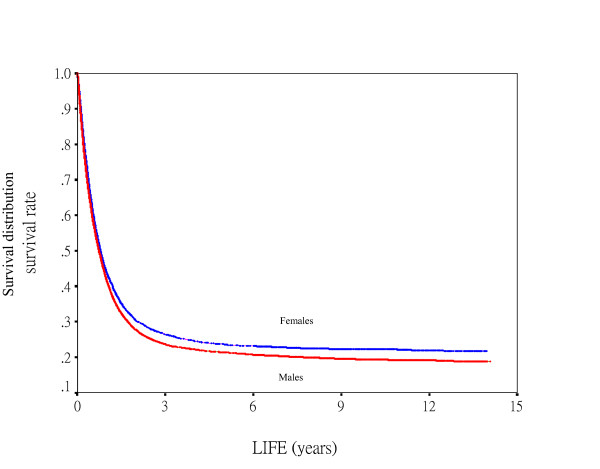
Results: The prognostic indicators associated with a higher risk of lung cancer deaths are male gender (males versus females; HR = 1.07, 95% confidence intervals (CI): 1.03-1.11), males diagnosed in later periods (shown in 1991-1994 versus 1987-1990; HR = 1.13), older age at diagnosis, large cell carcinoma (LCC)/small cell carcinoma (SCC), and supportive care therapy over chemotherapy. The overall 5-year survival rate for lung cancer death was significantly poorer for males (21.3%) than females (23.6%). Subjects with squamous cell carcinoma (SQCC) and treatment by surgical resection alone had better prognosis. We find surgical resections to markedly increase 5-year survival rate from LCC, decreased risk of death from LCC, and no improved survival from SCC.
Conclusion: Gender and clinical characteristics (i.e. diagnostic period, diagnostic age, histological type and treatment modality) play important roles in determining lung cancer survival.
Figures
References
-
- Ferlay J, Bray F, Pisani P, Parkin DM. Globocan 2002, cancer incidence, mortality and prevalence worlwide. IARC Lyon. 2003.
-
- Tan YK, Wee TC, Koh WP, Wang YT, Eng P, Tan WC, Seow A. Survival among Chinese women with lung cancer in Singapore: a comparison by stage, histology and smoking status. Lung Cancer. 2003;40:237–246. - PubMed
Publication types
MeSH terms
LinkOut - more resources
Full Text Sources
Medical
Research Materials
