


Renal function after ifosfamide, carboplatin and etoposide (ICE) chemotherapy, nephrectomy and radiotherapy in children with Wilms tumour
- PMID: 18996004
- PMCID: PMC2682543
- DOI: 10.1016/j.ejca.2008.09.017
Renal function after ifosfamide, carboplatin and etoposide (ICE) chemotherapy, nephrectomy and radiotherapy in children with Wilms tumour
Abstract
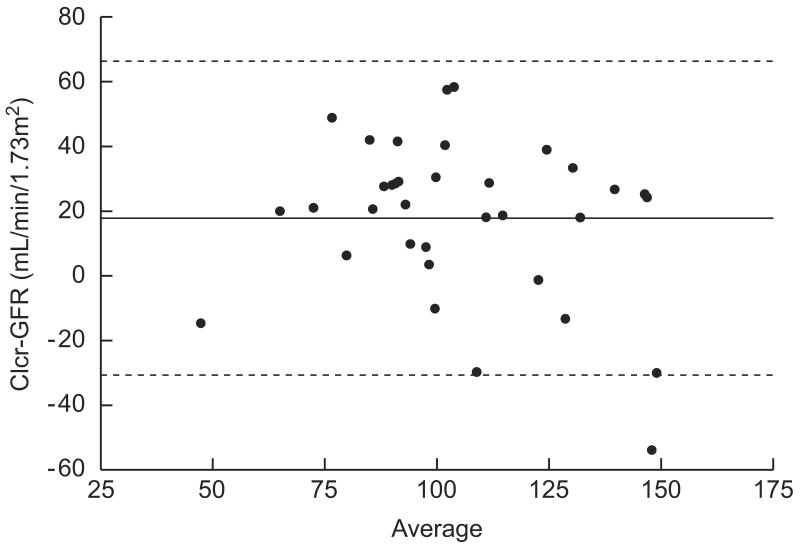
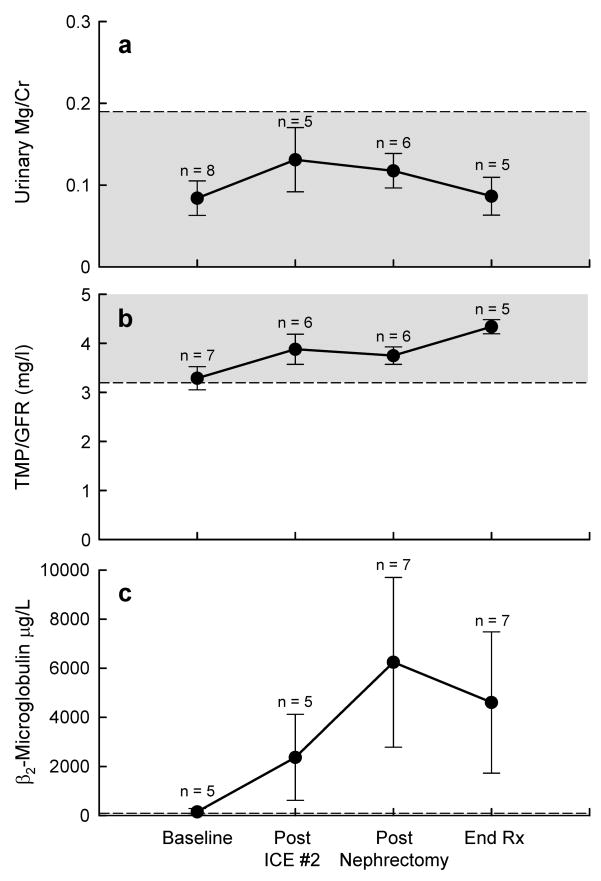
We prospectively evaluated tumour response and renal function in 12 newly diagnosed children with high-risk Wilms tumour receiving ifosfamide, carboplatin and etoposide (ICE) chemotherapy. Two cycles of ICE were followed by 5 weeks of vincristine, dactinomycin and doxorubicin (Adriamycin) (VDA), and nephrectomy, radiotherapy, additional VDA, and a third ICE cycle. Carboplatin dosage was based on glomerular filtration rate (GFR) to achieve targeted systemic exposure (6mg/ml min). Mean GFR (measured by technetium 99m-DTPA clearance) declined by 7% after 2 cycles of ICE and by 38% after nephrectomy; the mean carboplatin dose was reduced 32% after nephrectomy. Mean GFR remained stable after the third ICE cycle. Although urinary beta(2)-microglobulin excretion increased during therapy, no patient had clinically significant renal tubular dysfunction at the end of treatment. Treatment with ICE, nephrectomy and radiotherapy significantly reduces GFR, largely as the result of nephrectomy. Adjustment of carboplatin dosage on the basis of GFR and careful monitoring of renal function may alleviate nephrotoxicity.
Conflict of interest statement
Figures

References
-
- Green DM. The treatment of stages I–IV favorable histology Wilms’ tumor. J Clin Oncol. 2004;22(8):1366–72. - PubMed
-
- Dome JS, Cotton CA, Perlman EJ, et al. Treatment of anaplastic histology Wilms’ tumor: results from the fifth National Wilms’ Tumor Study. J Clin Oncol. 2006;24(15):2352–8. - PubMed
-
- Tournade MF, Com-Nougue C, de Kraker J, et al. Optimal duration of preoperative therapy in unilateral and nonmetastatic Wilms’ tumor in children older than 6 months: results of the Ninth International Society of Pediatric Oncology Wilms’ Tumor Trial and Study. J Clin Oncol. 2001;19(2):488–500. - PubMed
-
- Ritchey ML, Kelalis PP, Haase GM, Shochat SJ, Green DM, D’Angio G. Preoperative therapy for intracaval and atrial extension of Wilms tumor. Cancer. 1993;71(12):4104–10. - PubMed
Publication types
MeSH terms
Substances
Grants and funding
LinkOut - more resources
Full Text Sources
Medical
Research Materials
