Comparative Study
. 2009 Mar 1;418(2):285-92.
doi: 10.1042/BJ20081637.

Active site substitutions delineate distinct classes of eubacterial flap endonuclease

Affiliations
Comparative Study

Active site substitutions delineate distinct classes of eubacterial flap endonuclease

Lee M Allen et al. Biochem J. .

Abstract

FENs (flap endonucleases) play essential roles in DNA replication, pivotally in the resolution of Okazaki fragments. In eubacteria, DNA PolI (polymerase I) contains a flap processing domain, the N-terminal 5'-->3' exonuclease. We present evidence of paralogous FEN-encoding genes present in many eubacteria. Two distinct classes of these independent FEN-encoding genes exist with four groups of eubacteria, being identified based on the number and type of FEN gene encoded. The respective proteins possess distinct motifs hallmarking their differentiation. Crucially, based on primary sequence and predicted secondary structural motifs, we reveal key differences at their active sites. These results are supported by biochemical characterization of two family members--ExoIX (exonuclease IX) from Escherichia coli and SaFEN (Staphylococcus aureus FEN). These proteins displayed marked differences in their ability to process a range of branched and linear DNA structures. On bifurcated substrates, SaFEN exhibited similar substrate specificity to previously characterized FENs. In quantitative exonuclease assays, SaFEN maintained a comparable activity with that reported for PolI. However, ExoIX showed no observable enzymatic activity. A threaded model is presented for SaFEN, demonstrating the probable interaction of this newly identified class of FEN with divalent metal ions and a branched DNA substrate. The results from the present study provide an intriguing model for the cellular role of these FEN sub-classes and illustrate the evolutionary importance of processing aberrant DNA, which has led to their maintenance alongside DNA PolI in many eubacteria.


Figures
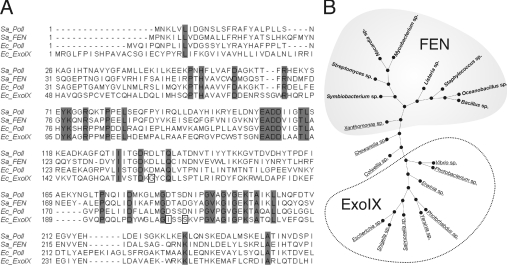
Figure 1
Figure 1. Evaluation of eubacterial DNA PolI 5′-3′ exonuclease paralogues
(A) ClustalW multiple sequence alignment of 5′-3′-like nucleases with their related Pol I paralogues. Both classes of eubacteria contain two putative paralogous FEN-like proteins, one associated with the Klenow fragment in the form of DNA Pol I (polA), and the other encoded autonomously. The autonomous FEN-like proteins can be divided into those which retain all the putative ligands to bind two metal ions (e.g. SaFEN) and those which retain the ligands to bind a single divalent metal ion (EcExoIX). Perfectly conserved residues are boxed in grey. The amino acid substitutions affecting binding at the second metal site in ExoIX are shown in clear boxes. (B) Phylip radial phylogenetic tree, derived from ClustalW alignment of 19 secondary FENs from eubacteria (Supplementary Figure S1). A clear differentiation of ExoIX and FEN classes is evident. Eubacterial paralogous FENs fall into two discrete classes with predicted affinity for one (hatched area) or two (grey area) metal ions. This broadly, but not exclusively, correlates with Gram-positive and -negative classification (bold and underlined type respectively).
Figure 2
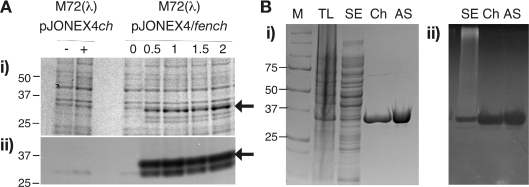
Figure 2. SDS/10% PAGE analysis of recombinant Staph. aureus FEN
(A) Heat-shock induction (0–2 h at 42 °C) of recombinant SaFEN demonstrates protein of the anticipated molecular mass (35 kDa; black arrow); i) stained with Commassie Blue or ii) zymogram for DNase activity. (B) Fractions taken during the purification of SaFEN were analysed by SDS/10% PAGE and stained with i) Coomassie Blue or ii) a zymogram assay of DNase activity. A replicate gel was prepared with 40 μg/ml of Type XIV herring sperm DNA, and assayed for in situ DNase activity, furnished with 10 mM MgCl2 as cofactor [41]. M, Marker (BioRad precision unstained), molecular mass of standards is given in kDa; TL, total lysate; SE, soluble extract; Ch, pooled Ni-chelate eluate; AS; ammonium sulphate precipitated fraction (final 30% saturated).
Figure 3
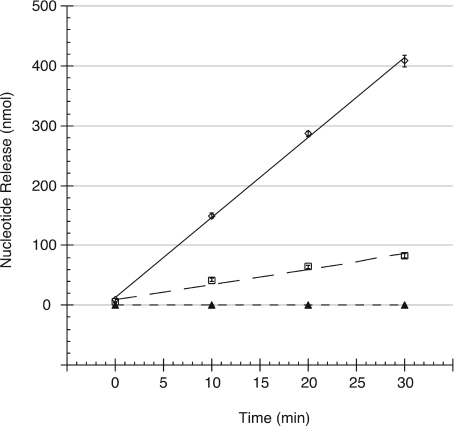
Figure 3. Comparison of exonucleolytic properties of prokaryotic FEN homologues
Release of acid-soluble nucleotides (nmol) in a standard reaction (1 ml) at pH 8.0, containing an excess of type XIV herring sperm DNA substrate, measured spectrophotometrically and adjusted to 1 μg of protein to aid comparison: ExoIX (▲), SaFEN (□), T5FEN (◊). Mean values from three independent readings were plotted, shown ±S.E.M (error bars). Nucleotide release was determined as described elsewhere [12].
Figure 4
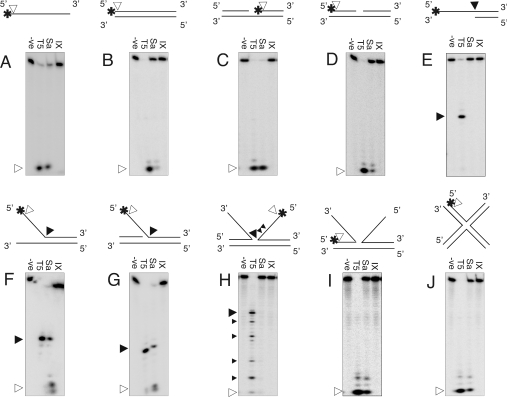
Figure 4. Comparison of enzymes' structure-specific nucleolytic cleavage on a selection of exo- and endo-nuclease substrates
An excess of enzyme (100 nM) was incubated with preformed 5′-labelled substrate (135 pM) in the presence of 10 mM MgCl2, at 37 °C for 30 min, and the reactions analysed on denaturing 15% PAGE. Filled triangles (▼) denote structure-specific endonucleolytic cleavage products and open triangles (∇) exonucleolytic cleavage products. -ve, negative control (BSA carrier, no enzyme); T5, bacteriophage T5 FEN; Sa, SaFEN; IX; EcExoIX. See Table 1 for explanation of substrates used in A J.
Figure 5
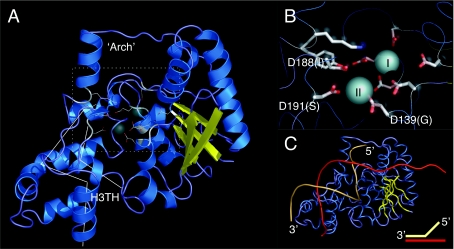
Figure 5. Homology modelling SaFEN in complex with M2+ cofactor and a branched PsY DNA substrate
Bacteriophage T5FEN (PDB 1UT8) served as a template for the Phyre-threaded model of SaFEN [38], confirmed by two independent algorithms and structural validation (refer to Experimental section). (A) Cartoon representation of SaFEN. α-helices are blue and β-sheets are yellow. The DNA-binding H3TH motif is illustrated in white and the predicted active site region is boxed, shown in detail in (B). Perfectly conserved eubacterial FEN residues include tyrosine and lysine, in addition to a cluster of carboxyl ligands at the active site, here modelled with two Mn2+ ions (cyan spheres). The ligand substitutions affecting site II in the ExoIX sub-class are in brackets. (C) A branched DNA substrate was modelled by rigid body docking, based on structural superimposition of the SaFEN model with PDB protein number 2IHN, and steric clashes are reduced to within 1.5 Å. The free 5′ end (in gold) fits best with a threading model, as originally proposed for T5FEN [15], although the arch is disordered and more spatially constricted in SaFEN.

References

    1. Setlow P., Brutlag D., Kornberg A. Deoxyribonucleic acid polymerase: two distinct enzymes in one polypeptide. I. A proteolytic fragment containing the polymerase and 3′ leads to 5′ exonuclease functions. J. Biol. Chem. 1972;247:224–231. - PubMed
    1. Setlow P., Kornberg A. Deoxyribonucleic acid polymerase: two distinct enzymes in one polypeptide. II. A proteolytic fragment containing the 5′ leads to 3′ exonuclease function. Restoration of intact enzyme functions from the two proteolytic fragments. J. Biol. Chem. 1972;247:232–240. - PubMed
    1. Robins P., Pappin D. J., Wood R. D., Lindahl T. Structural and functional homology between mammalian DNase IV and the 5′-nuclease domain of Escherichia coli DNA polymerase I. J. Biol. Chem. 1994;269:28535–28538. - PubMed
    1. Lieber M. R. The FEN-1 family of structure-specific nucleases in eukaryotic DNA replication, recombination and repair. Bioessays. 1997;19:233–240. - PubMed
    1. Ceska T. A., Sayers J. R. Structure-specific DNA cleavage by 5′ nucleases. Trends Biochem. Sci. 1998;23:331–336. - PubMed

Publication types

MeSH terms