


Angiotensin II-dependent hypertension increases Na transport-related oxygen consumption by the thick ascending limb
- PMID: 19001187
- PMCID: PMC2766242
- DOI: 10.1161/HYPERTENSIONAHA.108.120212
Angiotensin II-dependent hypertension increases Na transport-related oxygen consumption by the thick ascending limb
Abstract
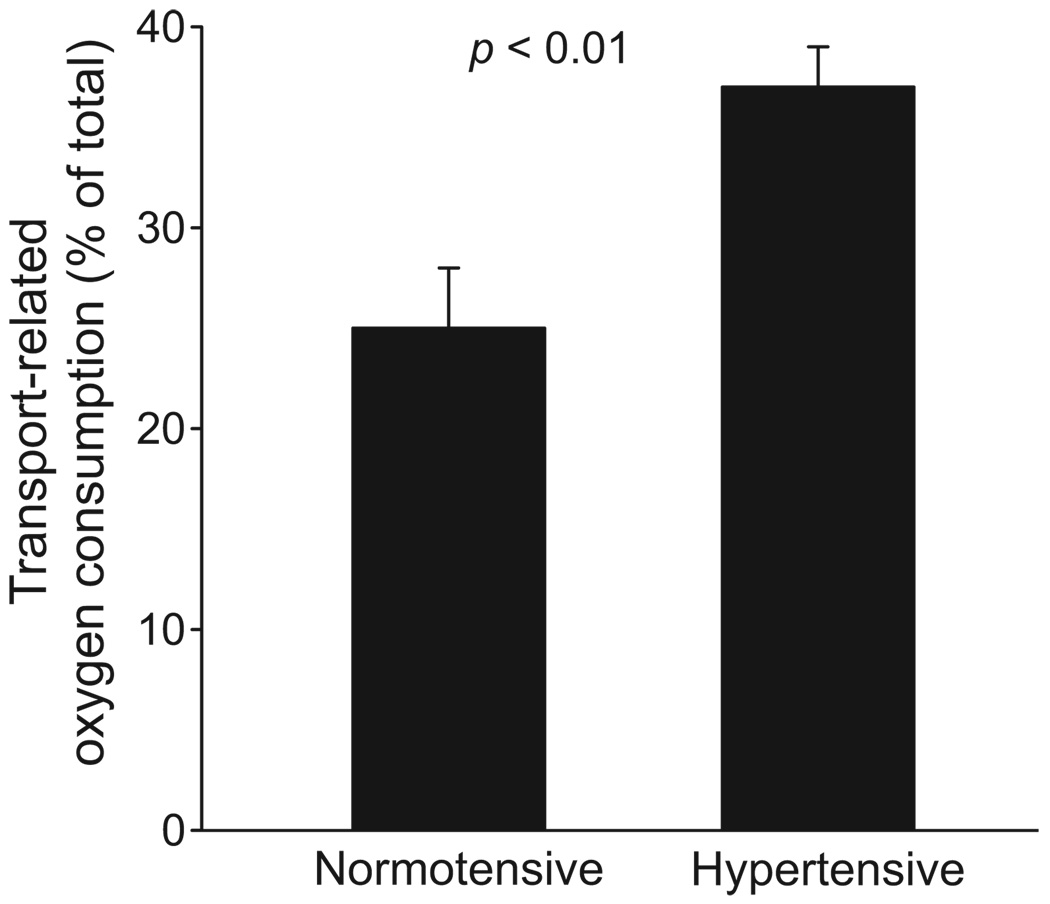
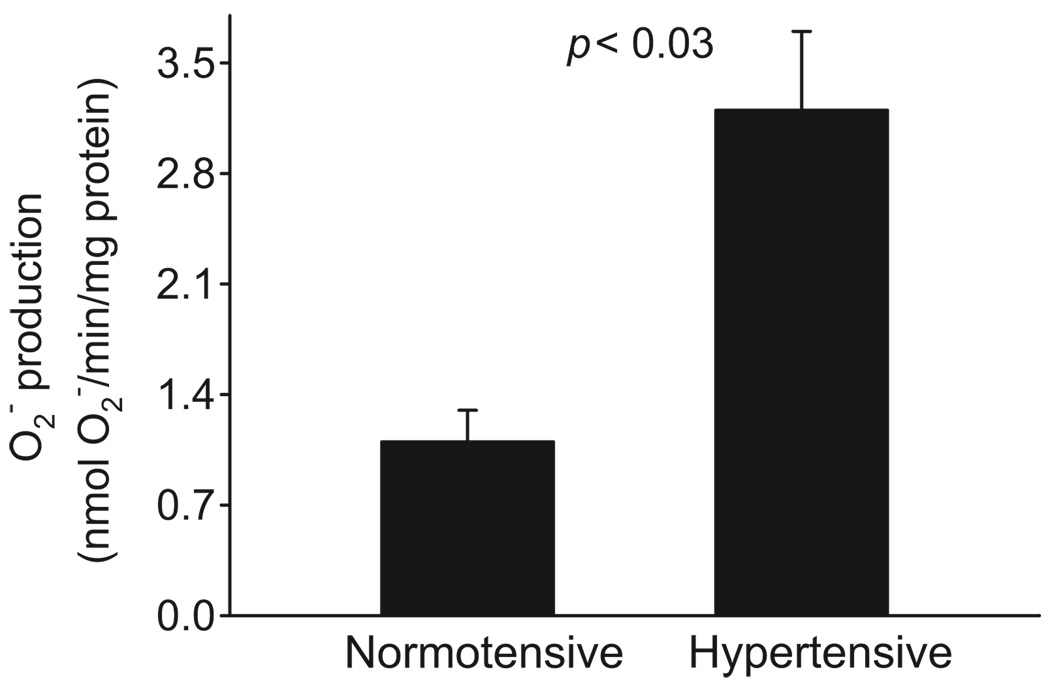
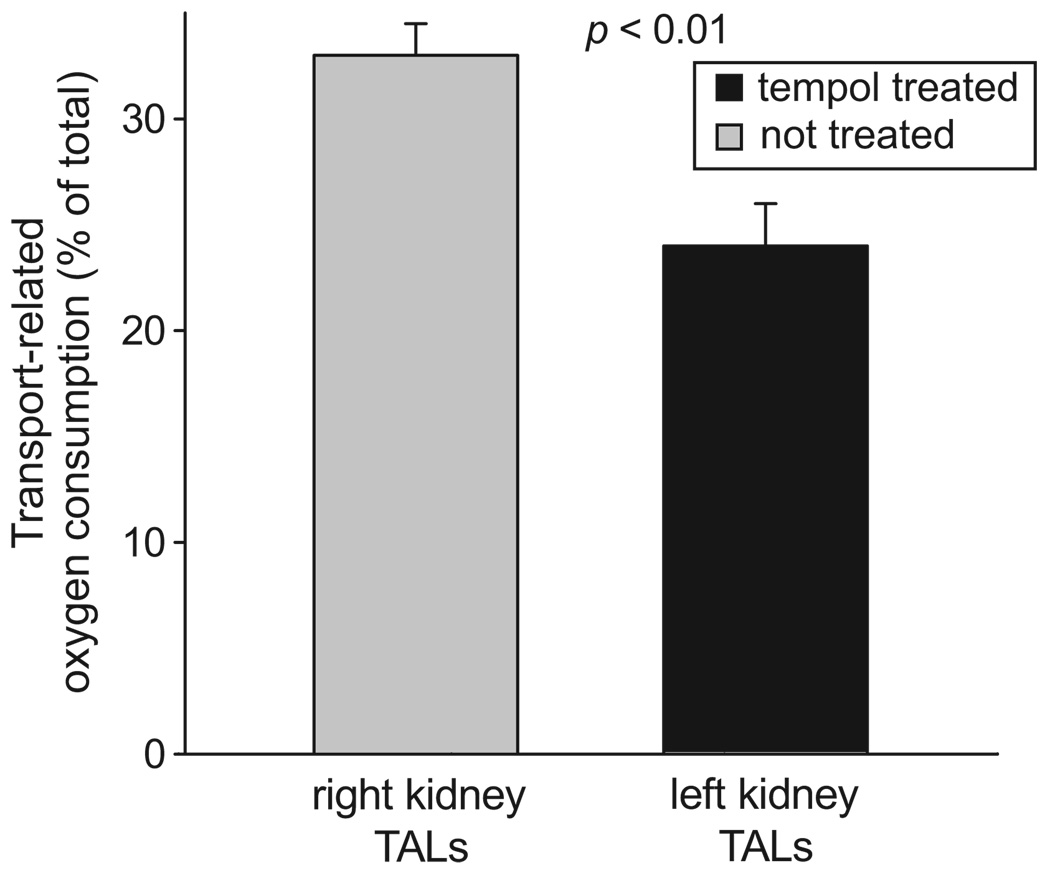
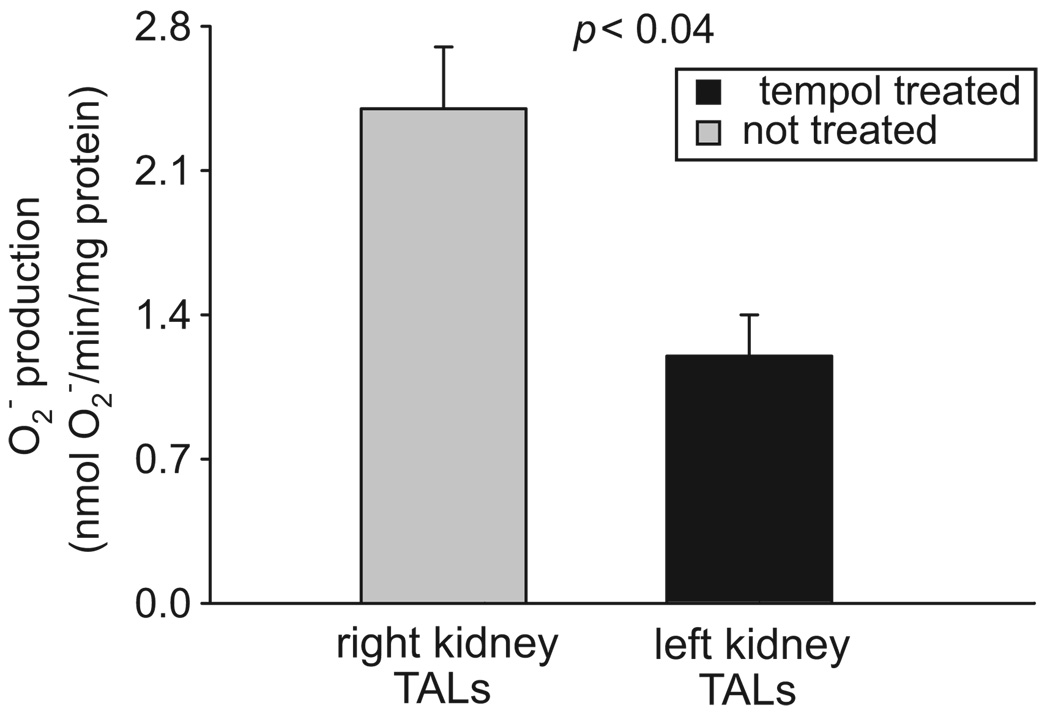
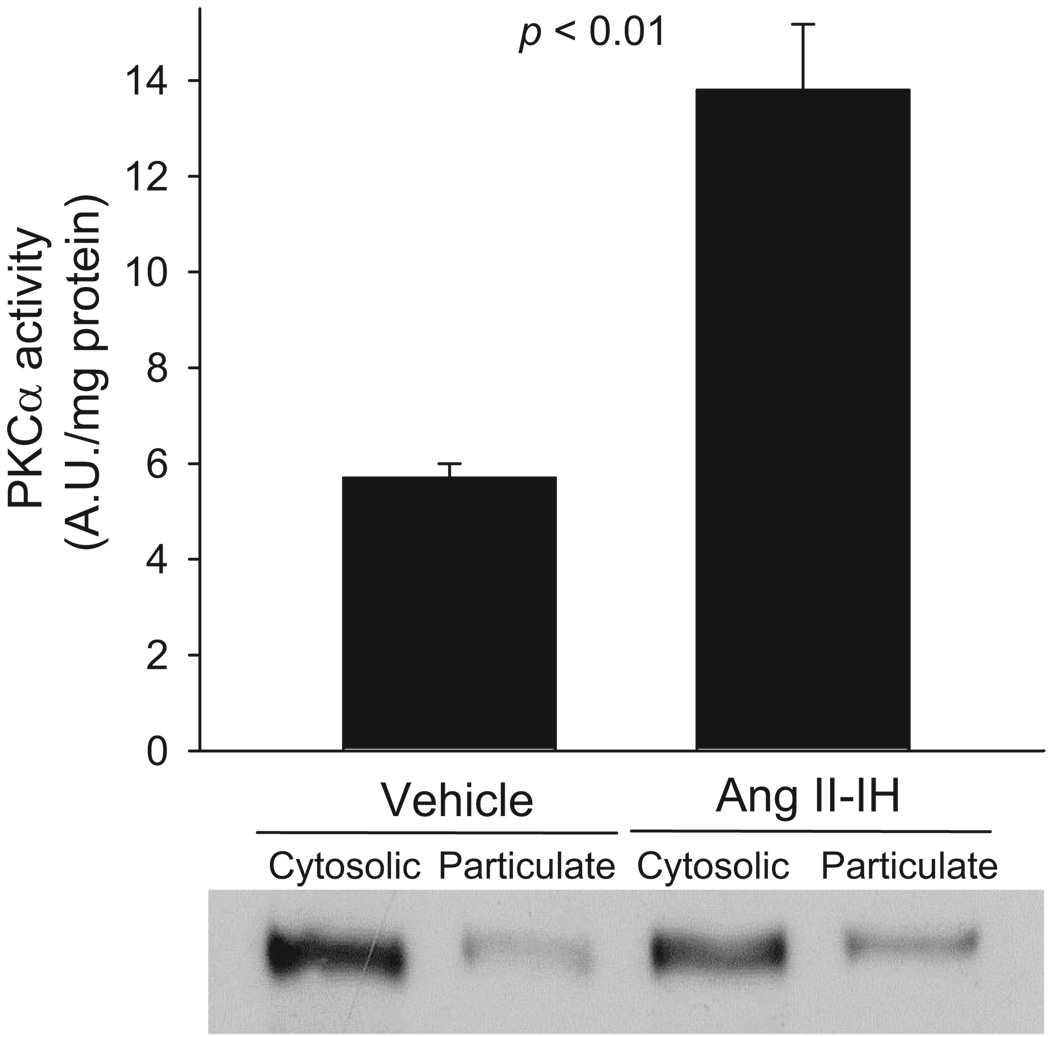
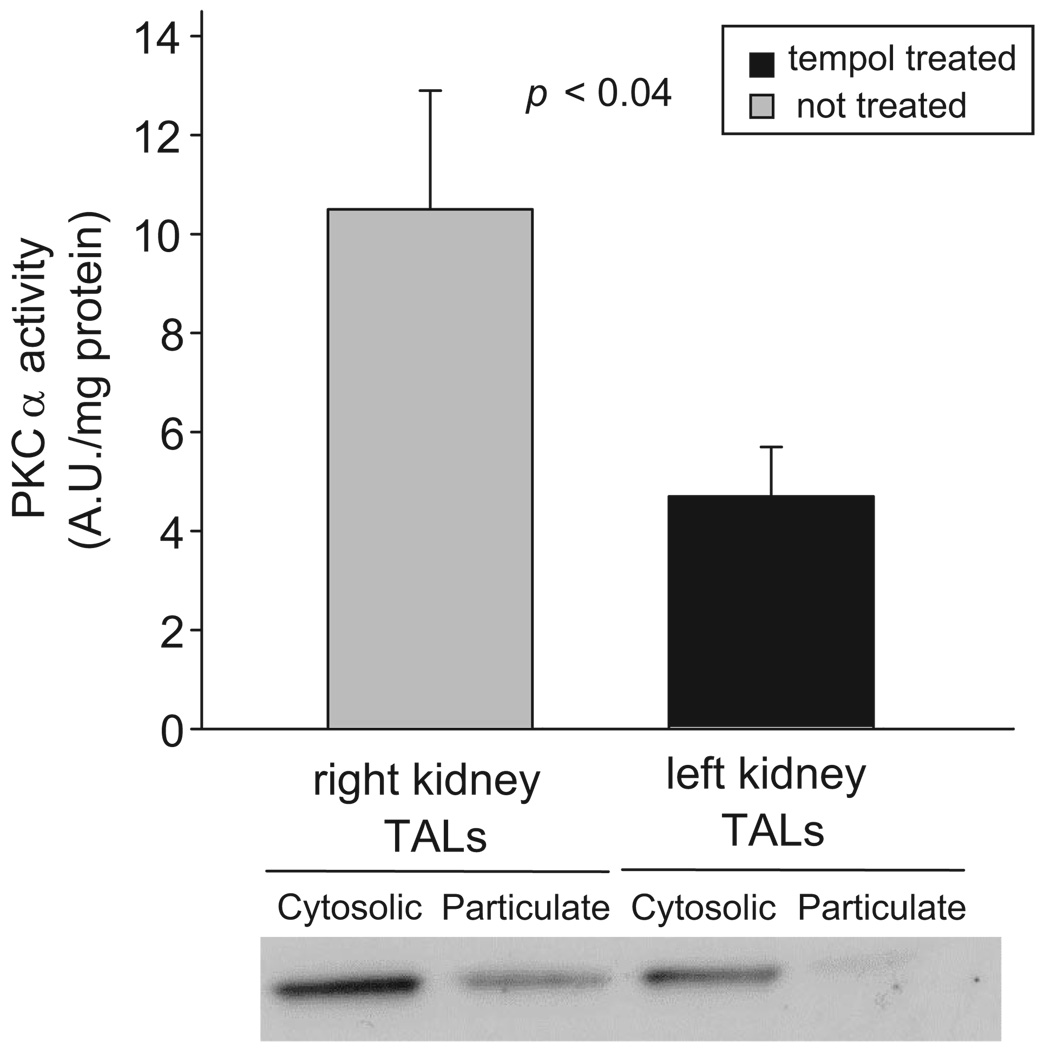
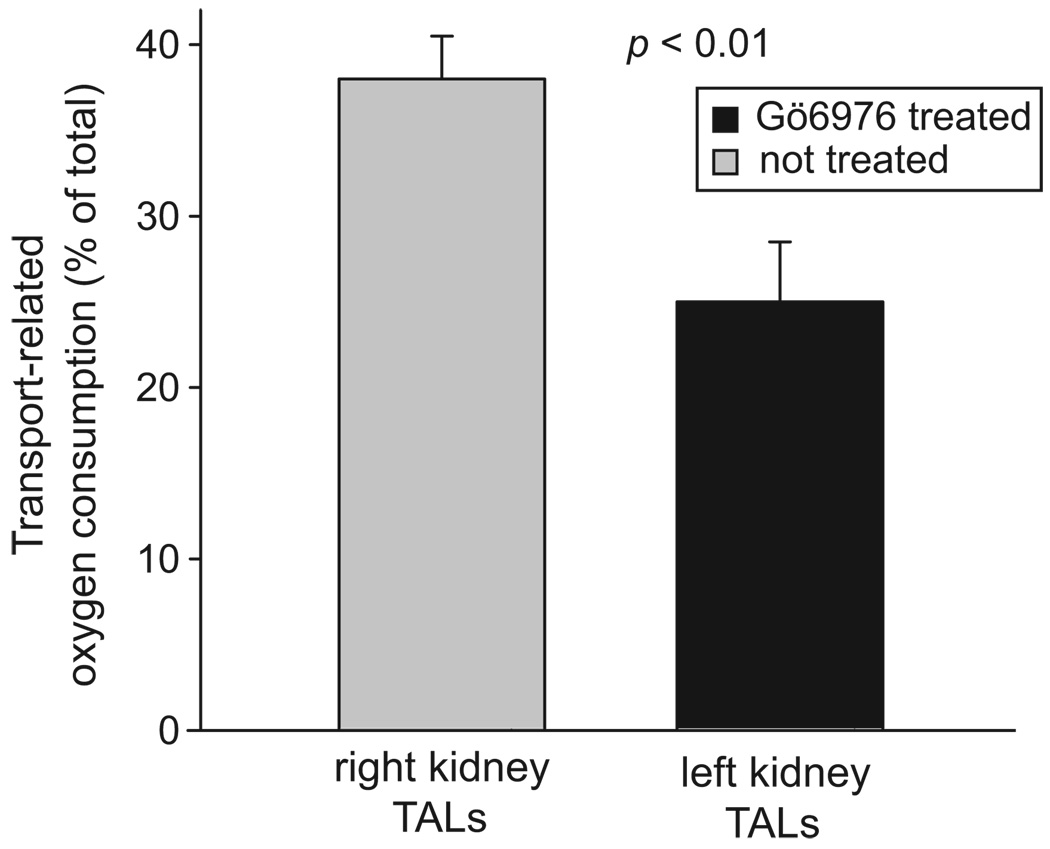
Renal medullary superoxide (O(2)(-)) increases in angiotensin (Ang) II-dependent hypertension. O(2)(-) increases thick ascending limb Na transport, but the effect of Ang II-dependent hypertension on the thick ascending limb is unknown. We hypothesized that Ang II-dependent hypertension increases thick ascending limb NaCl transport because of enhanced O(2)(-) production and increased protein kinase C (PKC) alpha activity. We measured the effect of Ang II-dependent hypertension on furosemide-sensitive oxygen consumption (a measure of Na transport), O(2)(-) production, and PKCalpha translocation (a measure of PKCalpha activity) in thick ascending limb suspensions. Ang II-dependent hypertension increased furosemide-sensitive oxygen consumption (26.2+/-1.0% versus 36.6+/-1.2% of total oxygen consumption; P<0.01). O(2)(-) was also increased (1.1+/-0.2 versus 3.2+/-0.5 nmol of O(2)(-)/min per milligram of protein; P<0.03) in thick ascending limbs. Unilateral renal infusion of Tempol decreased O(2)(-) (2.4+/-0.4 versus 1.2+/-0.2 nmol of O(2)(-)/min per milligram of protein; P<0.04) and furosemide-sensitive oxygen consumption (32.8+/-1.3% versus 24.0+/-2.1% of total oxygen consumption; P<0.01) in hypertensive rats. Tempol did not affect O(2)(-) or furosemide-sensitive oxygen consumption in normotensive controls and did not alter systolic blood pressure. Ang II-dependent hypertension increased PKCalpha translocation (5.7+/-0.3 versus 13.8+/-1.4 AU per milligram of protein; P<0.01). Unilateral renal infusion of Tempol reduced PKCalpha translocation (5.0+/-0.9 versus 10.4+/-2.6 AU per milligram of protein; P<0.04) in hypertensive rats. Unilateral renal infusion of the PKCalpha inhibitor Gö6976 reduced furosemide-sensitive oxygen consumption (37.4+/-1.5% versus 25.1+/-1.0% of total oxygen consumption; P<0.01) in hypertensive rats. We conclude that Ang II-dependent hypertension enhances thick ascending limb Na transport-related oxygen consumption by increasing O(2)(-) and PKCalpha activity.
Figures
References
-
- Manning RD, Jr, Tian N, Meng S. Oxidative stress and antioxidant treatment in hypertension and the associated renal damage. Am J Nephrol. 2005;25:311–317. - PubMed
-
- Tian N, Thrasher KD, Gundy PD, Hughson MD, Manning RD., Jr Antioxidant treatment prevents renal damage and dysfunction and reduces arterial pressure in salt-sensitive hypertension. Hypertension. 2005;45:934–939. - PubMed
-
- Cifuentes ME, Rey FE, Carretero OA, Pagano PJ. Upregulation of p67(phox) and gp91(phox) in aortas from angiotensin II-infused mice. Am J Physiol Heart Circ Physiol. 2000;279:H2234–H2240. - PubMed
-
- Zimmerman MC, Lazartigues E, Sharma RV, Davisson RL. Hypertension caused by angiotensin II infusion involves increased superoxide production in the central nervous system. Circ Res. 2004;95:210–216. - PubMed
-
- Kopkan L, Castillo A, Navar LG, Majid DS. Enhanced superoxide generation modulates renal function in ANG II-induced hypertensive rats. Am J Physiol Renal Physiol. 2006;290:F80–F86. - PubMed
Publication types
MeSH terms
Substances
Grants and funding
LinkOut - more resources
Full Text Sources
Other Literature Sources
Miscellaneous
