


Altered functioning of the executive control circuit in late-life depression: episodic and persistent phenomena
- PMID: 19001356
- PMCID: PMC2626170
- DOI: 10.1097/JGP.0b013e31817b60af
Altered functioning of the executive control circuit in late-life depression: episodic and persistent phenomena
Abstract
Objective: To characterize the functional neuroanatomy of late-life depression (LLD) by probing for both episodic and persistent alterations in the executive-control circuit of elderly adults.
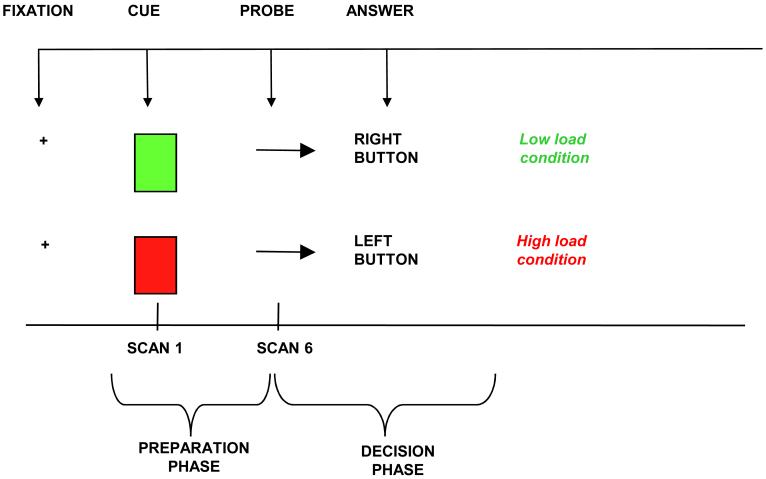
Design: Event-related functional magnetic resonance imaging (fMRI) data were collected while participants performed an executive-control task.
Setting: Participants were recruited through a depression-treatment study within the Pittsburgh, PA, Intervention Research Center for Late-Life Mood Disorders.
Participants: Thirteen nondepressed elderly comparison participants and 13 LLD patients.
Intervention: The depressed patients underwent imaging before initiating and after completing 12 weeks of paroxetine.
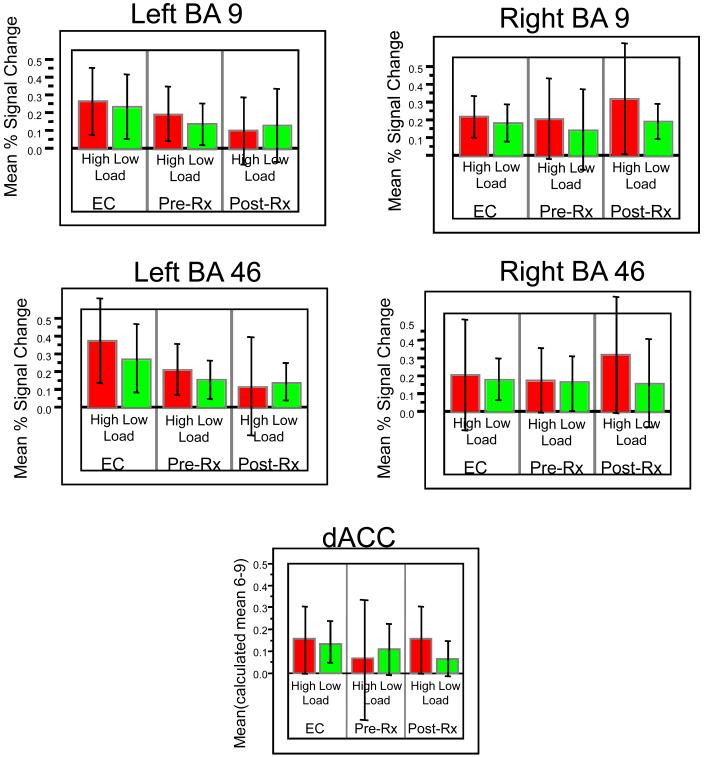
Measurements: Regional fMRI activity was assessed in the dorsolateral prefrontal cortex (dLPFC: BA9 and BA46 bilaterally) and the dorsal anterior cingulate cortex (dACC). Functional connectivity was assessed by correlating the fMRI time-series in the dLPFC and dACC.
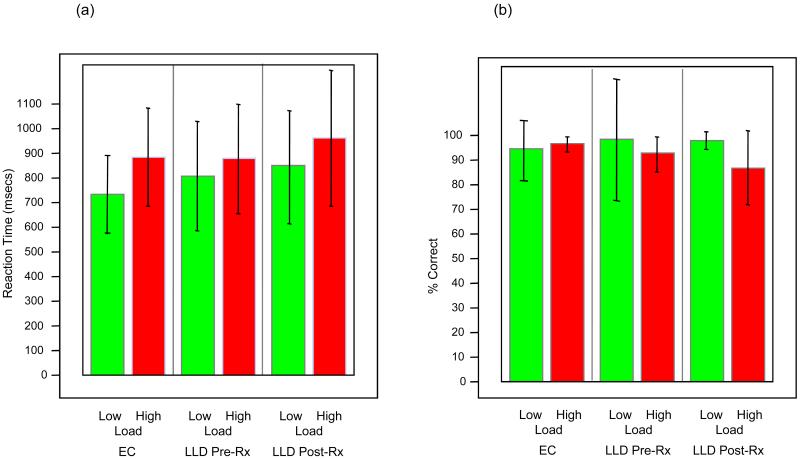
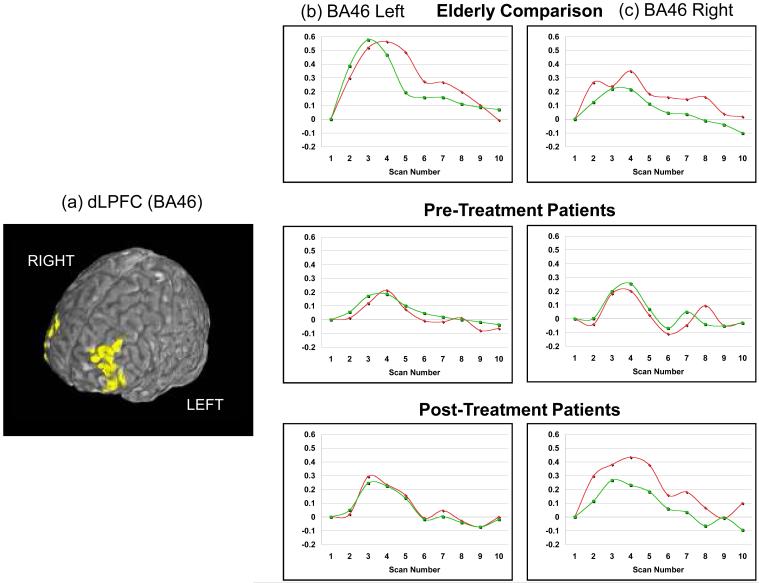
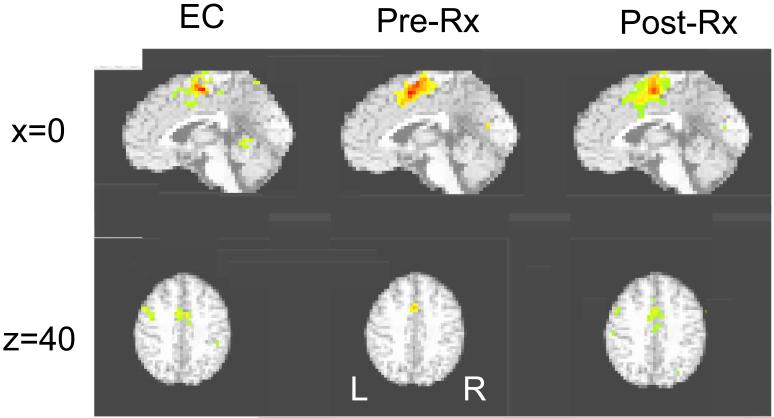
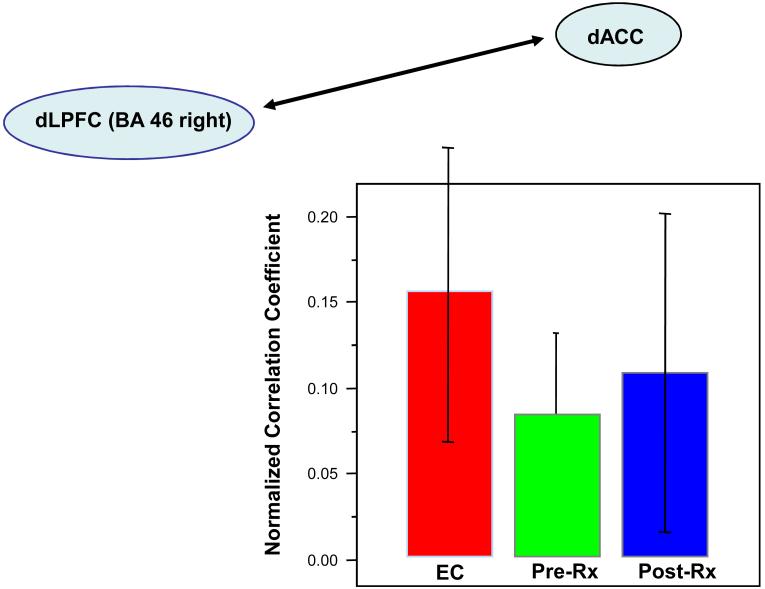
Results: Both depressed and comparison participants performed the task as expected, with greater response latency during high versus low-load trials. The response-latency load-effect did not differ between groups. In contrast to the null findings for behavioral data, pretreatment, depressed patients showed diminished activity in the dLPFC (BA46 left, t(25)=1.9, p = 0.035) and diminished functional connectivity between the dLPFC and dACC. Moreover, right dLPFC (BA46 right, t(25)=2.17, p < 0.02) showed increased activity after treatment.
Conclusions: These results support a model of both episodic and persistent neurobiologic components of LLD. The altered functional connectivity,perhaps due to vascular damage to frontal white matter, appears to be persistent. Further, at least some of the prefrontal hypoactivity (in the right dLPFC) seems to be an episodic characteristic of acute depression amenable to treatment.
Figures
References
-
- Beekman AT, Copeland JR, Prince MJ. Review of community prevalence of depression in later life. Br J Psychiatry. 1999;174:307–311. - PubMed
-
- Murray CJL, Lopez AD, Harvard School of Public Health et al. The global burden of disease: a comprehensive assessment of mortality and disability from diseases, injuries, and risk factors in 1990 and projected to 2020. Published by the Harvard School of Public Health; Cambridge, MA: 1996. on behalf of the World Health Organization and the World Bank; Distributed by Harvard University Press.
-
- Frasure-Smith N, Lesperance F, Talajic M. Depression following myocardial infarction. Impact on 6-month survival. Jama. 1993;270:1819–1825. - PubMed
-
- Schulz R, Beach SR, Ives DG, et al. Association between depression and mortality in older adults: the Cardiovascular Health Study. Archives of Internal Medicine. 1761;160:1761–1768. see comment. - PubMed
-
- Conwell Y, Duberstein PR, Cox C, et al. Relationships of age and axis I diagnoses in victims of completed suicide: a psychological autopsy study. Am J Psychiatry. 1996;153:1001–1008. - PubMed
Publication types
MeSH terms
Substances
Grants and funding
- P30 MH 52247/MH/NIMH NIH HHS/United States
- K01 MH 01684/MH/NIMH NIH HHS/United States
- K02 MH064190/MH/NIMH NIH HHS/United States
- K01 MH001684/MH/NIMH NIH HHS/United States
- T32 MH019986/MH/NIMH NIH HHS/United States
- L30 MH072042/MH/NIMH NIH HHS/United States
- R01 MH 076079/MH/NIMH NIH HHS/United States
- R25 MH 060473/MH/NIMH NIH HHS/United States
- R01 MH037869/MH/NIMH NIH HHS/United States
- R01 MH 37869/MH/NIMH NIH HHS/United States
- T32 MH 19986/MH/NIMH NIH HHS/United States
- R25 MH060473/MH/NIMH NIH HHS/United States
- P30 MH052247/MH/NIMH NIH HHS/United States
- P30 AG024827/AG/NIA NIH HHS/United States
- K23 MH 64678/MH/NIMH NIH HHS/United States
- K02 MH 064190/MH/NIMH NIH HHS/United States
- K23 MH064678/MH/NIMH NIH HHS/United States
- R01 MH 072947/MH/NIMH NIH HHS/United States
- R01 MH072947/MH/NIMH NIH HHS/United States
- R01 MH 043832/MH/NIMH NIH HHS/United States
- R01 MH043832/MH/NIMH NIH HHS/United States
- R01 MH076079/MH/NIMH NIH HHS/United States
LinkOut - more resources
Full Text Sources
Other Literature Sources
Medical
