


High levels of Epstein-Barr virus DNA in latently infected gastric adenocarcinoma
- PMID: 19002111
- PMCID: PMC2612099
- DOI: 10.1038/labinvest.2008.103
High levels of Epstein-Barr virus DNA in latently infected gastric adenocarcinoma
Abstract
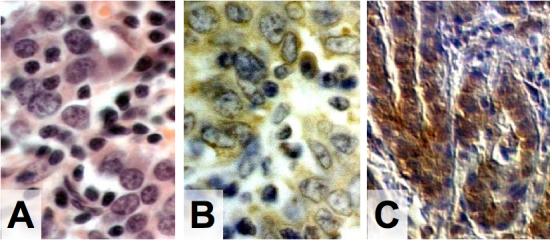
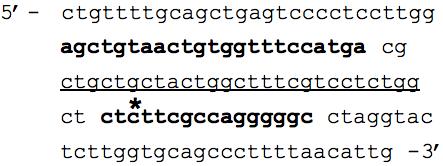
Gastric adenocarcinoma is the second leading cause of cancer death worldwide. Epstein-Barr virus (EBV) is present in the malignant cells of approximately 10% of cases. It is unclear whether EBV is being missed in some gastric adenocarcinomas due to insensitive test methods or partial EBV genome loss. In this study, we screened 113 gastric adenocarcinomas from low- and high-incidence regions (United States and Central America) for the presence of EBV using a battery quantitative real-time PCR (Q-PCR) assays targeting disparate segments of the EBV genome (BamH1W, EBNA1, LMP1, LMP2, BZLF1, EBER1) and histochemical stains targeting EBV-encoded RNA (EBER), the latent proteins LMP1 and LMP2, and the lytic proteins BMRF1 and BZLF1. EBV DNA was detected by Q-PCR in 48/75 United States cancers (64%) and in 38/38 Central American cancers (100%), which was a significant difference. EBER was localized to malignant epithelial cells in 8/48 (17%) United States and 3/38 (8%) Central American cancers. Viral loads were considerably higher for EBER-positive vs EBER-negative cancers (mean 162 986 vs 62 EBV DNA copies per 100,000 cells). A viral load of 2000 copies per 100,000 cells is recommended as the threshold distinguishing EBER-positive from EBER-negative tumors. One infected cancer selectively failed to amplify the LMP2 gene because of a point mutation, whereas another cancer had an atypical pattern of Q-PCR positivity suggesting deletion of large segments of the EBV genome. Three different viral latency profiles were observed in the cancers based on constant expression of EBER and focal or variable expression of LMP1 or LMP2, without lytic protein expression. We conclude that EBV DNA levels generally reflect EBER status, and a panel of at least two Q-PCR assays is recommended for sensitive identification of infected cancers.
Figures
References
-
- Correa P, Piazuelo MB, Camargo MC. The future of gastric cancer prevention. Gastric Cancer. 2004;7(1):9–16. - PubMed
-
- Boussioutas A, Taupin D. Towards a molecular approach to gastric cancer management. Intern Med J. 2001;31(5):296–303. - PubMed
-
- Henson DE, Dittus C, Younes M, Nguyen H, Albores-Saavedra J. Differential trends in the intestinal and diffuse types of gastric carcinoma in the United States, 1973-2000: increase in the signet ring cell type. Arch Pathol Lab Med. 2004;128(7):765–770. - PubMed
-
- Carrascal E, Koriyama C, Akiba S, Tamayo O, Itoh T, Eizuru Y, et al. Epstein-Barr virus-associated gastric carcinoma in Cali, Colombia. Oncol Rep. 2003;10(4):1059–1062. - PubMed
-
- Corvalan A, Koriyama C, Akiba S, Eizuru Y, Backhouse C, Palma M, et al. Epstein-Barr virus in gastric carcinoma is associated with location in the cardia and with a diffuse histology: a study in one area of Chile. Int J Cancer. 2001;94(4):527–530. - PubMed
Publication types
MeSH terms
Substances
Grants and funding
LinkOut - more resources
Full Text Sources
Other Literature Sources
Medical
